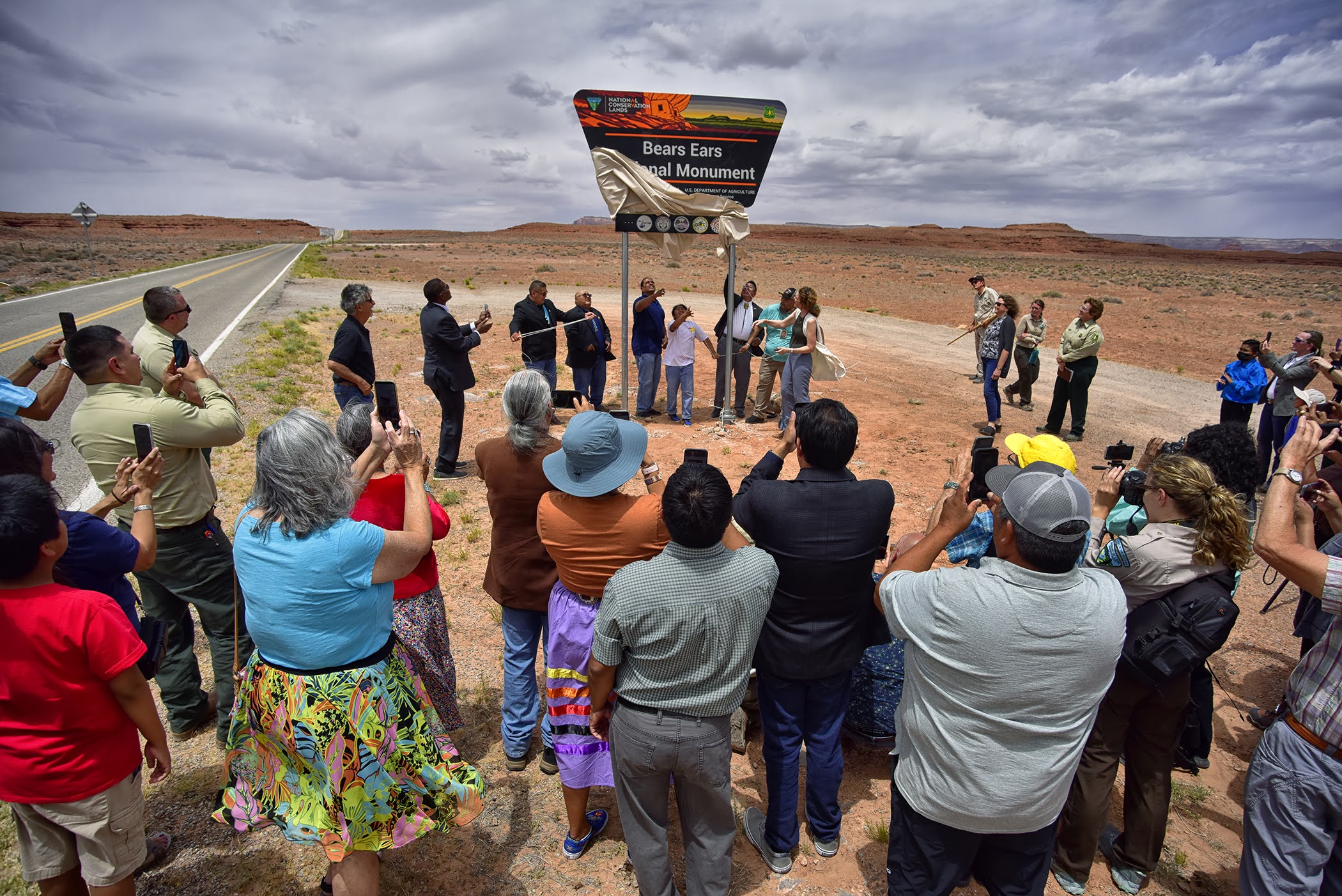
Tribal leaders from five sovereign nations expressed profound disappointment on July 13, 2026, after President Donald Trump signed proclamations dramatically reducing the size of the Bears Ears and Grand Staircase-Escalante National Monuments. The tribal leaders stated that the decision to shrink the monuments and terminate the Bears Ears Commission was made without the meaningful government-to-government consultation previously promised by the federal government.
Monument Size Reductions
The presidential action significantly alters the landscape of southern Utah. According to a White House fact sheet released July 13, 2026, the Bears Ears National Monument will be reduced from approximately 1.36 million acres to roughly 121,100 acres. Similarly, the Grand Staircase-Escalante National Monument will be downsized from approximately 1.87 million acres to about 181,500 acres.
The White House stated the modifications aim to restore "sensible land management" and prevent government overreach regarding the Antiquities Act. The administration noted that the revised boundaries allow for multiple-use activities, including grazing, timber harvest, fishing, hunting, and resource development, on lands previously restricted by the monument designations.
Tribal Leadership Denounces Decision
The Bears Ears Commission, a collaborative management body, was terminated by the new proclamation. Tribal leaders from the Hopi Tribe, Navajo Nation, Ute Indian Tribe of the Uintah and Ouray Reservation, Ute Mountain Ute Tribe, and the Pueblo of Zuni said the move undermines years of progress in collaborative management.
In a statement released July 14, 2026, the Bears Ears Commission noted that the Department of the Interior had previously committed in writing in June 2025 to contacting the Commission before making any changes to the monument's boundaries or management. Tribal leaders stated that no such consultation occurred before the President's order was issued.
Cultural and Spiritual Impact
Tribal representatives emphasized that the reduction disregards their deep cultural and spiritual connections to the land. Anthony Sanchez Jr., Head Councilman of the Zuni Tribe and Co-Chair of the Bears Ears Commission, said the reduction of protections disregards the deep cultural and spiritual connections the tribes hold to the landscape.
Curtis Yanito, a Navajo Nation Council Delegate and Bears Ears Commission Co-Chair, stated that the reduction is deeply disappointing and threatens sacred places. He emphasized that the Navajo are not mere visitors but locals who will continue to stand for the defense of their homelands. Gwen Cantsee, Vice Chairwoman for the Ute Mountain Ute Tribe and a Bears Ears Commissioner, added that the Ute Mountain Ute people's connection to the sacred place cannot be erased by government actions.
Conservationists Vow Legal Fight
The decision faced sharp criticism from the Southern Utah Wilderness Alliance (SUWA). In a statement on July 13, 2026, SUWA Executive Director Scott Braden called the actions "reckless and unlawful," accusing the administration of attacking the monuments at the urging of Utah politicians.
SUWA noted that the reduction of the monuments could leave rare archaeological sites and unique flora and fauna without protection from new hardrock mining claims and off-road vehicle damage. The organization announced it intends to challenge the decision in federal court to seek the restoration of the monuments.
Utah Delegation Supports Action
Conversely, the Utah federal delegation expressed strong support for the President's action. Senator Mike Lee, Chairman of the Senate Committee on Energy and Natural Resources, said the proclamation shows the President respects the limits placed on the Antiquities Act by Congress. Lee argued that previous designations "weaponized" the act to lock up millions of acres and cut rural communities off from their lands.
Representative Burgess Owens echoed these sentiments, stating that the original monument designations were an unmistakable violation of the "smallest area compatible" standard established by the 1906 law. Owens remarked that the previous designations, created by the Clinton and Obama administrations, created areas larger than Rhode Island and Delaware combined.
Calls for Legislative Solutions
The debate over monument boundaries has been a recurring theme in Utah politics. Senator John Curtis noted that while the executive action is an important step toward a balanced approach, the responsibility remains with Congress to enact lasting solutions through legislation.
Representative Blake Moore and Representative Mike Kennedy both emphasized that the decision addresses long-standing local concerns regarding restricted access and the need for management that respects the views of those who live closest to the lands. Utah Attorney General Derek Brown stated that the state will continue to press for permanent solutions that honor the textual limits of the Antiquities Act.
Ongoing Management Conflict
The tension between conservation and multiple-use management continues to define the region. While the White House maintains that the changes restore public access and economic growth, tribal nations and conservation groups maintain that the reduction compromises the protection of irreplaceable cultural and ecological resources.
===== END =====