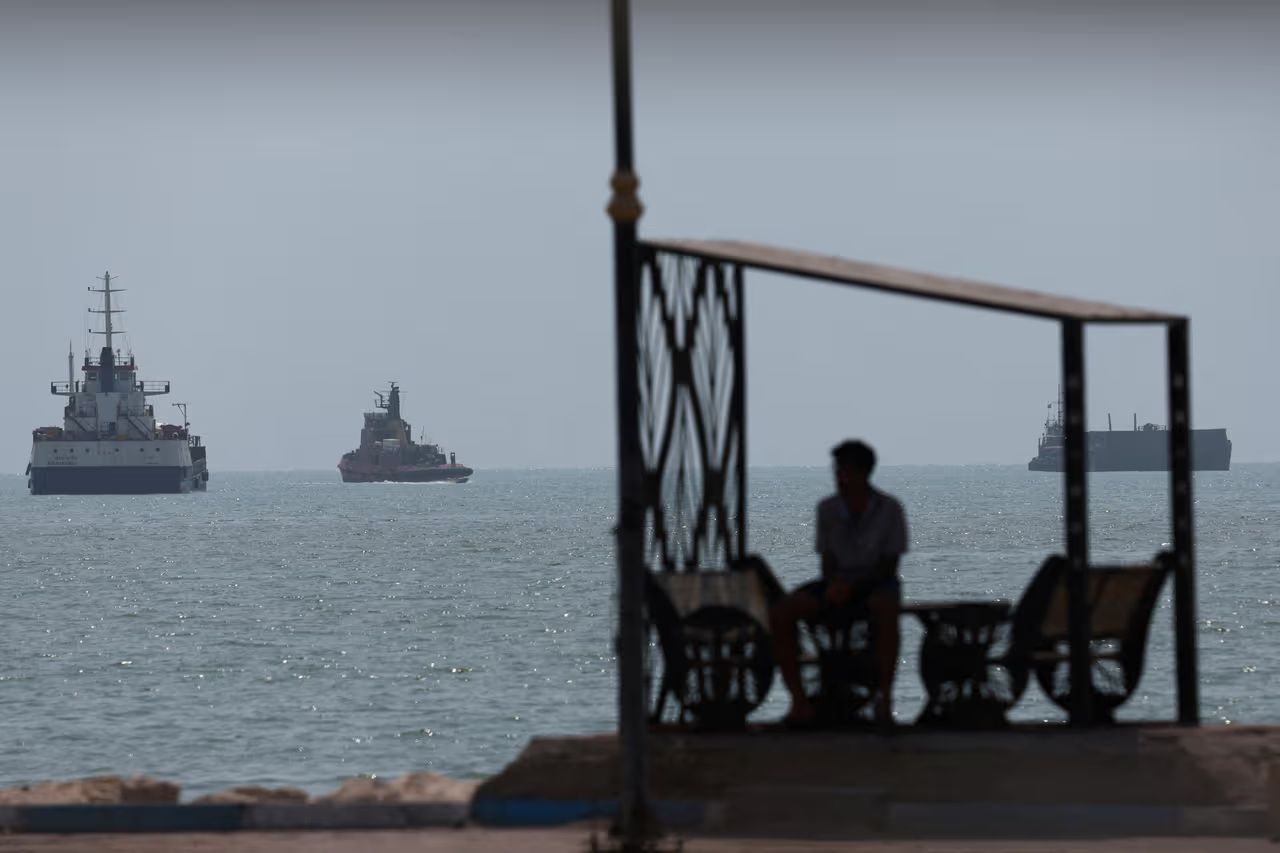
According to a September 1, 2026, report from U.S. Central Command (CENTCOM), United States forces have begun striking Islamic Revolutionary Guard Corps (IRGC) targets in Iran. The decision to strike follows attempted attacks by the IRGC against commercial shipping in the Strait of Hormuz and against American service members deployed to the region.
The military strikes follow recent reports that the U.S. army attacked rocket launchers on Larak island in the Strait of Hormuz. In response to previous actions, Iran launched missiles at American bases in Jordan, which were intercepted, and the United Arab Emirates reported intercepting an Iranian drone over its waters. While explosions were reported in the port city of Bandar Abbas by Iranian state television, no specific details were provided.
President Donald Trump stated that additional strikes might be necessary and remarked that U.S. and Israeli bombings have turned Iran into a failed nation. Trump noted that much of the country's political leadership has died and that the Iranian economy is struggling due to high inflation and a devastated military. He also dismissed the use of nuclear weapons against Iran.
Hosein Mohebi, a spokesperson for the Revolutionary Guard, stated on X that the United States will regret its new attacks around the Strait of Hormuz and promised severe punishment for the aggressors. This follows a period of intermittent warfare between the U.S. and Iran that has lasted over six months, following a one-month truce.
The U.S. Department of State has issued security alerts for Jordan, Amman, Oman, Muscat, and Abu Dhabi, joining previous alerts for Bahrain, Qatar, and Israel. These alerts cite complex security environments and the risk of escalation in the Middle East, recommending heightened vigilance and preparation for potential flight cancellations.
The current instability follows a pattern of Iranian attacks on U.S. military bases and infrastructure in Gulf countries since the start of the conflict.