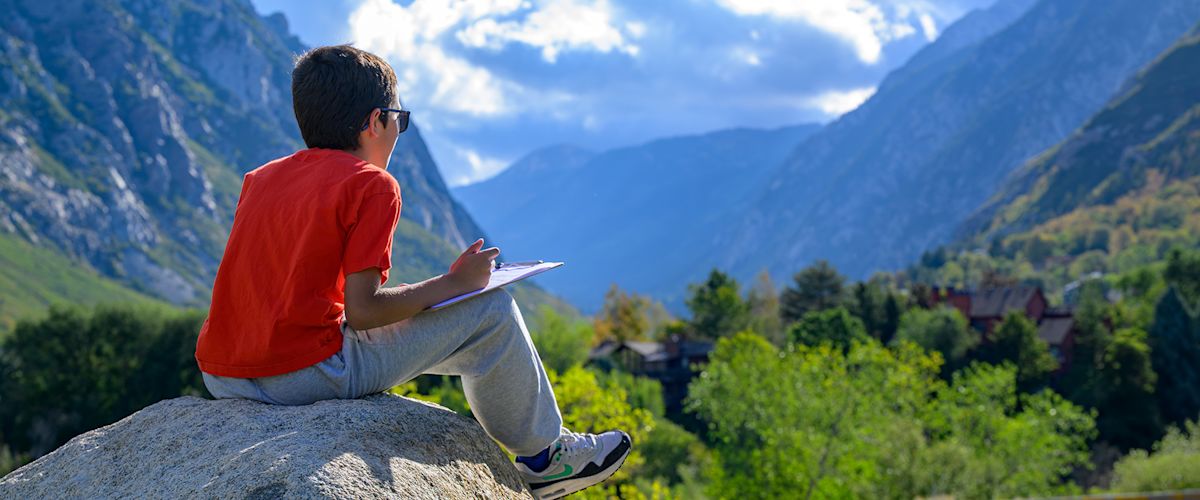
Rowland Hall fourth graders are participating in an extensive outdoor education program involving at least 16 field studies throughout the year, according to a November 13 report. The program aims to help students gain a deeper understanding of Utah's environment and their connection to it through hands-on exploration.
The curriculum includes visits to sites of historic, geologic, and cultural significance. Students have hiked Ensign Peak to study the geology, ecology, and history of the Salt Lake Valley and have visited Timpanogos Cave. Beyond natural landscapes, students have learned about Native American settlements, visited pioneer monuments, and studied the work of the Utah State Legislature while visiting the Capitol grounds.
The program features cross-divisional learning, where tenth-grade students serve as buddies to fourth graders during excursions like visits to the Great Salt Lake. In the school's Technology, Robotics, Engineering, and Coding (TREC) Lab, students will use remotely operated vehicle (ROV) kits from Sea Perch to collect data for research in collaboration with the Great Salt Lake Institute.
Teacher Jayme Young noted that these studies allow students to connect classroom lessons to the real world, such as linking drinking water to the Cottonwood Canyons and water treatment plants they have toured. Teacher Haas Pectol stated that the field studies naturally support subjects including reading, writing, math, observation, critical thinking, and asking meaningful questions.
As part of their studies, students create brochures detailing what they have learned, such as identifying land regions including the Great Basin, the Rocky Mountains, and the Colorado Plateau.