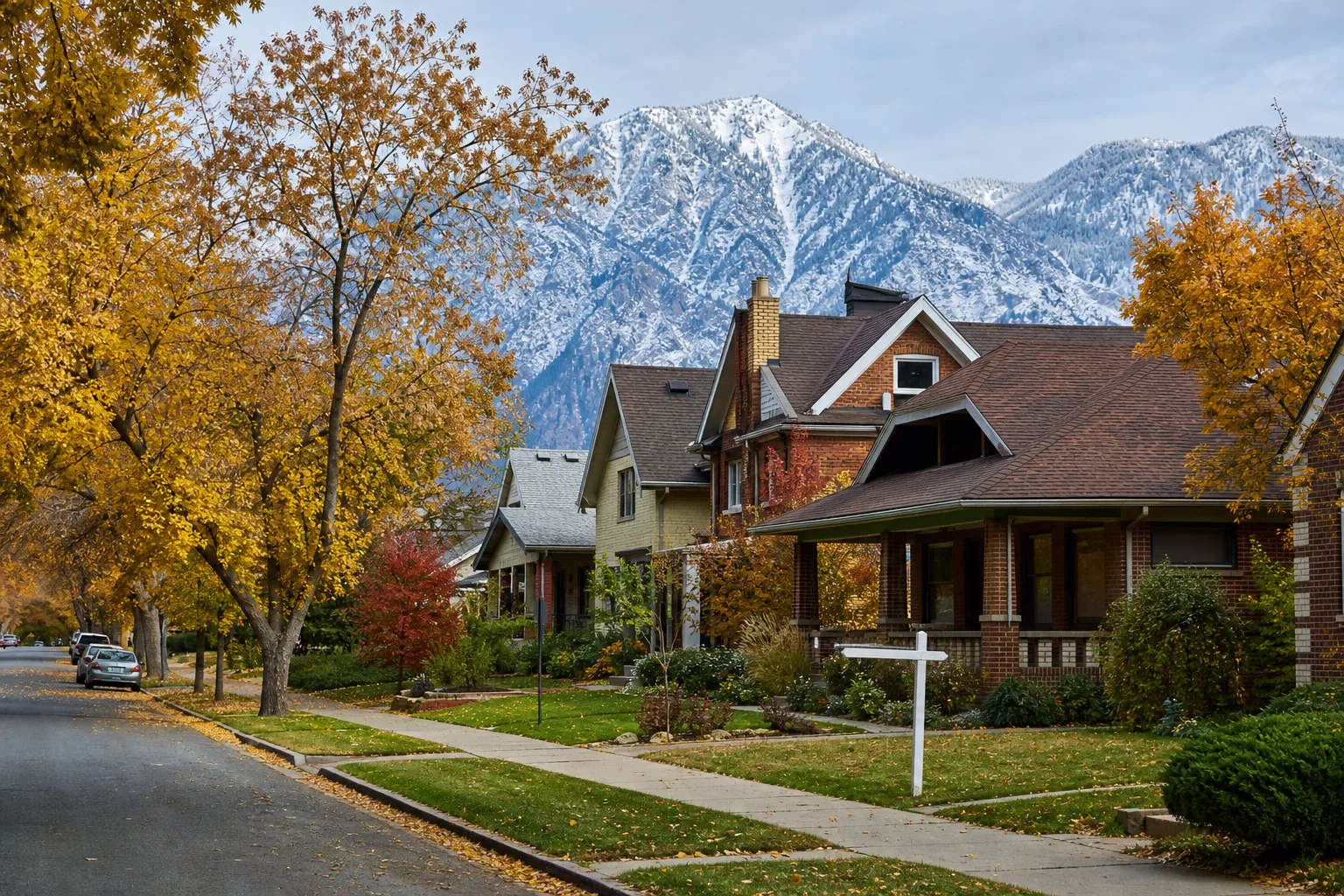
Home sales in the Salt Lake City metro area fell 22.5% in October 2026, representing the steepest decline of any major metropolitan area in Zillow's October market report. Despite the sharp drop in sales, home values in the metro area remained nearly flat, slipping just 0.2% over the past year.
Sales Drop Amid Rising Inventory
The slowdown in the Salt Lake City market coincided with rising mortgage rates and increased inventory. According to a report from Zillow released Nov. 5, 2026, home sales in the Salt Lake City metro—which includes Salt Lake and Tooele counties—dropped 22.5% compared to October 2025. This decline significantly outpaced the national drop of 8.7% reported by Zillow.
Data from Realtor.com's October housing report, released Nov. 4, 2026, indicated that the number of homes for sale in the Salt Lake City metro rose by 17.7% over the previous year. This increase in inventory occurred even as new listings in the metro area fell by 10.1% compared to last October. This trend suggests that while fewer owners are listing homes, properties are remaining on the market for longer periods.
One factor contributing to the increased inventory is the extended time homes spend on the market. The median Salt Lake listing had been on the market for 63 days in October, which is four days longer than the median time recorded in October 2025.
Resilient Home Values
While sales volume has decreased, property values in Salt Lake City have shown significant resilience. Zillow reported that the typical home value in the Salt Lake City metro was $554,250 in October, a slight decrease of 0.2% from a year earlier. This stands in contrast to the national trend where typical values rose by 0.7% over the same period.
Realtor.com data shows the median asking price in the Salt Lake City metro was $559,000, a 3.5% decrease from the previous year. This decline in asking price is partially attributed to a shift in the types of homes being listed; the asking price per square foot actually rose by 0.3%, suggesting that smaller and lower-priced homes may be making up a larger portion of the current listings.
The discrepancy between falling sales and stable values is explained by several market factors. According to Best Utah Real Estate, many homeowners in the region hold significant equity and possess mortgage rates well below 7%, which discourages them from selling if they cannot achieve their desired price. Additionally, the decrease in new listings—down 10.1% in the metro—has prevented inventory from swelling more rapidly despite the slower sales pace.
Impact of Mortgage Rates
Mortgage rates have played a central role in the recent market shift. Freddie Mac data, cited by Zillow, showed that the 30-year fixed mortgage rate averaged 7.33% in October, an increase from the 6.86% average recorded in September.
This rate hike has a direct impact on buyer affordability. For a home with a typical Salt Lake value of $554,250 and a 20% down payment, the monthly principal and interest payment rose from approximately $2,908 in September to $3,049 in October—an increase of about $140 per month.
Experts suggest that the Salt Lake City market is particularly sensitive to these fluctuations because the cost of housing remains high relative to local incomes. Zillow's chief economist, Mischa Fisher, noted the ongoing slowdown, stating that "next month is likely going to be the worst of it."
Utah Statewide Context
The Salt Lake City trends reflect broader patterns seen across the state of Utah. According to AgentCOS, Utah's statewide median list price in October 2026 was $575,000, a 1.7% decrease from a year earlier. The state's inventory rose by 8.5% to a total of 15,457 homes for sale.
In the Salt Lake City-Murray metro area, the median list price was $559,000, down 3.5%, with 4,030 homes for sale. This represents a 17.7% increase in inventory compared to last year. In comparison, the Provo-Orem-Lehi metro saw a slight decrease of 0.6% in homes for sale, and the St. George metro saw a 7.5% increase in inventory.
Utah's housing market also shows a significant difference in affordability compared to the national average. For the week of November 12, 2026, the 30-year fixed mortgage rate was 7.11%. For a median-priced Utah home of $575,000 with 20% down, the monthly principal and interest payment is approximately $3,094, compared to the U.S. median of $2,233.
Market Opportunities and Legislation
The current market environment offers different opportunities depending on whether a buyer or seller is looking to transact. In the Salt Lake City metro, 31.8% of listings featured a price cut, a figure higher than the 20.5% reported nationally by Realtor.com.
For buyers, the increased inventory and frequency of price cuts may provide more room for negotiation. Market analysis suggests that sellers of homes listed for 60 days or more may be particularly open to concessions, such as lower prices, closing-cost assistance, or rate buydowns.
In terms of legislative context, Utah recently saw a change in tax policy with the passing of SB 60, which cut the state's flat income tax rate to 4.45% for 2026. Additionally, a previous attempt to change how home sale prices are reported, known as H.B. 441, failed in March 2026.
Market Outlook
As the market moves into the winter months, the combination of rising mortgage rates and a growing supply of homes continues to shape the landscape for Utah residents. While the Salt Lake City metro has seen the most dramatic decline in sales volume, the stability in home values suggests a market that is adjusting to new interest rate realities.