Utah State University sites use cookies. By continuing to use this site you accept our privacy and cookie policy . I agree Skip to content Science & Technology Full Size Utah State University engineering professor Oenardi Lawanto received a National Science Foundation grant to study if AI tools strengthen or weaken engineering students' problem-solving skills. × Download Close Download Artificial intelligence is rapidly transforming how undergraduate students learn and make decisions. However, if AI is relied on too heavily, it can impede students’ ability to navigate problems on their own and improve their knowledge. Utah State University Professor Oenardi Lawanto received a grant of more than $600,000 from the National Science Foundation to study if AI tools strengthen or weaken engineering students’ problem-solving skills. “We cannot avoid AI, it's here,” Lawanto said. "People and industry use it, so we ought to find a way for students to use it to improve their learning.” Lawanto said a lot of universities are creating AI policies, but they're not based on research. The results of this Utah State study will serve as a data-backed blueprint on how educators, curriculum developers and policymakers can integrate AI into education to prepare engineers to work with it effectively and responsibly. Over the course of three years, researchers will use an AI-embedded tool on the learning management system Canvas to explore how undergraduate engineering students learn to balance their own judgement with AI assistance, how they develop trust in AI tools, when to rely on or challenge AI-generated outputs, and if they maintain ownership during AI-supported problem-solving. To study these objectives, 100-150 engineering students in their second and fourth years of undergraduate studies will complete the revised Physics Metacognition Inventory, a survey to understand their thought process when they’re problem-solving. Students will also take an open-ended survey in their second, third and fourth years for researchers to observe patterns in their self-regulation around AI when they’re solving engineering problems. At the end of the project, a small subsample of students will be interviewed to understand how their perceptions, decision-making processes and self-regulation have changed during the three-year study. Researchers will analyze the data to develop a model to explain how students' use of AI evolved over time. “We don’t know if it will have a negative or positive impact,” Lawanto said. “If we find that it’s mostly negative, the next question is how do we change that?” WRITER Libbie Anderson Public Relations Specialist College of Engineering 435-797-8361 libbie.anderson@usu.edu CONTACT Oenardi Lawanto Faculty Department of Engineering Education olawanto@usu.edu TOPICS Research 1150 stories Education 452 stories Engineering 412 stories Grants 280 stories Artificial Intelligence 40 stories SHARE Comments and questions regarding this article may be directed to the contact person listed on this page. Next Story in Science & Technology Mechanical and aerospace engineering Associate Professor Juhyeong Lee has been selected to receive the 2026 Pioneers of Progress Award. Read the Story See Also Whitney Walpole, a mechanical engineering student at ASPIRE, is discovering what it takes to answer real-world questions. Trending on Utah State Today Read the Story UNIVERSITY AFFAIRS Read the Story SCIENCE & TECHNOLOGY Read the Story UNIVERSITY AFFAIRS Read the Story BUSINESS & SOCIETY
Is AI Good or Bad for Preparing Engineers? A Utah State Professor Gets NSF Funding to Find Out
Official source This story comes from an official government or institutional source.
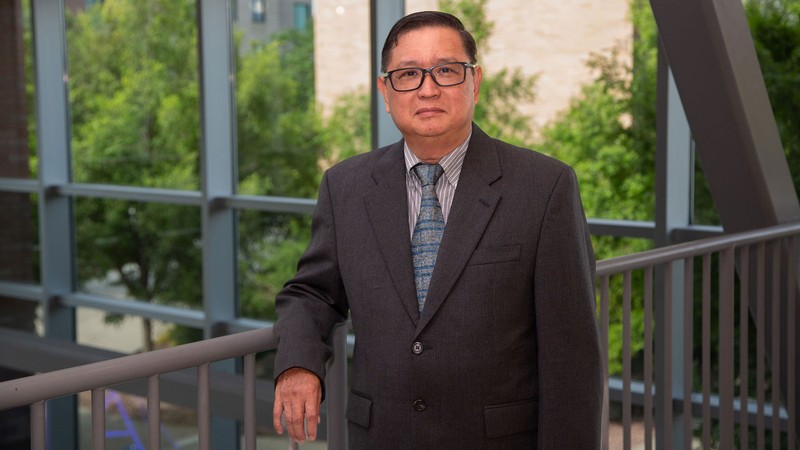
Photo via Source Author
Article details
CategoryOfficial Source
ToneNeutral