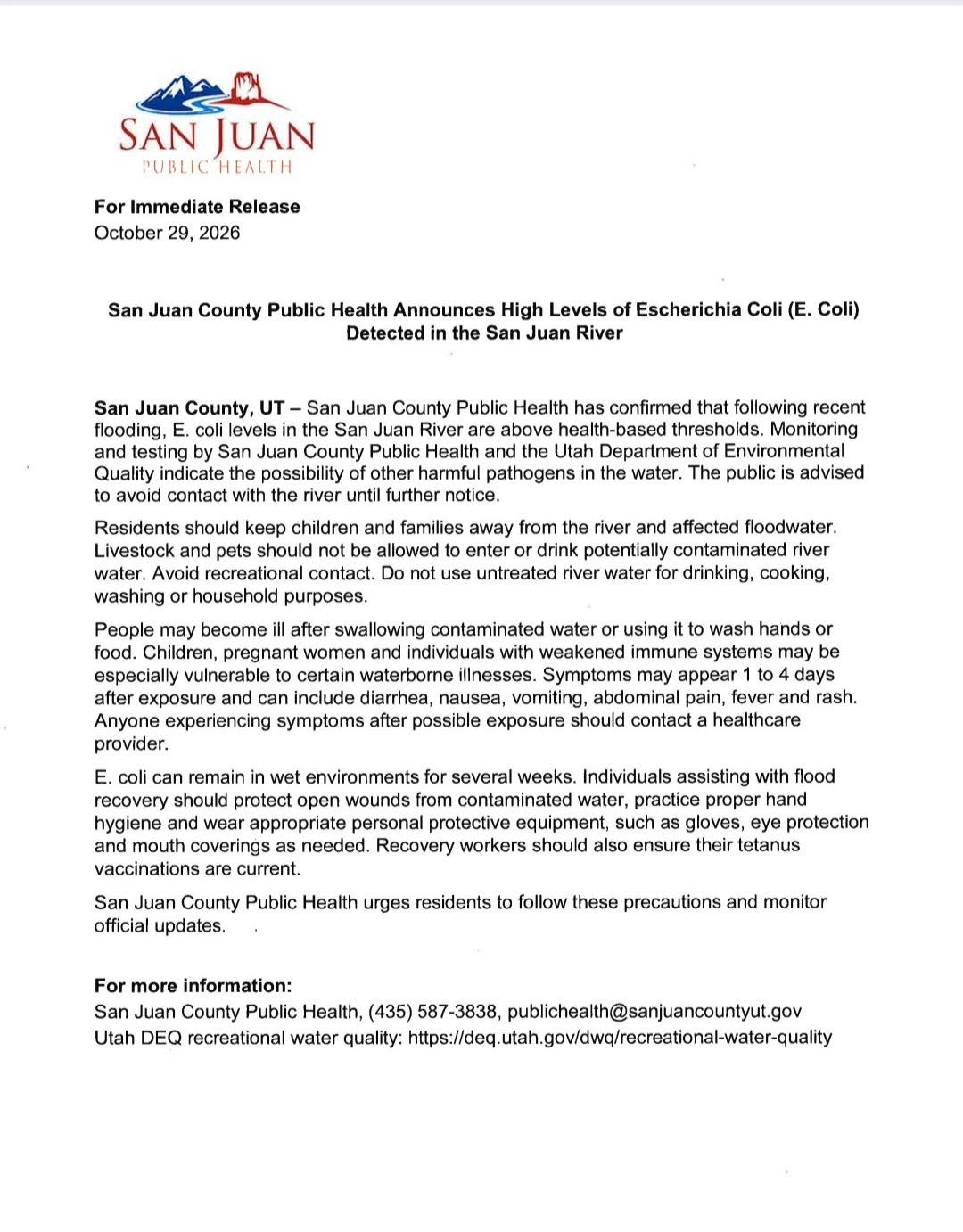
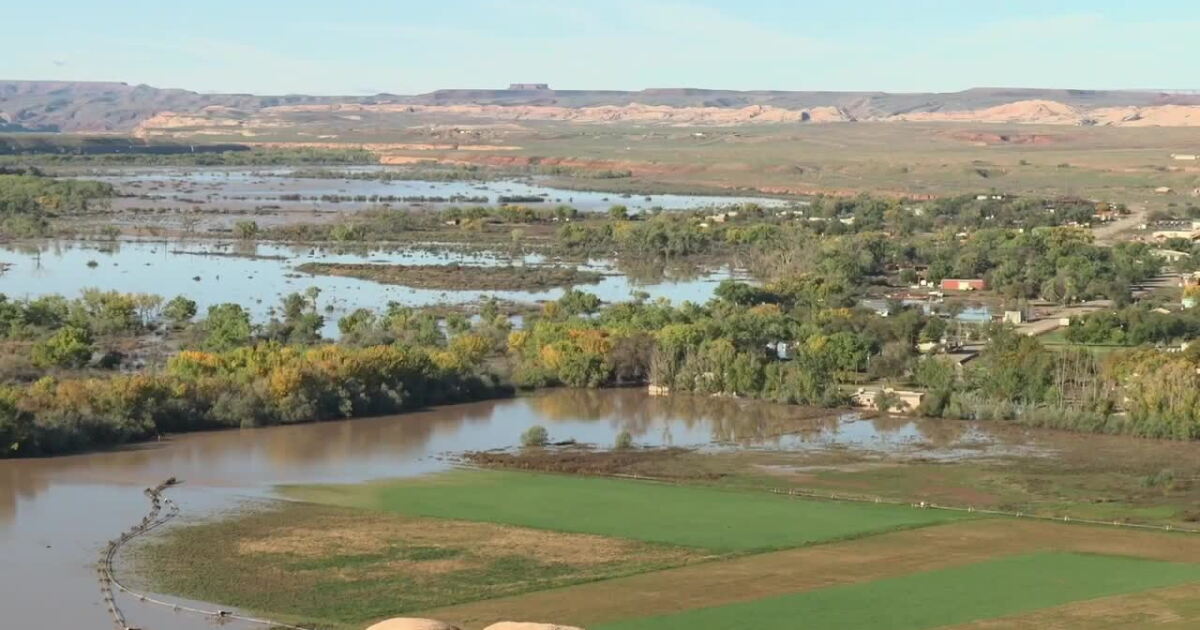
High levels of Escherichia coli (E. coli) have been detected in the San Juan River, according to an October 30 statement from the Utah Division of Emergency Management regarding a health alert from San Juan County Public Health. E. coli levels in the river are currently above health-based thresholds.
San Juan County Public Health advises the public to avoid recreational contact with the river and to keep children, families, livestock, and pets away from the river and affected floodwater. It is advised that untreated river water not be used for drinking, cooking, washing, or household purposes.
Officials noted that people and animals may become ill after swallowing contaminated water. Contaminated water should not be used to wash hands or food. Children, pregnant women, and individuals with weakened immune systems may be especially vulnerable to certain waterborne illnesses.
Symptoms of waterborne illnesses can include diarrhea, nausea, vomiting, abdominal pain, fever, and rash, appearing 1 to 4 days after exposure. Anyone experiencing these symptoms after possible exposure should contact a healthcare provider.
Because E. coli can remain in wet environments for several weeks, people involved in flood recovery should protect open wounds from contaminated water, practice proper hand hygiene, and wear personal protective equipment such as gloves, eye protection, and mouth coverings. Recovery workers should also ensure their tetanus vaccinations are current.
San Juan County Public Health is urging residents to follow these precautions and monitor official updates on the San Juan County Public Health Facebook page.