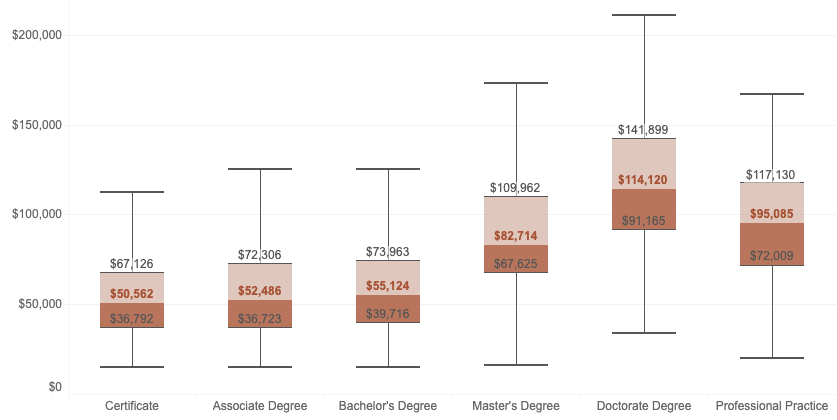
New data from the Utah System of Higher Education reveals that increased degree attainment consistently translates to higher annual wages and economic development for Utah graduates. The findings, released October 26, 2026, build upon foundational wage research maintained by the Utah Data Alliance since at least 2018.
Impact of Degree Attainment
The Utah System of Higher Education reported on October 26, 2026, that a graduate's field of study and level of attainment are critical factors in determining their economic outcomes. According to the organization, higher levels of education, such as moving from an associate to a bachelor's degree, are linked to increased annual wages and personal growth.
Institutional and Field Data
Data from the College Scorecard, which was last updated October 15, 2026, provides institutional-level data for the 1996-97 through 2025-26 academic years. This dataset includes aggregate information for each institution regarding student completion, debt, repayment, and earnings. Specifically, the scorecard offers field of study-level data for pooled award years between 2014-15 and 2019-20, allowing for a detailed look at cumulative debt and earnings one year after graduation.
Predicting Lifetime Earnings
When analyzing lifetime earning potential, the Utah Data Alliance notes that fifth-year wages serve as a more accurate indicator than first-year wages. While first-year wage information provides an initial indication of earning potential, the greatest fluctuations in income typically occur during the first years of full-time employment following graduation.
Data Methodology and Scope
The Utah Data Alliance maintains that the most recent cohort group available for five-year wage information includes graduates from the 2004-2006 period. This data is compiled by the Utah System of Higher Education — Office of the Commissioner through a partnership with the Utah Data Alliance. The information is derived from quarterly employer filings within the Unemployment Insurance database maintained by the Utah Department of Workforce Services.
Data Limitations
The reported wage data is subject to several limitations and specific parameters. The figures do not include individuals employed out-of-state who graduated from a Utah System of Higher Education institution, nor do they include Utah residents who did not graduate from a USHE institution. Additionally, the data excludes self-employed individuals, federal employees, military personnel, and those not considered part of the Utah workforce, such as stay-at-home parents.
Privacy and Reporting Constraints
To ensure data reliability and protect individual privacy, the Utah Data Alliance suppresses information for groups of 30 or fewer individuals within a specific field and degree level. Furthermore, the reported wages are limited to those between $3,480 and $1,000,000 per quarter. The data does not account for variables such as geography, specific individual circumstances, or current economic and regulatory conditions, nor does it include hours worked, hourly rates, or supplemental payments like stocks, tips, or bonuses.
Economic Outlook
As the Utah System of Higher Education continues to track graduate workforce outcomes, the connection between academic credentials and financial stability remains a central focus of the state's economic data collection. The ongoing synthesis of institutional data and employment records provides a framework for understanding the economic impact of higher education in Utah.