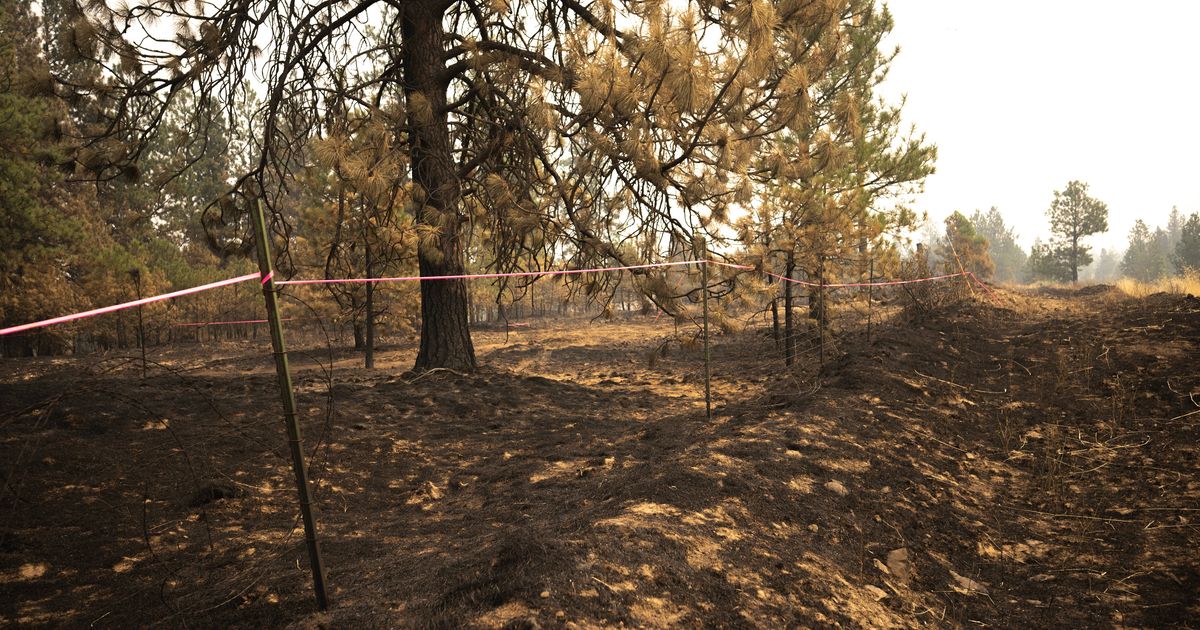
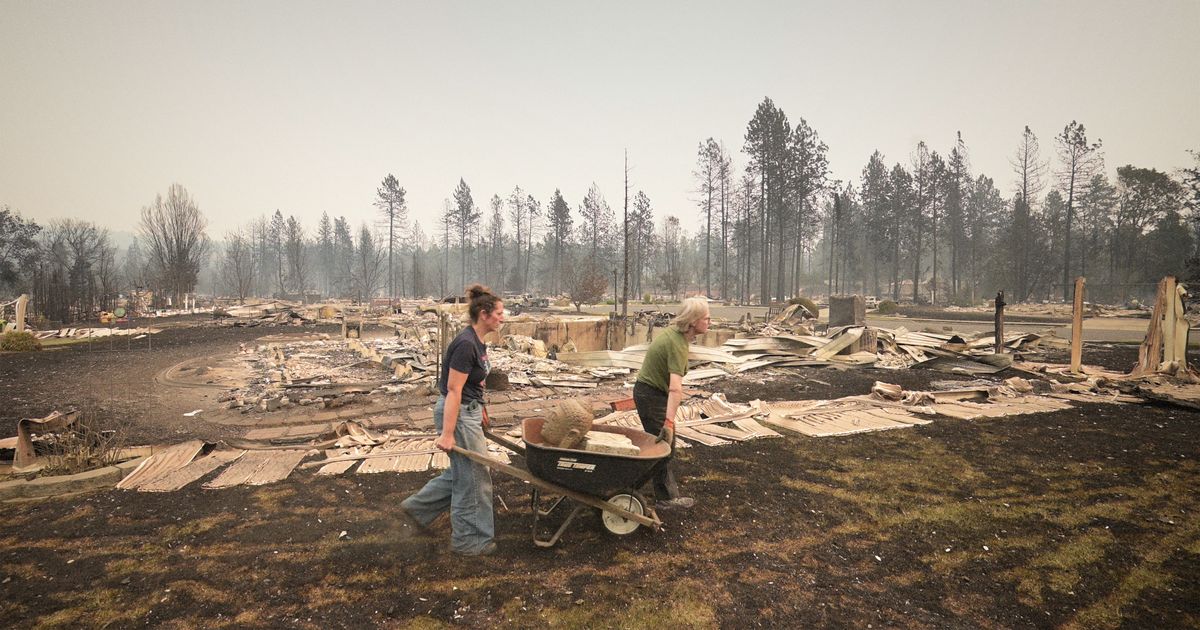
As millions of acres burn across the western United States, some wildland fire veterans are fearful that aggressive fire suppression tactics ordered by the Trump administration, combined with extreme and fast-moving blazes, could put firefighters in danger as conditions escalate this month.
Extreme weather conditions fueled a disaster in Eastern Washington on Saturday when a fast-moving wildfire jumped the Spokane River and swept through Spokane neighborhoods. The blaze destroyed more than 600 structures and forced 60,000 residents to evacuate. Incident Commander Tom Clemo stated the blaze is probably the largest and most destructive fire in Washington's history.
While no deaths have been reported in Spokane, Mayor Lisa Brown said the city is still assessing the potential for lives to be lost. Spokane Assistant Fire Chief Lance Dahl told the Spokane Spokesman-Review that no fire department in the U.S. can handle a wind-driven event of that size.
Leading up to the current fire season, federal officials with the U.S. Forest Service and the Interior Department directed crews to use a full suppression strategy to attack wildfires urgently. Federal land managers stated it was imperative to contain fires quickly following a hot, dry winter that left much of the West parched.
Following several dangerous incidents, including the deaths of four federal firefighters in Colorado in June, longtime wildland fire leaders are questioning this strategy. Many view it as a return to the Forest Service's decades-old 10 a.m. policy, which aimed to suppress all fires by the morning after they were reported.
Wildfire veterans expressed concern that rhetoric from Trump administration officials may be pressuring crews to use aggressive tactics to meet suppression goals. Riva Duncan, president of Grassroots Wildland Firefighters and a former wildland fire chief, noted that some feel pressured to deploy close to the fire line rather than choosing the safest location. Duncan stated it is disturbing when individuals in offices who have never fought fires direct direct attacks.
Bobbie Scopa, vice president with Grassroots Wildland Firefighters and a former firefighter with a 45-year career, noted that young firefighters feel pressure to take actions, which can lead to people getting hurt. Scopa also mentioned that the agency has already seen nine entrapments this year.
In April, Agriculture Secretary Brooke Rollins and Interior Secretary Doug Burgum sent directions to agency leaders calling for a full suppression strategy and prompt, decisive suppression. Rollins wrote that agencies should accelerate initial attack to suppress fires early and limit growth. Burgum added that decisions should be balanced with firefighter safety and an assessment of the probability of success.
Timothy Ingalsbee, executive director for Firefighters United for Safety, Ethics & Ecology, stated that the policy compelling crews to rush out and attack all fires is unsafe and ignores what has been learned about fire ecology and fire behavior. He suggested the policy is performative and fails to accomplish tangible goals while putting lives at risk.
State leaders in the Pacific Northwest have not yet seen evidence that federal directives are causing firefighters to take more risks. Oregon state forester Kacey KC said the state's landscape is too parched this year to safely manage fires for ecological benefits.
Washington state forester George Geissler cautioned that federal leaders should be careful with their rhetoric regarding safety. Geissler noted that the federal leadership has faced challenges including severe staff reductions, a major reorganization within the Forest Service, and the establishment of the U.S. Wildland Fire Service by President Trump without congressional approval. He noted that these rapid changes and the loss of personnel have made the leadership structure feel scattered.