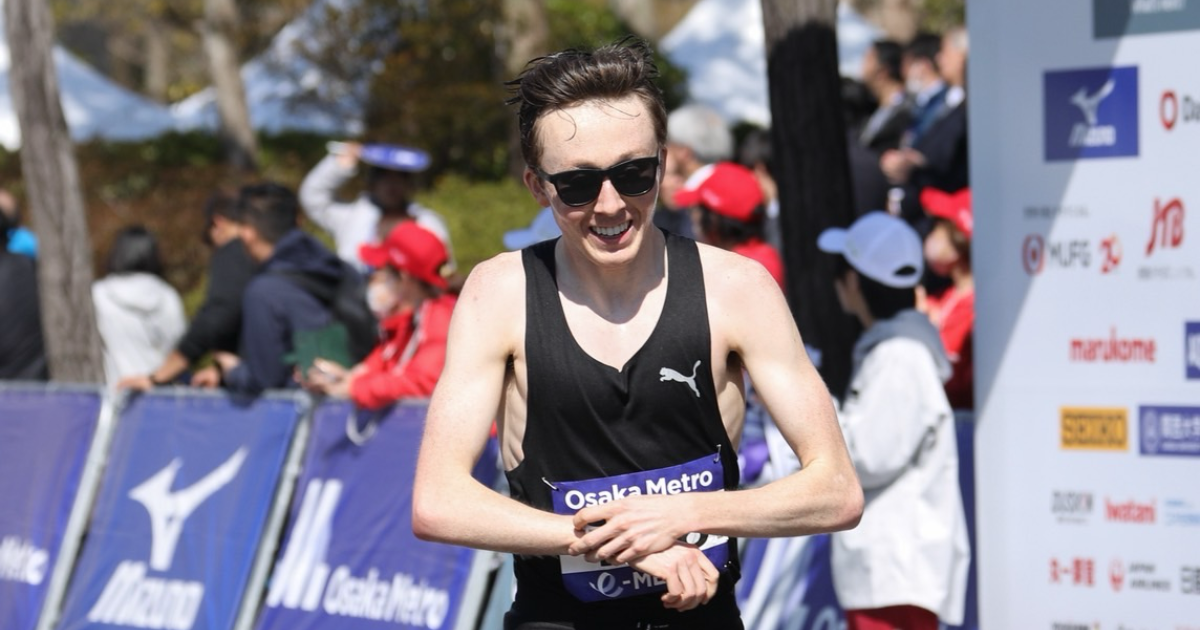
Ethan Shuley has emerged as one of the most surprising figures in American marathon running following his performance at the Osaka Marathon. By clocking a 2:07:14, Shuley secured the seventh-fastest time ever recorded by an American on a record-eligible course, placing him behind only Conner Mantz, Khalid Khannouchi, Zouhair Talbi, Galen Rupp, Ryan Hall, and Biya Simbassa on the U.S. all-time list.
Shuley's path to this achievement is marked by significant transitions, moving from a high school standout in Kentucky to a period of competitive absence during a Mormon mission in Ukraine, and eventually to self-coached training in Japan.
Before his recent success, Shuley's running career faced numerous interruptions. After competing for BYU, where injuries including Achilles tendonitis limited him to just one race in a university uniform, he decided to leave competitive running altogether. Following his mission in Ukraine, he relocated to Tokyo in 2023 for work and film school with no immediate plans to run professionally.
Initially focused on trail races and ultramarathons due to the influence of athletes like David Goggins and Courtney Dauwalter, Shuley's training eventually shifted back toward road racing. His progression included a sub-15:00 5K, a 2:20 marathon in Nara, and a 2:18 performance at the Nagano Marathon. He noted that improvements in strength training, nutrition, and footwear, such as switching to the PUMA Fast-R 3s, played roles in his development.
During his time in Japan, Shuley worked as a Coordinator of International Relations in Kobe through the JET Program. While his recent marathon performance has brought significant attention to his name, he remains focused on incremental goals, stating that he prefers to take his racing one event at a time.
As Shuley continues to compete in the Japanese racing circuit, his performance has sparked discussions regarding the depth of American marathon talent and the potential for success at the 2028 U.S. Olympic Marathon Trials. While he has expressed a desire to compete in major marathons, he remains committed to finding success within the highly competitive Japanese racing culture.