November 11th, 2026 One Year as Chief: Jeremy Robertson on Leading the Department He Grew Up In
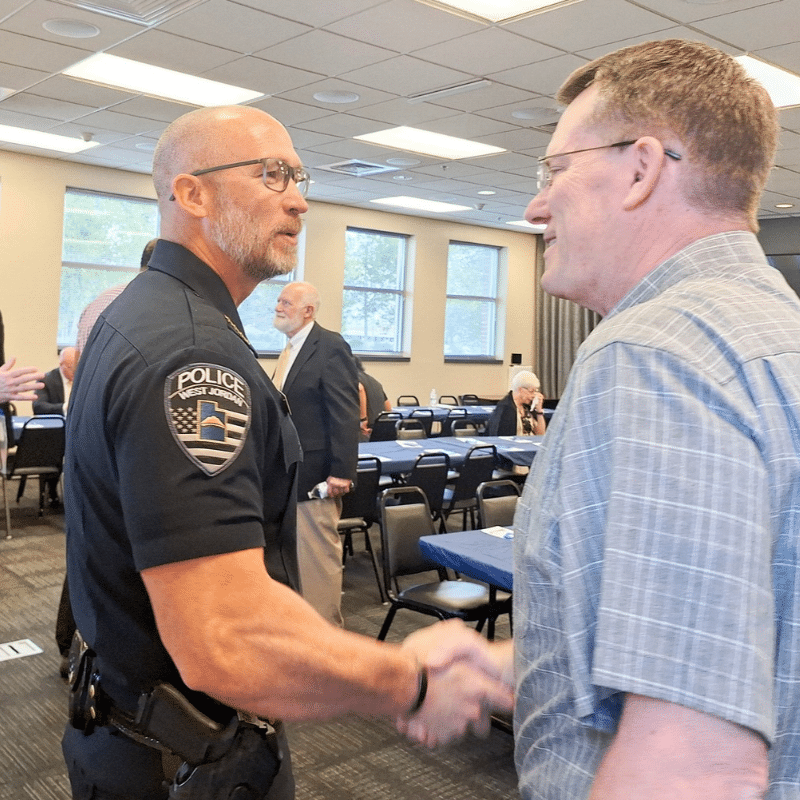
On November 18, 2025, Jeremy Robertson took the oath of office as West Jordan’s Police Chief. Now, one year into the job, Chief Robertson reflects on what’s changed, what he’s proud of and where the department is headed.
A Career Built in WJPD
Chief Robertson isn’t new to the West Jordan Police Department. He spent most of his career here, including eight years in the training division and time as deputy chief under former Chief Ken Wallentine.
“I feel lucky to be in an agency that I grew up in, so to speak, because I understand the dynamics of the agency,” he said. “But it’s also been a lot more different than what I expected.”
The biggest surprise was the shift in perspective. As deputy chief, his job was to support the chief and fill in wherever he was needed. As chief, he has to decide where his own skills and perspective add the most value.
“It’s not the same as any other chief before, because I have a different set of skills,” he said. “Trying to figure that out was a bigger change than I expected.”
That question doesn’t go away with time. “There’s always a new challenge,” he said. “That’s one of the things about police work that’s always appealing or challenging, or both.”
Right now, one of those challenges is technology: finding new tools that bring real value to the department, “but also with the right guardrails and in a responsible way.”
Training for the Moments That Matter
The police department has had a busy year, with major cases solved, a new chaplain program, ten awards for its K9 teams at the Bradley Taylor Police Memorial K9 Trial, and public outreach events that continue drawing crowds. When asked what he’s most proud of, Chief Robertson pointed to training.
Under his direction, the training unit now focuses more on high-risk, low-frequency, high-stress scenarios. These are the situations where officers have almost no time to process before they have to react.
“It’s hard to recreate those scenarios in training,” he said. “So almost every training that we do starts with some type of a scenario that’s meant to simulate that.”
The payoff goes beyond emergencies. “That helps our officers respond safer, but it also helps them remain calm in normal situations,” he said. “We’ve seen a change, I think, in how we’re interacting with people during moderately stressful to high-stress situations.”
Investing in the Next Generation of Leaders
Chief Robertson has also made leadership training a priority, especially for sergeants.
“They’re the future of our department,” he said. “They’re the ones who really set and reinforce the culture that we want here.”
Newly promoted sergeants now go through a formal training program, and many attend leadership training outside the agency to bring fresh ideas back to West Jordan.
One of his first steps as chief was to invite the whole department into a conversation about the qualities it hires and promotes for. Under Chief Wallentine, the department built a strong set of qualities, and Robertson helped shape them as deputy chief. As the new chief, he wanted every employee to see those values as their own.
“If they’re going to be things that we’re looking to hire for and promote for, then everyone should have a say in those,” he said.
He asked employees across the department what qualities they value most, then built their input onto that existing foundation. The result now guides the department’s hiring goals and the values it aspires to.
“It’s amazing the work that gets done every day,” he said. “But that starts with who we hire, who we promote, and the values that we teach here. And by ‘we,’ I mean everybody teaches it by the example that we set for each other.”
The goal is a department people want to stay in. “It’s those long-term relationships that police officers have with the community, with each other and with the city that make a difference.”
“You Matter Like I Matter”
“You matter like I matter” comes from training the police department adapted from the Arbinger Institute. The idea is simple: see every person, whether a coworker, a resident or a driver at a traffic stop, as someone whose needs and challenges matter just as much as your own. It started as a pillar of the police department and has since been adopted across the City.
For Chief Robertson, it’s personal. He was one of the first four officers sent to get the training and bring it back to West Jordan.
“It was going to be a big change, and I was skeptical about it,” he admitted. “But after going through it and recognizing the value that it has for everybody, but especially for police officers, I feel really attached to it.”
He’s seen the department change a lot over his career, “but never so much as it did at that point,” he said, when the agency adopted a shared mindset, common terminology and a clear direction.
“That made us better officers,” he said. He’s committed to keeping it as the department’s motto: “the mindset that people who succeed here will demonstrate over and over again.”
Why Painting Pumpkins with Police Matters
Events like Painting Pumpkins with Police reliably draw big crowds, and Chief Robertson says they’re central to the department’s work, not a side project.
“The connections that we make during those events really allow us to do our jobs better,” he said. “When people trust the police, they’re more likely to cooperate. They’re more likely to report a crime.”
The goal is for residents to feel safe and secure in their homes, neighborhoods and workplaces. That feeling is hard to build when the only time residents meet an officer is during a crisis, after they’ve been victimized, or during a traffic stop.
“If they know that the men and women who are protecting them are people who care about them, they’re going to feel that way,” he said. “The best way to do that is during non-enforcement activities, which is why that will continue to be something that we grow and make a priority.”
Looking Ahead: Growing Responsibly
West Jordan will keep growing, and Chief Robertson wants the department to grow responsibly. His priorities for the coming year:
Technology that puts safety first. That means community safety and officer safety first, then efficiencies that make officers’ time more valuable.
Data-driven enforcement. Officers use data on where crashes and crimes are happening to spend time in those areas and reduce the impact, while making sure the data comes from the right sources and is accurate.
Hiring the right people.
“Never”
Did Chief Robertson ever picture himself as police chief?
“Never,” he said. “In fact, I remember my comment was often that I would never want to be more than a sergeant, or maybe a lieutenant at the very highest.”
He thinks that may have helped. “Sometimes the desire to go that high gets in the way,” he said. “I wasn’t focused on that. I was just focused on doing a good job.”
What a Year Taught Him
The biggest lesson of the year? “I am better at communicating than I thought.”
He recalled a town hall he thought he’d be attending alone. When he arrived, the room was full and the media was there. He was asked to join a panel of law enforcement professionals and answer questions on the spot.
“It was not what I planned for at all,” he said. “The feedback I got was really positive. That’s something that 10 years ago I probably would have had to step back from.”
He credits “You matter like I matter” for teaching him that everyone has challenges and sees things much the way you do.
It ties back to the question he started the year with: where can he, as chief, make the biggest difference?
“Right now, as chief, that’s my focus,” he said. “Making sure that I’m communicating to our staff where the department’s going and what our values are, and then communicating to the community that same message, so that they know that their police department’s here for them.”