The Church of Jesus Christ of Latter-day Saints officially launched its 2026 Light the World initiative on Tuesday, marking a decade of the Giving Machine program. The initiative, which has expanded from a single location in 2017 to 145 kiosks across 28 countries, has raised approximately $70 million for various charities since its inception.
A Decade of Giving
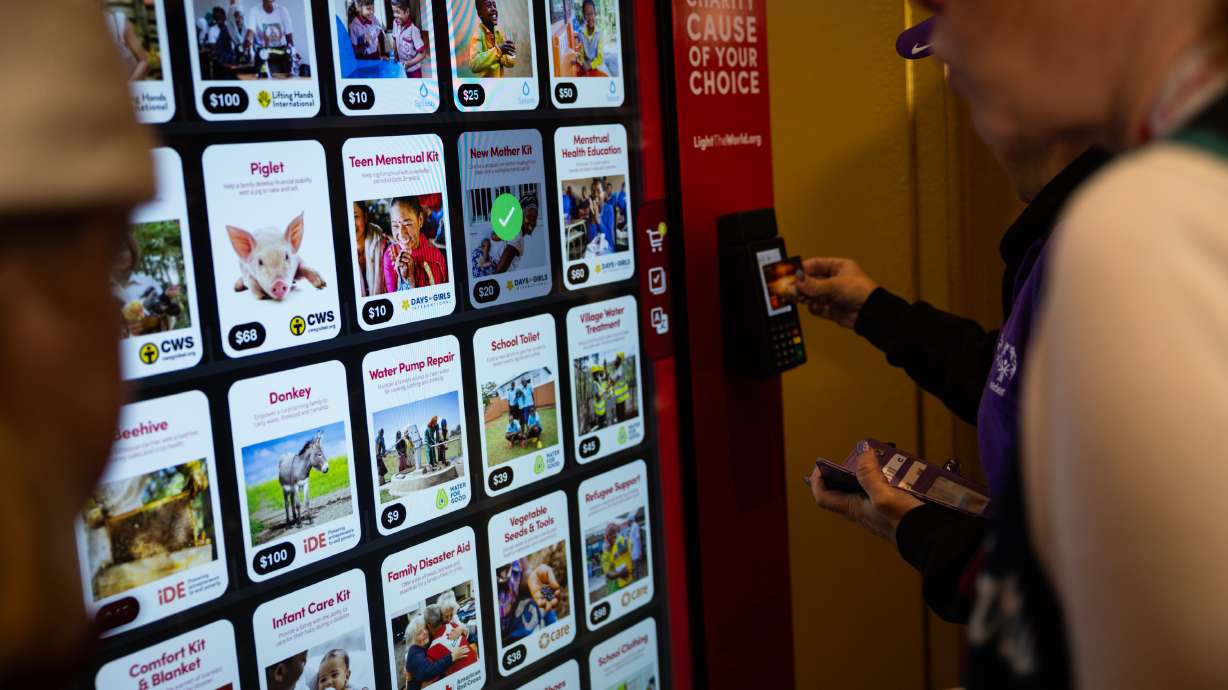
The launch event, held Tuesday in the lobby of the Church Office Building on Temple Square in Salt Lake City, highlighted the growth of the vending machine-style kiosks. These red machines allow donors to purchase specific items—such as meals, medical care, school supplies, or even livestock—to be donated to people in need through participating nonprofits.
Global Expansion
Sister Tamara W. Runia, first counselor in the Young Women General Presidency of The Church of Jesus Christ of Latter-day Saints, noted that the program began in November of 2017 with just one Giving Machine location in Salt Lake City. By 2026, the initiative has reached 145 locations across six continents, which officials described as the most ever.
New Locations and Reach
The 2026 initiative includes 25 new locations. New participating countries this year include Bolivia, Colombia, Ecuador, Hungary, Paraguay, Peru, South Korea, Taiwan, and Uruguay. In Peru, the program will utilize a mobile Giving Machine—a truck designed to travel throughout cities to reach more communities.
Impact on Communities
During the event, the director of Adra Peru spoke via video to discuss how donations will assist families facing difficulties following floods and heavy rains. These contributions are intended to provide safe water, hot meals, and dengue protection kits. Similarly, Miriam Murdoch, a development officer with Lifting Hands International, highlighted the impact of the machines by describing how livestock, such as goats, provides essential food and income for families in refugee camps like those in Uganda.
Partnering with Nonprofits
Elder Jeremiah J. Morgan, assistant executive director of the missionary department, stated that more than 500 nonprofit organizations have partnered with the church to place items in the machines. He noted that the machines offer diverse opportunities, including the ability to donate items like chickens, pigs, and goats to help individuals build self-reliance.
Participation Statistics
The scale of the program is reflected in its historical participation data. Since 2017, the initiative has seen approximately 3.5 million people visit the machines. In 2025 alone, nearly 1 million people visited kiosks and purchased approximately 4.8 million items. Additionally, more than 45,000 volunteers were required to staff the machines last year.
Service and Mission
The Church of Jesus Christ of Latter-Saints covers all operating costs for the initiative, ensuring that 100% of every donation goes directly to participating nonprofits without the church receiving any financial benefit. Elder Peter M. Johnson, assistant executive director of the missionary department, encouraged participants to act as peacemakers in their communities by inviting others to join the service efforts.