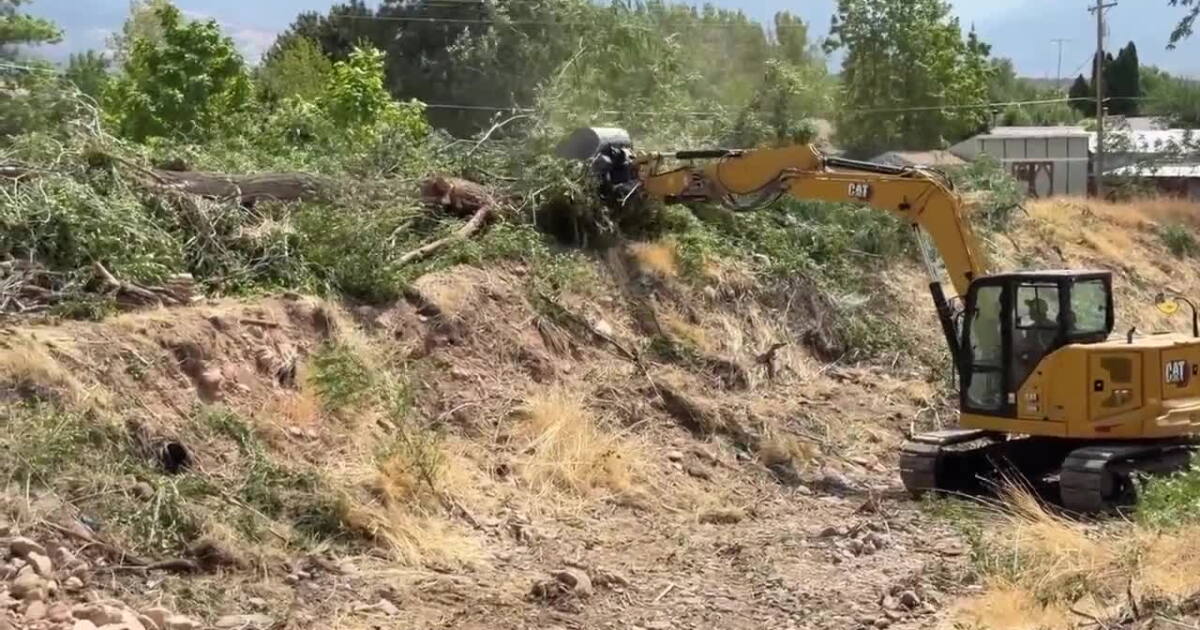
Four people remain displaced as the Little Horse wildfire in Duchesne County reached 50% containment on Aug. 6, 2026. The fire, located southwest of Fruitland, has burned more than 100 acres and remains active despite progress made by firefighting crews.
Firefighting Progress and Personnel
Firefighters have made progress on the Little Horse fire, according to an Aug. 6 update from Utah Fire Info. The fire has reached 50% containment, though its total acreage remains unchanged from previous estimates.
As of Aug. 6, 85 personnel were assigned to the incident. The workforce includes two hand crews, a State Task Force, and various federal resources. Crews have been focused on constructing hand lines and installing hose lays around the perimeter to secure the area.
Evacuations and Fire Behavior
The fire has exhibited varying behavior over the last several days. On Aug. 5, 2026, Utah Fire Info reported that the fire laid down overnight, which allowed firefighters to make significant progress.
Despite the progress, evacuation orders remain in effect for several areas. These include Avintaquin Canyon to the Strawberry River and Morning Star Ranch. As of Aug. 5, 2026, four evacuees remained displaced due to the blaze.
Statewide Drought Emergency
The Little Horse fire is occurring against a backdrop of severe environmental stress in the region. On May 21, 2026, Governor Spencer J. Cox issued an executive order declaring a statewide state of emergency due to extreme drought conditions.
This declaration was prompted by the warmest winter on record and the lowest snowpack levels ever recorded in Utah. The Governor noted that snowpack peaked about three weeks early and was the lowest recorded since 1930.
Governor Cox stated that snowpack provides 95% of Utah's water supply, but the recent supply fell far short of state needs. He noted that while reservoirs remain at 70% capacity due to management during wetter years, those reserves are being drawn down rapidly.
Drought Impact on Utah Counties
The state of emergency declared in May 2026 activated the state Emergency Operations Plan. It also directed the state Drought Response Committee to review hardships caused by the drought and recommend necessary actions.
At the time of the declaration, all 29 Utah counties were in severe drought, with 22 counties experiencing extreme drought conditions as defined by the U.S. Drought Monitor. Governor Cox urged residents to treat water as a precious resource, noting that while the state cannot control the weather, it can control the tap.
National Forest Safety Closures
The Uinta-Wasatch-Cache National Forest has maintained several alerts and closures to ensure public safety during periods of high fire danger and severe weather.
Forest orders include restrictions on camping and specific closures to prevent resource damage and protect critical watersheds. For example, the Guinavah-Malibu Campground area and all its roads were closed to provide for public health and safety during reconstruction efforts.
Additionally, the forest has implemented closures in areas like Deer Hollow to address hazards such as standing hazard trees, unstable soils, and burned trail structures. Other closures include the Wheatgrass Road and Wheatgrass Trailhead to facilitate roadway construction activities.
Ongoing Weather Risks
Weather conditions continue to influence fire risk across the region. Forecast data indicates that hot, dry weather and increasing winds may allow elevated wildfire conditions to return to the northern Intermountain West.
In the West, dangerous heat is expected to intensify. Officials continue to advise the public to avoid the area of the Little Horse fire and to follow all instructions from local officials as conditions change.