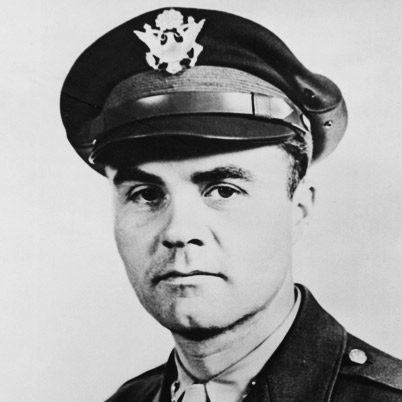
The historical legacy of Paul Tibbets remains a subject of intense debate decades after the 1945 atomic bombing of Hiroshima, a mission involving extensive training conducted in the Utah desert. Tibbets, who rose to the rank of brigadier general in the United States Air Force, piloted the Enola Gay during the mission that dropped the first atomic bomb in the history of warfare.
Rise Through the Air Force Ranks
Tibbets's path to the Hiroshima mission was marked by significant military distinction and specialized training. After receiving his basic flight training at Randolph Field in San Antonio, Texas, in 1937, he quickly ascended the ranks to become the commanding officer of the 340th Bombardment Squadron of the 97th Bombardment Group. His reputation as one of the premier pilots in the Army Air Force grew through several high-profile missions. In August 1942, he led the first American daylight heavy bomber mission over occupied France. Shortly thereafter, he was selected to fly Major General Mark W. Clark from Polebook to Gibraltar in preparation for Operation Torch, and he later flew Supreme Allied Commander Lieutenant General Dwight D. Eisenhower to Gibraltar.
The Manhattan Project and the 509th
In February 1943, Tibbets returned to the United States to assist in the development of the B-29 Superfortress bomber. His involvement in the most sensitive military operations of the era intensified on September 1, 1944, when he met with Lt. Col. John Lansdale, Captain William S. Parsons, and Norman F. Ramsey to receive a briefing regarding the Manhattan Project. Following this briefing, Tibbets was selected to lead the 509th Composite Group, a self-contained organization of approximately 1,800 men tasked with the responsibility of dropping the first atomic bomb on Japan.
Secret Training in the Utah Desert
The preparation for the atomic mission was centered in Utah's West Desert, where the 509th Composite Group trained extensively from September 1944 until May 1945. During this period, Tibbets and his crews practiced dropping large dummy bombs modeled after the shape and size of the actual atomic bombs to prepare for the mission in Japan. While the specific purpose of the 509th's presence at Wendover Air Base remained a top-secret mission during the training period, the crews utilized the desert landscapes to perfect their bombing techniques on mockups of cities and battleships.
A Mission Defined by Secrecy
The details of the mission reveal a high level of secrecy maintained even among the personnel involved. In December 1944, the focus of the Wendover operations shifted toward the 509th. At that time, approximately 1,500 men were working toward a mission they did not fully understand, and technicians working on the bomb components were also kept in the dark. For much of the training period, Colonel Tibbets was the only person in the 509th Composite Group who understood the entirety of the mission.
The Hiroshima Mission and Aftermath
The mission reached its culmination on August 6, 1945. After naming his B-29 Enola Gay after his mother on August 5, Tibbets and his flight crew departed North Field at 02:45 the following morning. At 08:15 local time, the Enola Gay dropped the atomic bomb code-named "Little Boy" over Hiroshima. The explosion destroyed 4.7 square miles of the city and killed between 70,000 and 80,000 people instantly. An additional 100,000 or more people died in the following months due to radiation and other injuries caused by the blast.
End of the War and Lasting Controversy
The impact of the bombing extended beyond the immediate casualties. Three days after the Hiroshima strike, another crew dropped an atomic bomb on Nagasaki, repeating the devastation. These events led to the formal surrender of Japan on August 14, 1945, effectively ending World War II. While the mission was viewed by many supporters as a heroic act that ended the war, it also made Tibbets a polarizing figure. To his detractors, he was seen as a war criminal responsible for the deaths of thousands of Japanese civilians.
Postwar Career and Death
Following the war, Tibbets continued a distinguished military career. His organization was transferred to what is now Walker Air Force Base in Roswell, New Mexico, where it remained until August 1946. During this time, he participated as a technical adviser for Operation Crossroads. Tibbets also served as a director of the Strategic Air Division at the Headquarters U.S. Air Force after graduating from the Air Command and Staff School in 1947. He retired from the United States Air Force on August 31, 1966, and died in Columbus, Ohio, on November 1, 2007.