Salt Lake City is preparing for a significant shift in road construction strategy, moving away from major infrastructure overhauls to focus on smaller neighborhood projects. The change follows the completion of the 600 North/700 South project and comes as the city prepares to meet requirements from Senate Bill 242 by the start of 2027.
Shifting Construction Priorities
The transition follows a period of intensive construction across the city. Since 2020, Salt Lake City has undertaken several large-scale projects, including a 200 South downtown revamp and infrastructure overhauls in the Sugar House area. Many of these projects were funded by a 2018 Salt Lake City bond that has since been exhausted.
Lynn Jacobs, Salt Lake City's transportation director, noted that the high volume of work has led to significant construction fatigue among residents. This fatigue, combined with upcoming state mandates, is driving the city toward a different approach. While major projects are slowing, some large-scale work remains planned, such as sections of 300 West and 200 West for the downtown sports, entertainment, culture, and convention district.
Compliance with SB242
Under the requirements of SB242, passed by the Utah Legislature this year, Salt Lake City must comply with new regulations regarding the management of certain roads. The law requires the Utah Department of Transportation (UDOT) to study the impacts of city road projects, a study that concluded while acknowledging construction fatigue but finding minimal impact on traffic flow.
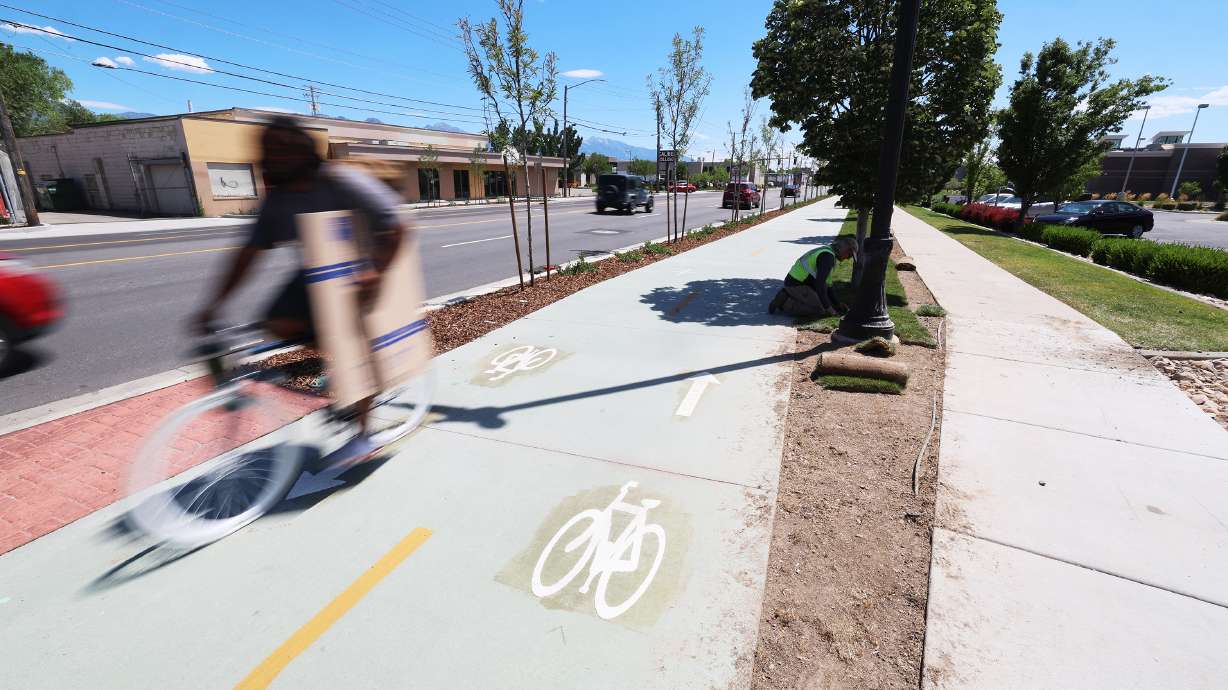
The legislation grants UDOT increased oversight on the city's busiest roads and requires the mitigation of impacts from recent bike lane and trail projects along 200 South, 300 West, and 400 South. To manage this, the city has unveiled an updated capacity routes map that categorizes streets into four tiers for future construction involving traffic calming or lane reductions.
Tiered Roadway Management
The city's updated capacity map establishes four distinct tiers for future projects:
Tier 1 includes large segments of North Temple, West Temple, State Street, Redwood Road, and Columbus Street, along with portions of 100 South, 300 West, 400 South, 500 South, 600 South, 700 East, 800 South, and 2100 South. On these roads, the city can conduct safety projects but cannot affect traffic flow.
Tier 2 includes streets such as Main Street, 200 South, 400 West, 500 East, 900 West, 1300 East, 1700 South, and 2100 East. Projects on these roads may affect traffic flow but require UDOT approval and analysis.
Tier 3 includes local routes like 300 South, 300 East, 400 East, 600 East, 700 South, 800 East, and portions of 1100 East. For these, the city must provide a traffic analysis, though UDOT approval is not required.
Tier 4 covers residential roads, which are not included on the map and are not affected by the bill.
Ordinance Repeal and Alignment
In addition to the capacity map, Salt Lake City officials are seeking City Council approval to repeal the city's 2010 'complete streets ordinance.' The ordinance, which was designed to increase bicycle and pedestrian ways on every street, now conflicts with current state law.
Tammy Hunsaker, director of Salt Lake City's Department of Community and Neighborhoods, stated that while the city considered narrowing the ordinance to fit Utah law, it was determined that a uniform policy would be less confusing for residents and planning staff. Hunsaker said the city intends to uphold the spirit of the original plan through a future bicycle and pedestrian plan that aligns with state requirements.
Addressing Local Concerns
The city is also preparing to address specific concerns raised by council members regarding state oversight and safety. Councilwoman Victoria Petro expressed concerns regarding oversight following an incident on 1700 South involving a 6-year-old boy.
To mitigate the impact of recent projects, city officials suggested implementing new signage, improving clarification for delivery vehicles, and enhancing signal timing. The city also plans to increase business outreach to manage local concerns and will continue to work with emergency responders on future infrastructure designs.
Council Meeting Agenda
During a formal meeting on Tuesday, Nov. 10, 2026, the Salt Lake City Council considered several grant applications and resolutions. These included a request for a 2027 Transit Innovation Grant to increase ride-hailing capacity for the anticipated five million visitors expected for the Temple Open House Celebration in 2027. Other items included various justice, outdoor recreation, and firefighter support grants.