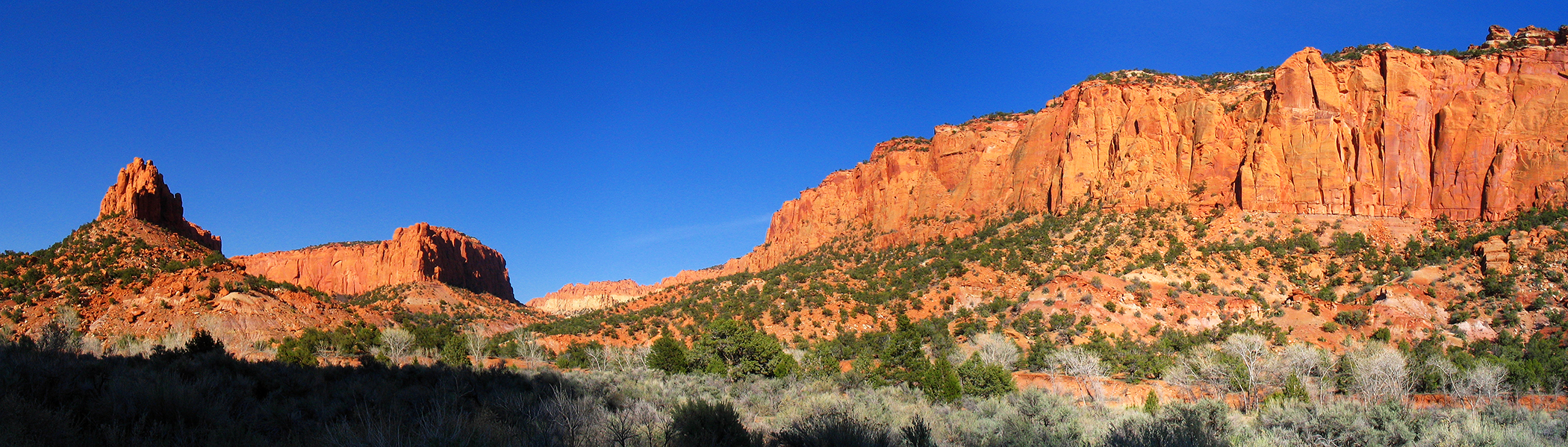
Three Tribal Nations filed a lawsuit in the U.S. District Court of Columbia on November 18, 2026, challenging the federal government's attempt to revoke the Grand Staircase Escalante National Monument. The Kaibab Band of Paiute Indians, the Paiute Indian Tribe of Utah, and the Ute Mountain Ute Tribe are suing President Donald Trump, Interior Secretary Doug Burgum, and Bureau of Land Management Director Steven Pearce to contest the revocation.
The legal action challenges a July 2026 proclamation issued by President Trump that attempts to shrink the Grand Staircase from 1.9 million acres to approximately 181,000 acres, which is about 10% of its original size. NARF Deputy Director Matthew L. Campbell stated that the Antiquities Act of 1906 allows the president to declare national monuments but does not grant the power to revoke existing ones, arguing that such power resides with Congress. The lawsuit seeks to prevent the administration from stripping nearly two million acres from Tribal Nations and to preserve access to sacred ceremonial spaces.
Chairman Roland Maldonado of the Kaibab Band of Paiute Indians said the sacred lands hold plant medicines, cultural resources, and histories that the Tribes are required to protect for future generations. Maldonado stated that the Grand Staircase is inseparable from their culture, history, and identity. Chairwoman Laurel Yellowhorse of the Paiute Indian Tribe of Utah noted that the land is where citizens travel to pray and gather plants and medicines necessary for religious ceremonies, and she emphasized that these are sacred lands rather than potential mining sites.
The Grand Staircase Escalante landscape has been part of the ancestral homelands for the Kaibab Band of Paiute Indians, the Paiute Indian Tribe of Utah, and the Ute Mountain Ute Tribe since time immemorial. President Trump has made two attempts to revoke the monument's designation via proclamation. A 2017 proclamation sought to shrink the area by 860,000 acres to allow for oil and gas drilling, mineral mining, and off-road vehicle use. While President Biden restored the monument to its original boundaries in 2021 through Proclamation 10286, the recent 2026 effort seeks to significantly reduce the protected acreage.


