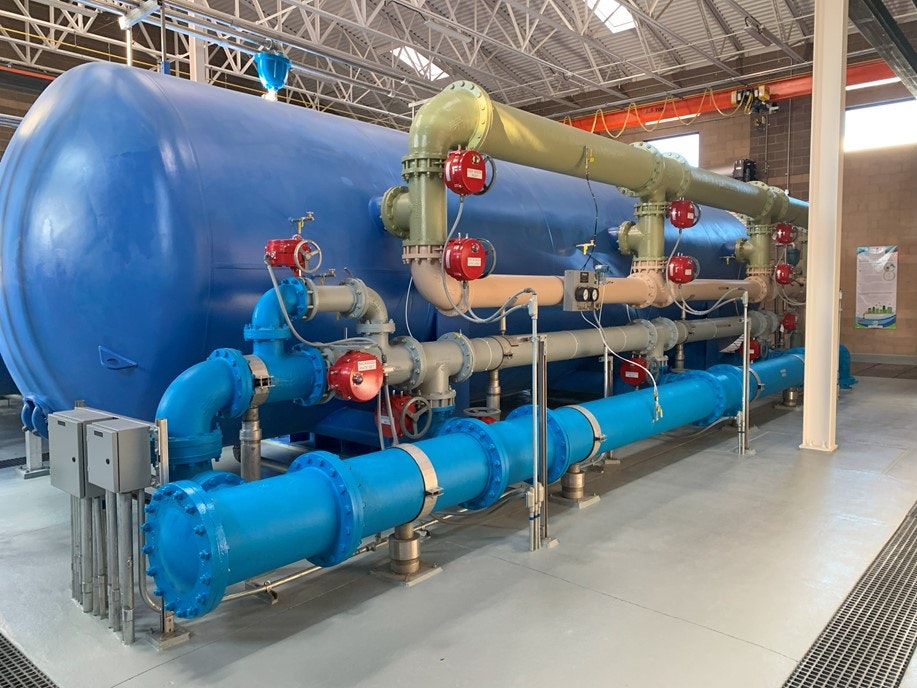
GHID is implementing water quality improvements through new treatment facilities to address iron, manganese, and ammonia levels in the Salt Lake Valley. These initiatives are supported by state and federal funding programs.
The project follows a 2018 study that identified how chlorine added at well sites caused iron and manganese to oxidize, resulting in yellow or black water. The study also noted that higher levels of ammonia can cause chlorine odor issues.
The Rushton Groundwater Treatment Plant, which was completed in 2023, removes iron, manganese, and ammonia from three GHID wells. This facility delivers high-quality water to customers located east of Bangerter Highway. The design and construction of this plant were funded by a low-interest State Revolving Fund loan from the State of Utah Division of Drinking Water.
Following the success of previous testing, GHID received two grants in 2023 totaling $7.5 million from the Bureau of Reclamation and the State of Utah Emerging Contaminants program. These funds are designated for the Anderson Groundwater Treatment Plant. This next project will remove iron, manganese, and ammonia from two wells to supply water to western customers out to 7200 West.
GHID currently utilizes six deep wells to provide approximately 25% of the water delivered to its customers. Once the second treatment facility is complete, GHID will be able to supply up to half of its water needs through groundwater alone.
Maintaining alternative supplies is noted as important for drought resiliency, particularly as low snowpack and high temperatures can lead to low reservoir levels. Groundwater sources that do not rely on mountain reservoirs provide a reliable water source for the future.


