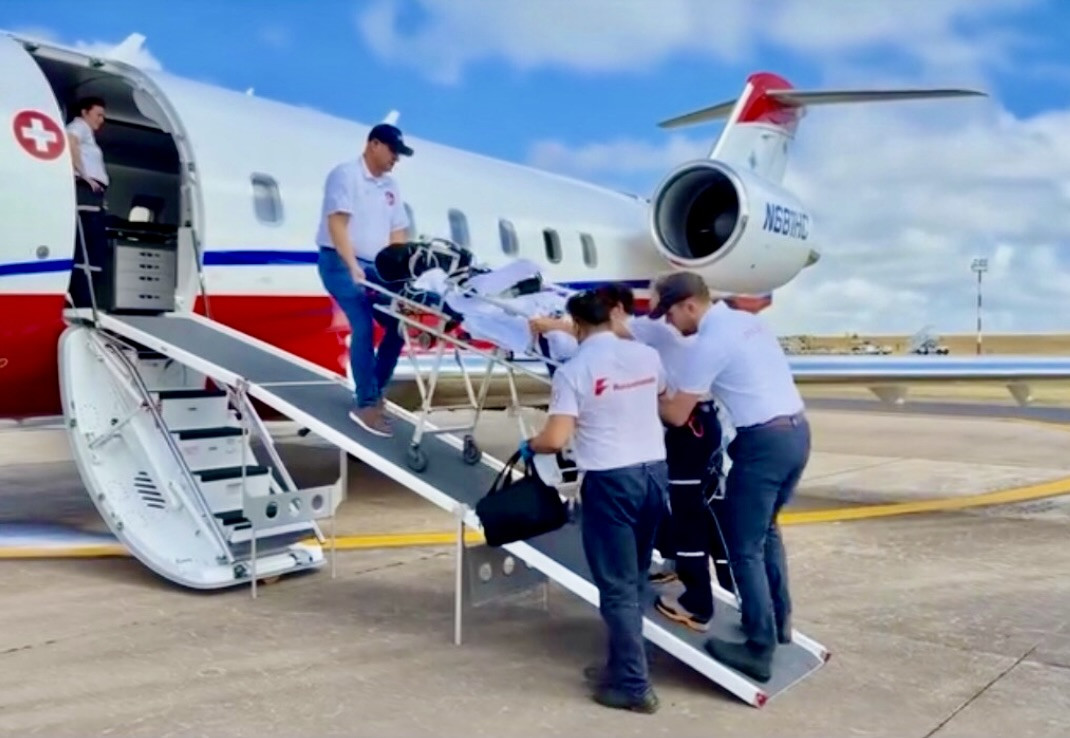
A Midway, Utah family is celebrating the survival of three-year-old Estelle Santiago, who was rescued from Uruguay by an Intermountain Health flight team after a life-threatening medical crisis. The specialized mission, which involved an 18-hour flight covering more than 6,300 miles, successfully brought the toddler back to Utah for life-saving treatment following a diagnosis of Hemolytic Uremic Syndrome.
A Critical Medical Crisis
The Santiago family traveled to Uruguay to visit grandparents on a church mission when Estelle suddenly became gravely ill. By the time she reached the hospital, she was experiencing seizures and renal failure, eventually spiraling into respiratory and cardiac failure, according to prior reporting by Intermountain Health News.
On January 7, 2026, the family sent frantic messages requesting help after Estelle was diagnosed with Hemolytic Uremic Syndrome (HUS). The condition is a serious complication often caused by Shiga toxin-producing E. coli (STEC) infection, which can lead to kidney failure, permanent health problems, and death, according to the CDC. For children under 18, approximately 80% of HUS cases are linked to STEC infection.
The Global Rescue Mission
The medical emergency required rapid international coordination. While landing permits for medical flights typically take seven to ten days, the permit for Estelle's transport was approved in just 24 hours. This allowed the Intermountain Health Flight & Ambulance team to launch a mission from Salt Lake City on January 9, involving an overnight stop in Peru before proceeding to Montevideo, Uruguay.
Dr. Jon Woods, a pediatric critical care physician from University of Utah Health/Intermountain Primary Children’s Hospital, served as medical control for the flight. He worked to coordinate Estelle's care with physicians at the British Hospital of Montevideo, a boutique hospital in Uruguay that provides 24-hour emergency services and specialized medical care. Dr. Woods had to assess whether Estelle could survive the transport, particularly because her continuous dialysis would have to be paused during the journey.
An 18-Hour Journey Home
The 18-hour journey home on January 11 required extreme precision. The flight crew used a Bombardier Challenger 604, a long-range medical jet capable of serving as an airborne ICU. During the flight, Estelle was intubated and required 6 to 7 medication drips to manage her blood pressure, cardiac output, and sedation.
Flight crew members, including nurse Rose Linscher and pilot Bracken Mecham, described the operation as a massive team effort involving coordinators, communications specialists, mechanics, and medical personnel. Upon landing in Salt Lake City, Estelle was transferred directly to the pediatric intensive care unit at Intermountain Primary Children’s Hospital. Her parents, Michael and Ellie Santiago, were reunited with their daughter in Utah, where she underwent several weeks of hospitalization and rehabilitation.
Specialized Medical Transport
The successful mission highlights the capabilities of Intermountain Health's specialized transport services. In May 2025, Intermountain Health announced it was unifying its various medical transport programs—including MedX, Life Flight, Classic Air Medical, Platte Valley Ambulance, Cassia Paramedics, and HELP Flight—under the single identity of Intermountain Health Flight & Ambulance Services to streamline operations and identity.
The Bombardier Challenger 604 used in the rescue was added to the fleet in 2022 specifically for long-range global flights and organ retrievals. The aircraft features a large cabin designed to accommodate two patients and a medical team, allowing for complex medical procedures to be performed while in flight.
A Milestone Celebration
Six months after the crisis, Estelle is thriving and expected to make a full recovery. Her mother, Ellie Santiago, stated that while the girl has some lingering problems, her recovery has been incredible. "She has led her own recovery with a positive attitude and endless energy," Ellie said.
The Santiago family scheduled a reunion for Wednesday, July 29, 2026, to thank the Intermountain Health team and celebrate Estelle's fourth birthday, a milestone her parents believed might not be possible in January.
Understanding HUS Risks
Health officials emphasize that Hemolytic Uremic Syndrome remains a medical emergency. According to the CDC, signs that a patient with diarrhea may be developing HUS include urinating less often or not at all, loss of pink color in the cheeks or lower eyelids, unexplained bruising, blood in the urine, extreme fatigue, or decreased alertness. Most people with HUS recover within a few weeks, but the condition can cause permanent health issues or death.