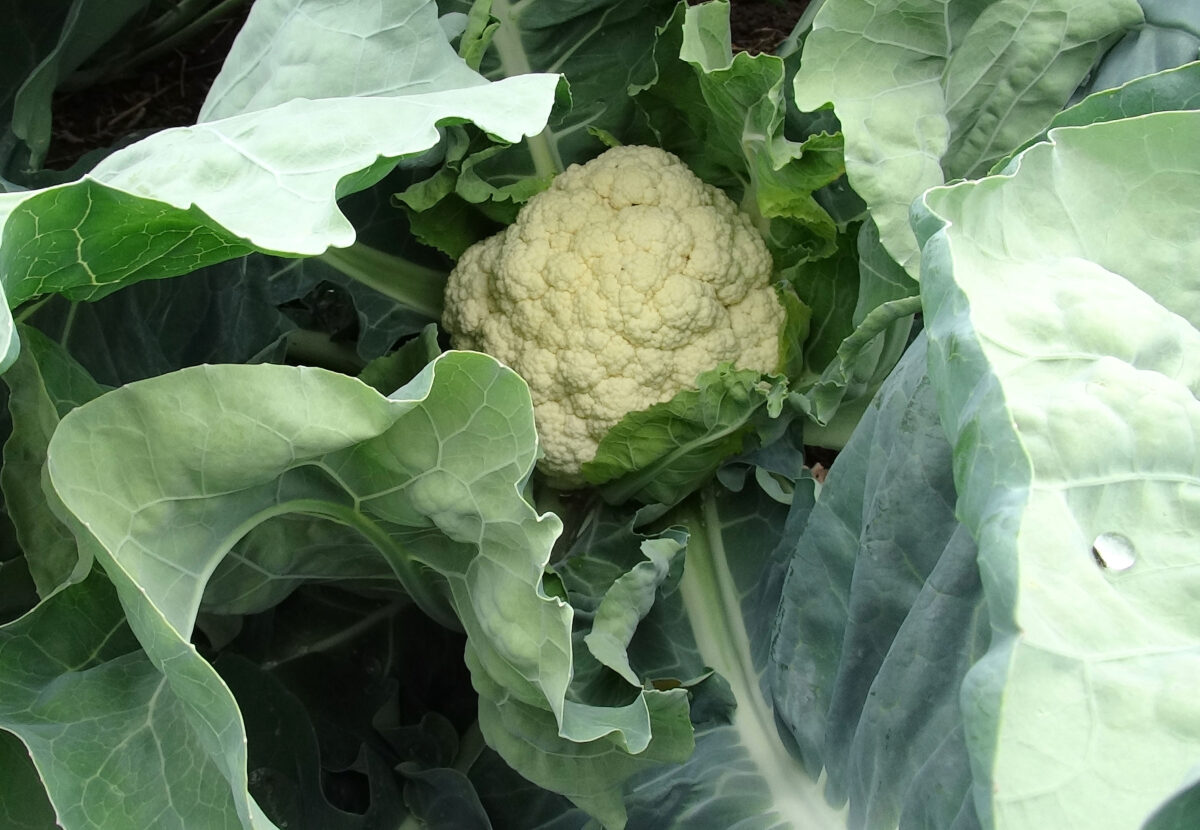
Growing successful cauliflower requires selecting the correct variety and providing consistent care to avoid issues like discoloration or loose curds, according to a November 13 report by Meredith Seaver.
Seaver, a USU Extension horticulture assistant, noted that cauliflower is a cool-season crop that does not perform well in summer heat.
To prevent cauliflower heads from turning a dingy color due to sun exposure, gardeners can use a method called blanching. This involves gathering and tying large leaves together over the head to block sunlight, ideally when the head is the size of a ping pong ball or an egg.
Gardeners should avoid blanching while leaves and heads are wet to reduce fungal disease risks. Additionally, cauliflower heads can develop a loose, open texture known as ricey curds if they are left in the garden too long or if they experience temperature stress.
Temperature stress, including chilling stress in the spring or heat and drought stress, can contribute to the development of ricey curds. While gardeners can use protective row covers or shade cloth to mitigate extreme temperatures, they can also prevent ricey curds by harvesting the heads as soon as they are ready.
Proper soil preparation and moisture management are also essential. Cauliflower thrives in fertile, well-drained soil rich in organic matter, such as plant-based compost. To maintain even moisture, gardeners should water deeply but not frequently, as plants do not tolerate drought stress or chronically wet soils.
Cauliflower varieties are available in several colors, including lavender, orange, purple, and green. Because different varieties have different temperature requirements, some must be planted in the spring to mature in cool weather, while others are bred for heat tolerance or for summer planting to mature in the fall.
To ensure a successful harvest next season, gardeners should consider performing a home soil test to identify fertility needs and ensure plants have sufficient space, typically 12 to 18 inches between them.


