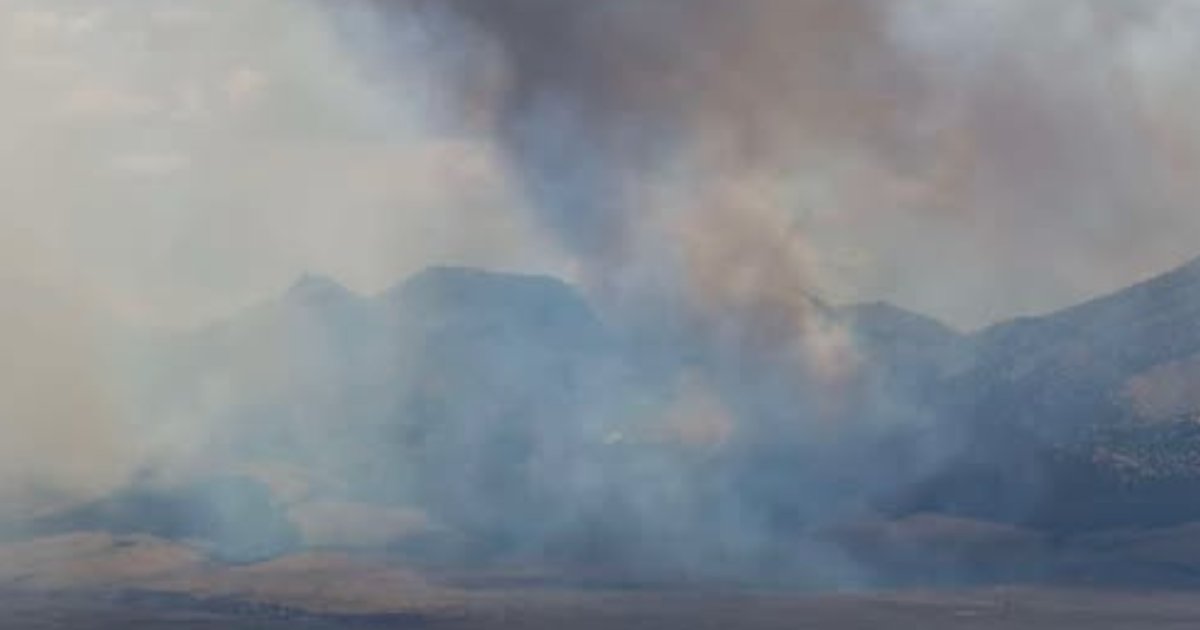
A single magnesium refinery may be a significant contributor to the persistent winter brown clouds over Salt Lake City, according to findings published in the journal Environmental Science & Technology. Analysis of measurements taken during 2017 NOAA research flights suggests that emissions from the US Magnesium plant contribute to a large fraction of fine particles in the region.
Lead author Carrie Womack, a scientist at the NOAA Chemical Sciences Laboratory, stated that airborne measurements from the plume rising from the refinery showed that halogenated compounds, specifically chlorine and bromine, were significant contributors to winter air pollution.
The US Magnesium plant, which is the largest magnesium producer in North America, extracts metal from the Great Salt Lake brine at a location upwind of Salt Lake City. While the Utah Division of Air Quality requires reporting for precursors like chlorine and nitrogen oxide, NOAA researchers identified significant emissions of bromine, a reactive chemical that does not require reporting.
Modeling demonstrated that the chlorine and bromine emitted by the refinery were responsible for 10% to 25% of regional PM2.5 during winter pollution episodes. Womack noted that while chlorine and nitrogen oxide measurements aligned with facility reports to regulators, the findings suggest that industrial bromine emissions may require closer inspection.
NOAA scientist Steven Brown, who led the field campaign, stated that the air around the plant was unlike previous samples due to high chlorine emissions and expressed surprise at the large effect these emissions had on winter PM2.5 across the entire region.
The 2.4 million residents along Utah's Wasatch Front experience some of the nation's most severe winter particulate matter pollution. In Salt Lake Valley, wintertime PM2.5 levels exceed national air quality standards an average of 18 days per year, primarily during December, January, and early February when cold air pools trap pollution near the surface.
A study in Salt Lake County found that these exceedances have been linked to a 42% higher rate of emergency room visits for asthma during certain periods between 2003 and 2008.
The research team found that halogen emissions from the refinery speed up the conversion of nitrogen oxides and volatile organic compounds into ammonium nitrate, which is the dominant contributor to regional particulate matter.
Researchers have shared their findings with Utah officials. In response to Dr. Womack's publication, a proposed Utah bill to address air pollution along the Wasatch Front received a last-minute amendment to study halogen emissions. This followed testimony provided by Dr. Womack to the legislative committee.