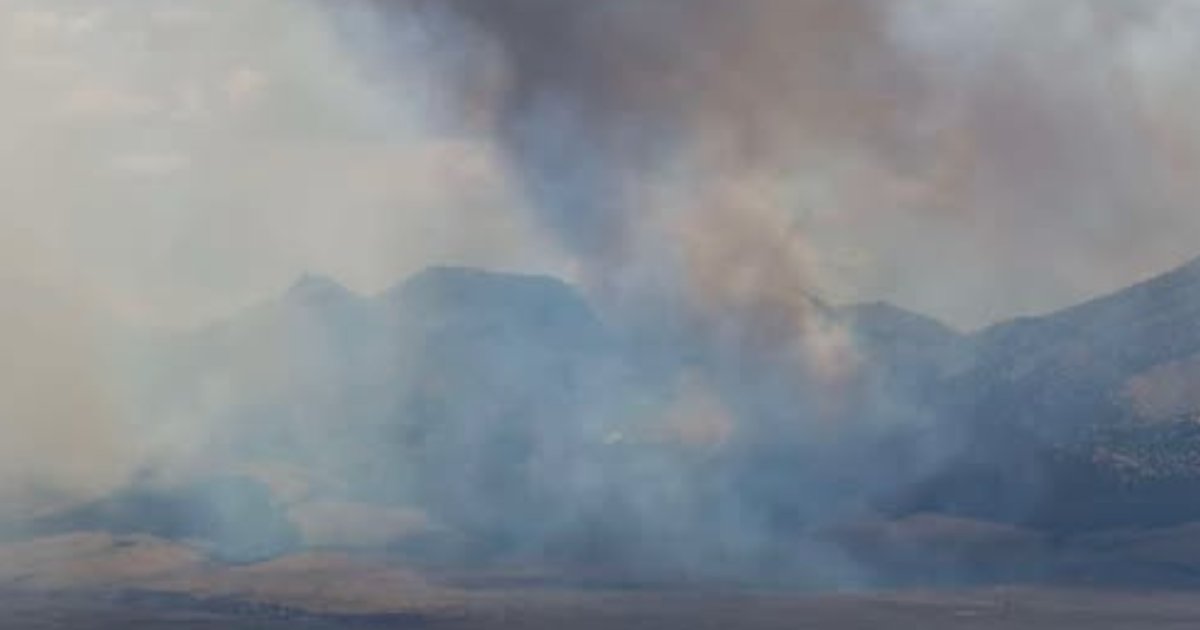
Persistent drought conditions across Utah are significantly reducing the fitness and survival of mule deer, with research indicating that extreme aridity can cause the number of new fawns per doe to decline by more than 30 percent. This biological impact comes as 93.44 percent of the state remains under some level of drought, according to data from the U.S. Drought Monitor released August 6, 2026.
Drought Amplifies Habitat Loss
The impact of decreasing moisture levels extends beyond simple habitat loss. A study led by the University of Michigan, published in the journal Communications Earth and Environment, found that drought is negatively impacting wildlife across Utah and Nevada. The research, which analyzed 12 years of GPS collar data, revealed that during severe drought, mule deer experienced a 10 percent reduction in their highly selected, highly suitable habitat.
While researchers expected herbivores to be most affected by declining vegetation, the study found that the impact actually amplified as it moved up the food web. In severe drought conditions, black bears saw a 14 percent reduction in suitable habitat, while cougars experienced an 18 percent reduction. Researchers noted that predators like cougars may be more sensitive to these environmental perturbations because they cannot simply switch to different food sources as easily as herbivores can.
Statewide Restoration Efforts
The Utah Division of Wildlife Resources (DWR) has identified several ecological bottlenecks that threaten deer populations. DWR Habitat Restoration Coordinator Daniel Eddington noted that many ecosystems deer rely on for food currently have limited or older vegetation with low nutritional value, a problem exacerbated by ongoing drought. To combat this, the state has a goal to improve the quality and quantity of vegetation for mule deer on at least 600,000 acres of crucial range through December 2030.
To support these efforts, the DWR completed 133 habitat projects during fiscal year 2025. These projects, which cost $55 million, restored or preserved more than 114,277 acres of land. The initiative aims to revert sagebrush habitat back to young, shrub-dominated plant communities and restore aspen communities to ensure deer populations can thrive.
Watershed and Habitat Management
Many of these restoration projects are managed through the Utah's Watershed Restoration Initiative. This program has a significant footprint in the state, with 370 current projects covering 794,452 acres. The initiative has invested over $178 million in funding to date to restore watersheds and support wildlife habitat.
Specific projects have addressed diverse needs, such as the Willow Watershed improvements in Uintah County, which focused on providing additional feed and improving streambeds. In Sanpete County, the Twelve-Mile Watershed restoration project utilized 100 beaver dam analog structures to reduce erosion and improve water quality. Other efforts include the Gooseberry habitat restoration project near Salina, which utilized solar pumps and fencing to protect wetlands and springs.
Long-term Population Trends
The current environmental challenges follow long-term trends in the region. The Utah Division of Wildlife Resources has been managing deer populations for decades, with the most recent statewide estimate placing the population at approximately 324,000 deer. Over the last 10 years, the population has fluctuated between 278,000 and 374,000 animals.
Beyond habitat and precipitation, the DWR also monitors predation as a factor in deer population health. The agency uses GPS collar technology to study how predator densities, such as those of bears and cougars, affect deer recovery, particularly after harsh winters. The agency has identified specific units where predation limits population growth, leading to management changes to reduce predator densities in those areas.
The Future of Conservation
As climate patterns like drought and wildfire become more enmeshed with landscape management, researchers suggest that conservation strategies must evolve. Experts noted that because managers typically manage deer and predators separately, the interconnected nature of these species requires more integrated communication and conversation moving forward.
Ongoing Management Monitoring
The Utah Division of Wildlife Resources continues to monitor these trends through its statewide management plans. These plans are reviewed and approved by the Utah Wildlife Board to ensure adaptable management of habitat and predators in response to changing environmental conditions.