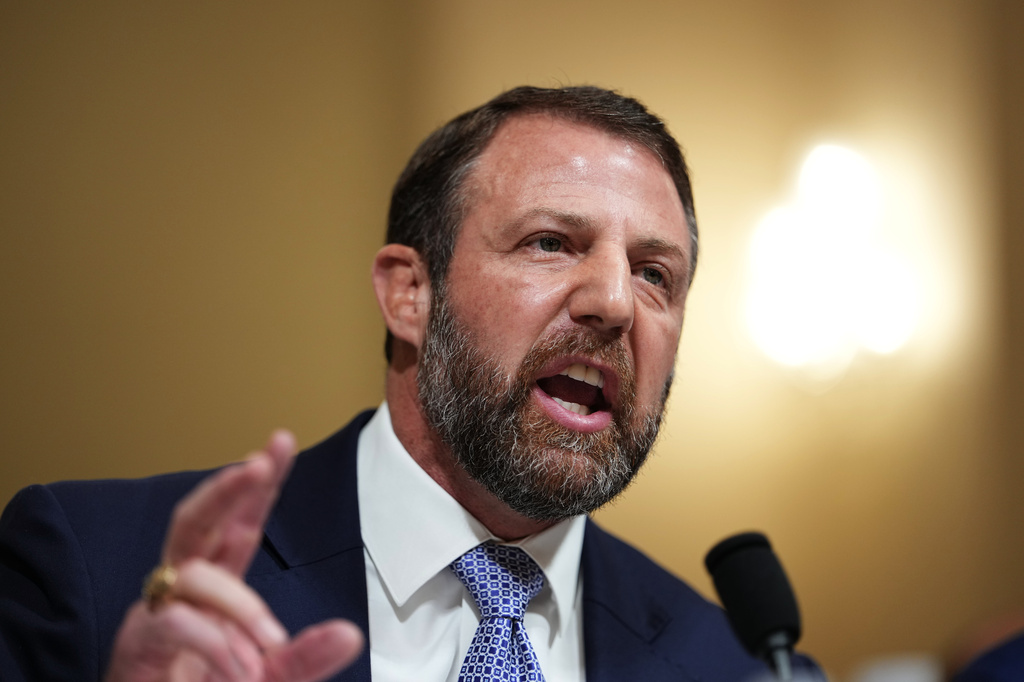
Homeland Security Secretary Markwayne Mullin defended his decision to fly to a college football game on Saturday, Nov. 14, while travelers across the United States faced airport delays following a nationwide aviation ground stop. Mullin testified before the House Homeland Security Committee on Wednesday, Nov. 18, regarding the communication failures that halted all flights on Friday, Nov. 13.
Mullin Defends Travel Decisions
During the hearing, Mullin addressed scrutiny regarding his flight to Louisiana to attend an LSU-Texas game. He stated the trip had been planned for weeks to accompany his nieces and argued that canceling the trip could have sent a confusing message to officials he was scheduled to meet. Mullin noted that while the flight occurred after the ground stop was lifted and planes had returned to the air, thousands of flights were canceled during the incident, forcing travelers to scramble for alternative transportation.
Response to Ground Stop
Mullin also pushed back against criticism regarding the administration's transparency during the crisis. He reported that the government successfully landed over 4,000 planes during the stoppage without a single incident, calling the safe resolution a great success. The incident, which occurred on Friday, Nov. 13, was described by Mullin as a telecommunications outage rather than a nefarious attack, noting that no evidence of a cyberattack or artificial intelligence attack was found.
Aviation System Instability
The nationwide ground stop was triggered by communications problems at 22 regional air traffic control centers. Transportation Secretary Sean Duffy stated that the order was issued out of an abundance of caution due to inconsistency in data and instability in radar and communications systems. The stoppage, which lasted approximately four hours before being lifted on Friday, Nov. 13, was the first nationwide ground stop since January 2023, and the first since the September 11, 2001, attacks.
Calls for Increased Funding
The outage highlighted long-standing issues with the nation's aging air traffic control infrastructure. Mullin and Duffy have called for a complete overhaul of the system, with Mullin stating that the current process of incremental upgrades, or "nickel and diming," is ineffective. On Friday, Nov. 13, administration officials increased their funding request for aviation modernization to $50 billion, up from a previous request of $30.1 billion made by Duffy and White House budget chief Russ Vought.
Modernization Funding History
The push for $50 billion follows a history of legislative attempts to modernize airspace technology. In September, Senator Eric Schmitt, R-Mo., introduced a bill providing $10.1 billion for upgrades, including $2 billion for telecommunications. Additionally, $12.5 billion was allocated through a July 2025 reconciliation law, which Duffy described as a "down-payment" toward the necessary upgrades. Senate Commerce, Science, and Transportation Committee Republicans noted that the last time a new air route traffic control center was built was during the administration of President Lyndon B. Johnson.
Local Impact in Utah
The communication failure also impacted local travel in Utah. On Friday, Nov. 13, the Utah State football team was grounded at Logan-Cache Airport. The team was scheduled to depart for San Diego around 2 p.m. but remained on the tarmac for over an hour before deplaning. The team eventually departed Logan just after 8 p.m. Other Utah-related travel disruptions included a delayed flight for Utah to Tucson and a delay for Baylor at BYU.
Broader National Security Context
The hearing occurred amidst broader concerns regarding cyber infrastructure and immigration enforcement. Mullin, who took office in March after the removal of former Secretary Kristi Noem, faced questions regarding the administration's mass deportation agenda and the oversight of the Cybersecurity and Infrastructure Security Agency (CISA), which has lacked a Senate-confirmed leader since the start of the current administration in early 2025.