REXBURG — Richard Robison remembers the day of the Teton Dam collapse well. He was 13 years old.
“My dad got a phone call … he told us the Teton Dam was breaking,” Robison said. “We knew there was a wall of water coming, so me and some of the neighborhood kids climbed up on our roof.”
Robison said many families around his neighborhood did the same thing, watching as the massive wave overtook communities, completely washing out Sugar City, and Wilford.
“You'd see a dust cloud and then it just looked like a moving lake,” Robison recalled. “And the thing I remember most is you would see a house way out there, a farmhouse or home in Sugar City, and the water would come up to it and it would kind of submerge, and then all of a sudden the house would pop up and just start floating along.”
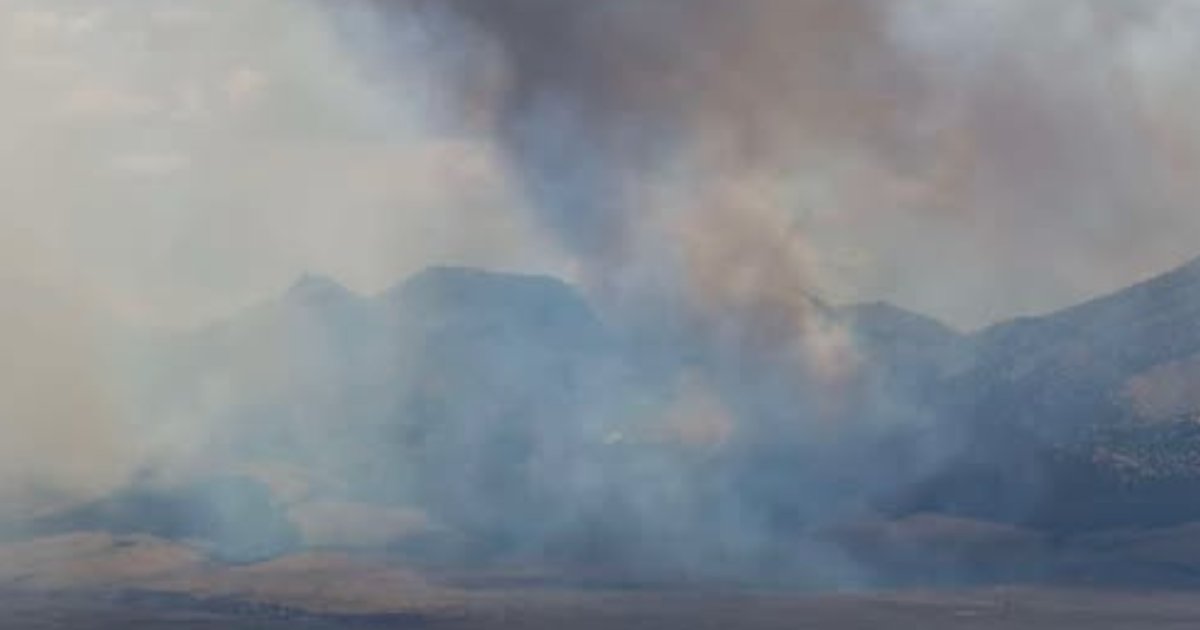
KSL archive footage of the Teton Dam collapse.
Historical facts of the collapse
On June 5th, 1976, the Teton Dam collapsed during its inaugural fill, sending water downstream at an overwhelming one-million cubic feet per second. Eleven people were killed, and many homes were washed away, leaving behind roughly 2-billion dollars in damages.
Preserving oral histories via Substack
50 years later, Robison is doing what he can to preserve many of the stories he's heard — by talking directly to the the people who lived them. He's already posted around a dozen to his Substack: The Teton Letters, with many more in the works. He believes some of the stories escaped the eye of major news coverage.
The Teton Letters is a collection of oral histories of the Teton Dam collapse, compiled by Richard Robison on Substack. (Mike Anderson, KSL)
“There was this woman named Elaine Robinson,” Robison explained. “She was a Relief Society president, and she literally took care, with help from other people there in the Relief Society, all these people who the only dry ground they found was a Texaco gas station lot that was kind of up above the rest of the town next to the freeway.”
KSL archive footage shows how parts of Southeastern Idaho were covered with water.
Seeking justice for his uncle
Of the several stories he's still working on however, Robison is struggling to put the most care possible into one in particular — that of his uncle Bob.
“It's touchy and you know, it's a little emotional,” Robison said.
Richard Robison, shares some photos of his uncle, Robert Robison, who oversaw construction of the Teton Dam. (Mike Anderson, KSL)
Investigation clears project engineer
Robert Robison, as he was known to most people, was the Teton Dam's project engineer. Robison said for a long time, many people blamed his uncle for the disaster.
“He explains that for that next six months, he thought he was the most in troubled person in the country,” Robison said.
An investigation into the Bureau of Reclamation project however later found the fault lied in the design phase of the dam that failed to use modern concepts that were common at the time, according to records. Robison said the findings offered something that was much needed for the family; “the vindication, the exoneration of him and all the different people who were involved in the construction.”
Robison said by compiling The Teton Letters, he hopes to share with people the retelling of the strength, courage, and acts of service that came out of the disaster, through the efforts of someone who lived it.
“They're just all such good stories,” he said.
KSL archive footage of Rexburg Main street, in the wake of the Teton Dam collapse.
Related: 50 years after Teton dam failure, Rexburg City celebrates legacy of service
Follow @KSL5TV
Like us on Facebook