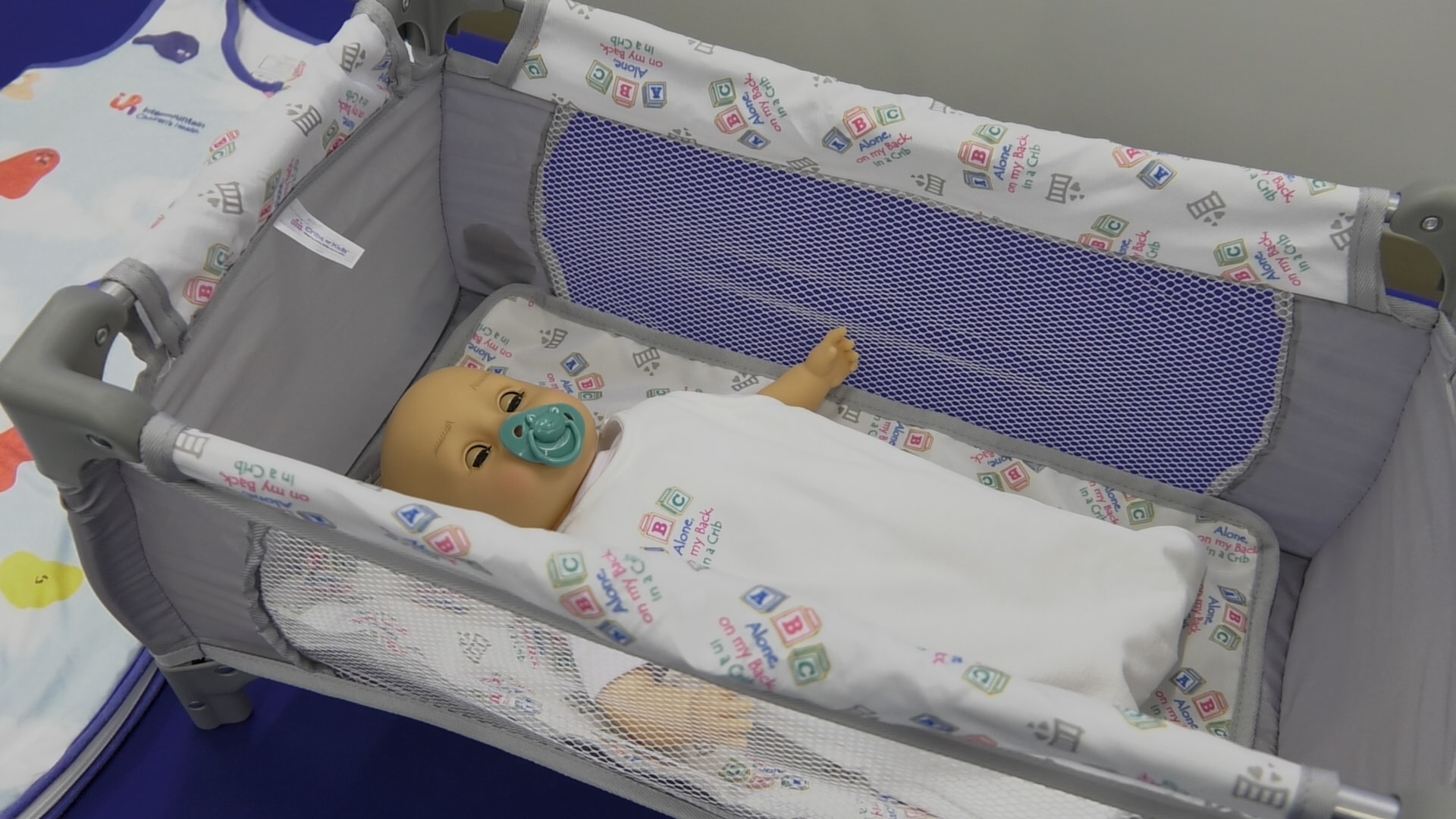
Intermountain Health Primary Children’s Hospitals has launched a new program offering free safe infant sleep consultations to help Utah families reduce the risk of sudden unexpected infant death. The initiative, which provides access to certified safe sleep ambassadors, aims to address a critical health issue in the state where approximately 27 babies die each year before their first birthday from sudden unexpected infant death (SUID).
New Resources for Utah Families
The new program allows families to receive expert guidance at two specific locations: the Larry H. & Gail Miller Family Campus in Lehi and the Salt Lake Campus. According to Intermountain Health, the Lehi campus offers consultations Monday through Friday from 11 a.m. to 4 p.m., while the Salt Lake Campus provides services Monday through Friday from 9 a.m. to 4 p.m. Families can schedule these free consultations by calling 801-662-2277, a number that also serves as a contact for car seat checks with trained technicians.
Addressing High SUID Rates
The program arrives as Utah continues to face significant challenges regarding infant safety. In Utah, approximately 27 babies die annually from SUID, a statistic that represents more infant deaths than any other cause. Data indicates that 93.5% of these deaths occurred in unsafe sleep environments. While the American Academy of Pediatrics has recommended that infants sleep on their backs since 1994, experts note that this single measure is often insufficient to prevent tragedies.
Critical Risks in the First Year
Medical experts emphasize the importance of creating a separate, safe sleep space for infants. Dr. Jessica Davidson, medical director of the Neonatal ICU at Intermountain Medical Center and chair of the Utah Women and Newborn Quality Collaborative, noted that the first year of life is a critical period when babies are most at risk. While sharing a room with an infant is encouraged to allow parents to attend to their needs, Dr. Davidson warned that sharing a bed with an infant significantly increases the risk of a sleep-related death.
The ABCs of Safe Sleep
To prevent accidental suffocation, health officials recommend following the ABCs of safe sleep: Alone, on their Back, and in a Crib, bassinet, or portable crib. Danielle Chunglo, a community health coordinator at Primary Children’s Hospital, explained that the safest environment is a no-frills crib with only a firm, flat mattress and a fitted sheet. It is vital to keep the sleep space clear of soft items, including loose blankets, bumpers, pillows, or stuffed animals, which can cause unintended suffocation.
Historical Utah Safety Data
The importance of safe sleep is underscored by historical data from the Utah Department of Health and Human Services. Between 2019 and 2021, 82 Utah infants died suddenly and unexpectedly, with 78 of those deaths occurring during sleep. The U.S. Centers for Disease Control and Prevention has been monitoring SUID data through a registry since 2009, and Utah joined the registry in 2019. Currently, 32 states and jurisdictions participate in this monitoring effort to better understand the factors influencing SUID risk.
The Impact of Infant Loss
The push for safe sleep education is also linked to the emotional toll of infant loss on families. Lizbeth Hernandez, a senior practice manager for maternal fetal medicine at Intermountain Medical Center, shared her personal experience of losing her six-week-old daughter, Carla Sophia, to an unexplained death. She recalled the trauma of the event and the difficulty of processing such a loss, noting that an autopsy eventually revealed the death was unexplained, which helped her understand that nothing could have been done differently to save her daughter.
Specialized Support for Families
Hernandez's personal journey has informed her professional work, including her involvement in developing care processes for the Intermountain Pregnancy After Loss Clinic. This specialized clinic, located at the Intermountain Medical Center in Murray, is one of only nine in the United States to receive certification from the U.S. Pregnancy After Loss Support (USPAL) program. The clinic provides specialized medical and emotional support for individuals navigating pregnancy after experiencing miscarriage, stillbirth, or infant loss.