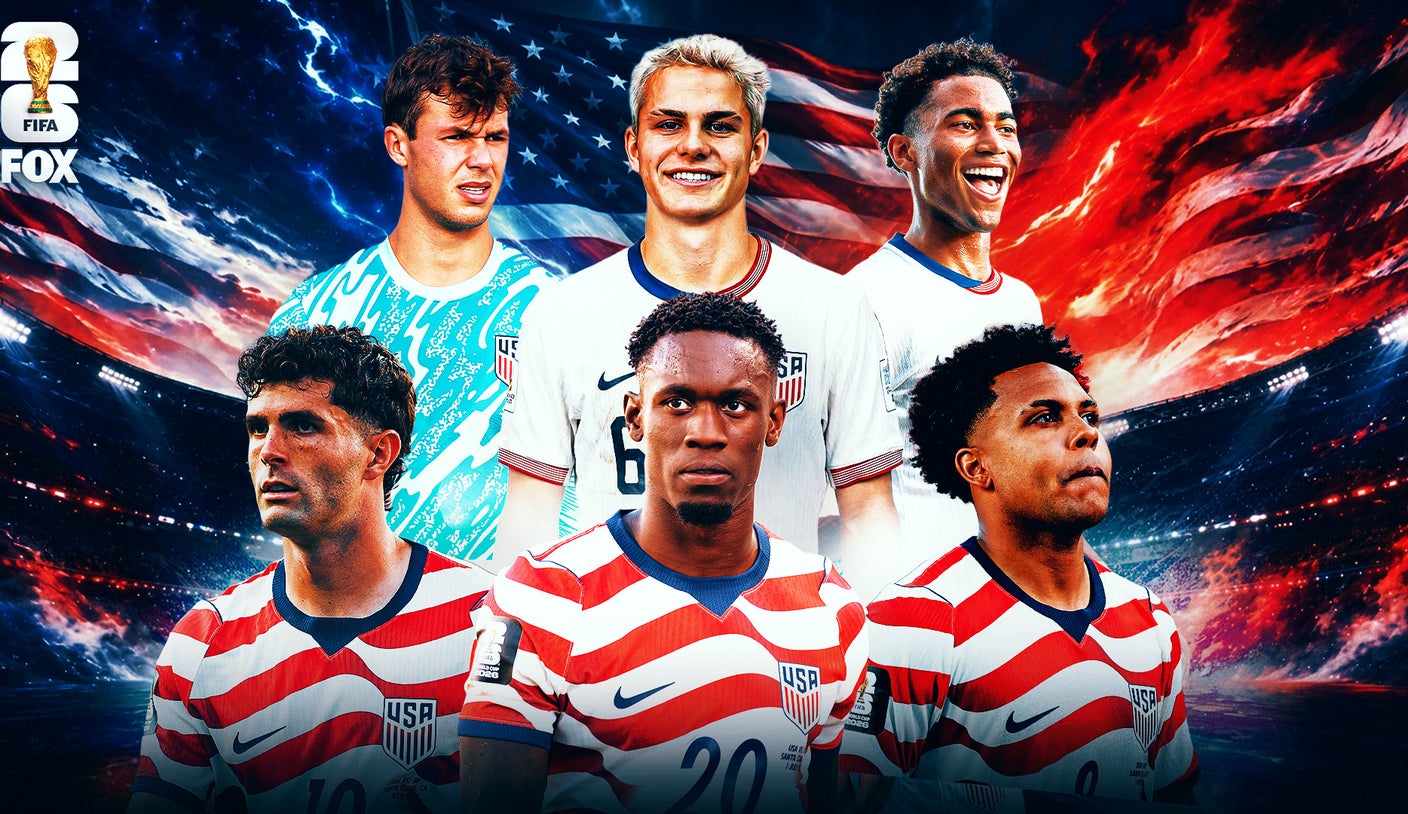
Following the United States' exit against Belgium in the 2026 World Cup, the U.S. Men's National Team has entered a rebuilding phase aimed at the 2030 tournament, with roster projections highlighting a significant generational shift as several 2026 veterans approach their 30s.
Aging Veterans and Roster Shifts
The composition of the U.S. player pool is expected to undergo a major transformation over the next four years. According to FOX Sports, many stalwarts of the 2026 squad will be entering their veteran years or past their physical primes by 2030. Players such as Tim Weah and Chris Richards will be 30 years old, while Christian Pulisic, Tyler Adams, Weston McKennie, and Mark McKenzie will all reach age 31.
Further aging trends include Haji Wright, Alex Zendejas, and Antone Prime, who will be 32 by the time the 2030 tournament arrives. The most dramatic shift involves Tim Ream, who is projected to be 42 years old. FOX Sports noted that unless the talent pool shifts younger, the United States could enter the 2030 World Cup as one of the oldest competing nations.
Pathways for Emerging Talent
While the veteran core ages, several developmental milestones are expected to bridge the gap for younger prospects. The U.S. national team pool is set to benefit from hosting the 2028 Olympic Games in Los Angeles, a platform intended to help top prospects transition from youth levels to the senior squad. Additionally, potential appearances in the 2027 and 2029 U-20 World Cups could serve as essential stepping stones for emerging talent.
Some players who missed the 2026 roster are viewed as prime candidates for the next cycle. FOX Sports identified several 'highly likely' returners from the 2026 group, including center back Chris Richards, winger Christian Pulisic, striker Folarin Balogun, midfielder Tyler Adams, Malik Tillman, and Ricardo Pepi.
Other players are categorized as having a 'good chance' to remain in the mix, such as Weston McKennie, Tim Weah, Sergiño Dest, and Alex Freeman. Meanwhile, a more competitive group, including Gio Reyna, Joe Scally, Matt Turner, and Haji Wright, will have to fight for their positions on the 2030 roster.
Real Salt Lake Stars
Real Salt Lake players are prominently featured in discussions regarding the future of the national team. Diego Luna, an attacking midfielder and winger for Real Salt Lake, is viewed as a primary candidate for 2030. FOX Sports reported that Luna's absence from the 2026 World Cup was likely due to an injury sustained at the start of 2026, but his performance in 2025—including scoring in a 5-1 friendly win over Uruguay—established him as a fearless playmaker who will be in his prime by 2030.
Similarly, Real Salt Lake's Zavier Gozo has emerged as one of the most significant prospects in American soccer. As reported by The Athletic in May 2026, the 19-year-old winger has had a breakout season, including a performance where he scored twice in a 3-0 victory over the Houston Dynamo. Gozo's recent form includes five goals and four assists for the season, following a highlight-reel overhead kick against LAFC that gained national attention.
Gozo’s physical profile has already attracted interest from major European clubs like Atlético Madrid and Aston Villa. According to reports from The Athletic, there is significant expectation that the Utah native could be sold for an eight-figure sum during the summer of 2026.
Historical Precedents for Youth
The potential integration of young players like Gozo into the senior squad is supported by historical precedents and coaching philosophies. The Athletic noted that while introducing uncapped teenagers to a veteran group carries risk, players like Xavi Simons, Trent Alexander- Arnold, and Thomas Müller have successfully debuted at young ages in previous World Cups.
U.S. assistant coach Jesús Pérez has already indicated that the coaching staff is actively scouting younger talent during MLS matches. Speaking on Apple TV, Pérez noted the importance of keeping an eye on players like Luna and other emerging prospects during fixtures such as FC Dallas versus Real Salt Lake.
Furthermore, the U.S. has a history of successful late-stage call-ups, such as Joe Scally joining the 2022 squad at age 19. The Athletic highlighted that DeAndre Yedlin, a former teammate of Gozo at Real Salt Lake, provided a similar 'supersub' impact during the 2026 tournament, helping set up a goal in a draw against Portugal.
Key Midfield and Defensive Prospects
Beyond Gozo and Luna, several other players are positioned to be central figures in the 2030 cycle. FOX Sports identified Tanner Tessmann, a 24-year-old midfielder for Lyon and former 2024 Olympic captain, as a player whose career is on an upward trajectory. Gianluca Busio, the Venezia midfielder, is also expected to remain in contention following a successful season that saw him captain his club to promotion.
Other notable names include Johnny Cardoso, the Atlético Madrid central midfielder who missed the 2026 World Cup due to an ankle injury sustained in May, and Patrick Agyemang, a Derby County striker whose progress was hampered by an Achilles injury. Additionally, players like Aidan Morris of Middlesbrough and Jack McGlynn of the Houston Dynamo are viewed as prospects who could earn more opportunities in the coming years.
Looking Toward 2030
As the U.S. Men's National Team moves away from its 2026 era, the focus shifts toward a mix of established stars and high-ceiling teenagers. While the aging of key veterans presents a challenge to roster depth, the emergence of players like Zavier Gozo and the continued development of the youth pipeline provide the foundation for the 2030 World Cup campaign.