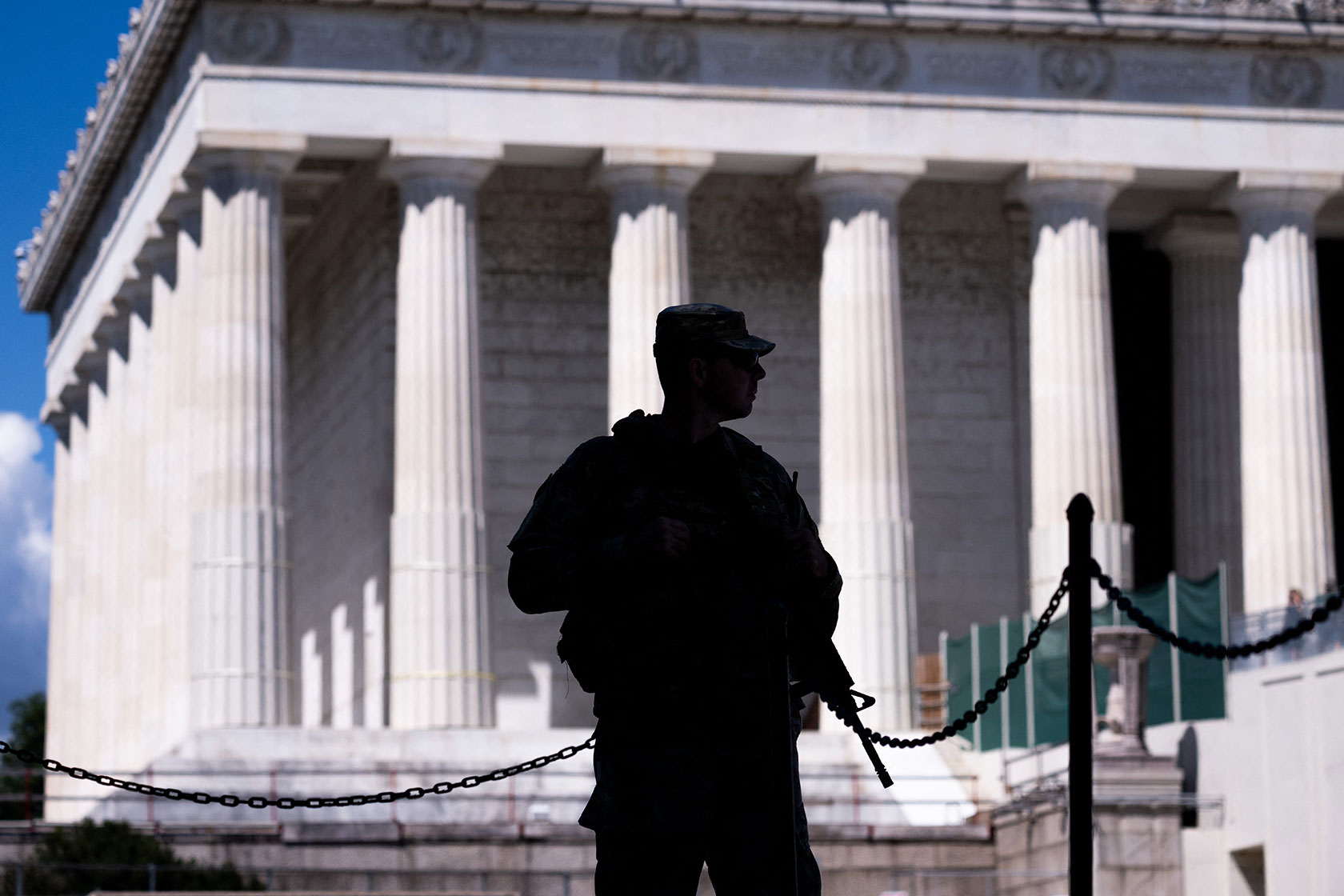
A new analysis by the Center for American Progress found that the Trump administration's National Guard deployments failed to reduce violent crime in targeted cities. The report states that these deployments have had no measurable effect on homicide, violent crime, or gun violence rates despite claims of success from the administration.
The analysis indicates that violent crime and homicides were already declining in American cities during 2023 and 2024, prior to the administration taking office. On average, the 11 cities where the National Guard was deployed or threatened to be deployed saw a 14 percent decrease in the 12-month rolling violent crime rate and a 22 percent decrease in the 12-month rolling murder rate from June 2024 to June 2025, before the first deployment to Los Angeles.
In June 2025, the administration federalized California's National Guard and deployed 2,000 guardsmen and 700 U.S. Marines to Los Angeles. On August 11, 2025, the president federalized Washington, D.C.'s police force and sent 800 National Guard troops to the city after declaring a crime emergency. The administration has also authorized deployments to Portland, Chicago, Memphis, and New Orleans, and has threatened to send troops to Baltimore, New York City, St. Louis, San Francisco, and Oakland.
The study utilized three different models to evaluate the impact of these deployments. The first model found that Los Angeles and Washington, D.C. showed no detectable change in violent crime rates. While Memphis showed a statistically significant drop in crime levels following intervention, the model also estimated that crime rates began trending upward post-intervention.
A second model, which used seasonally adjusted weekly homicide rates, found no statistically significant crime-reducing effect of National Guard deployment on the level or trend of homicides in Los Angeles, Memphis, or Washington, D.C. A third model, which compared treated cities to a control group of cities including New York and San Francisco, also found no statistically significant effect on gun victimization rates.
The National Guard deployments are expected to be costly, potentially exceeding $1.7 billion for American taxpayers if they continue through the end of 2026. A letter from the Congressional Budget Office reported that deployments to Los Angeles, Washington, D.C., Memphis, Portland, and Chicago cost $496 million in 2025. The administration's fiscal year 2027 budget includes a request for $3 billion to surge law enforcement resources in American cities.


