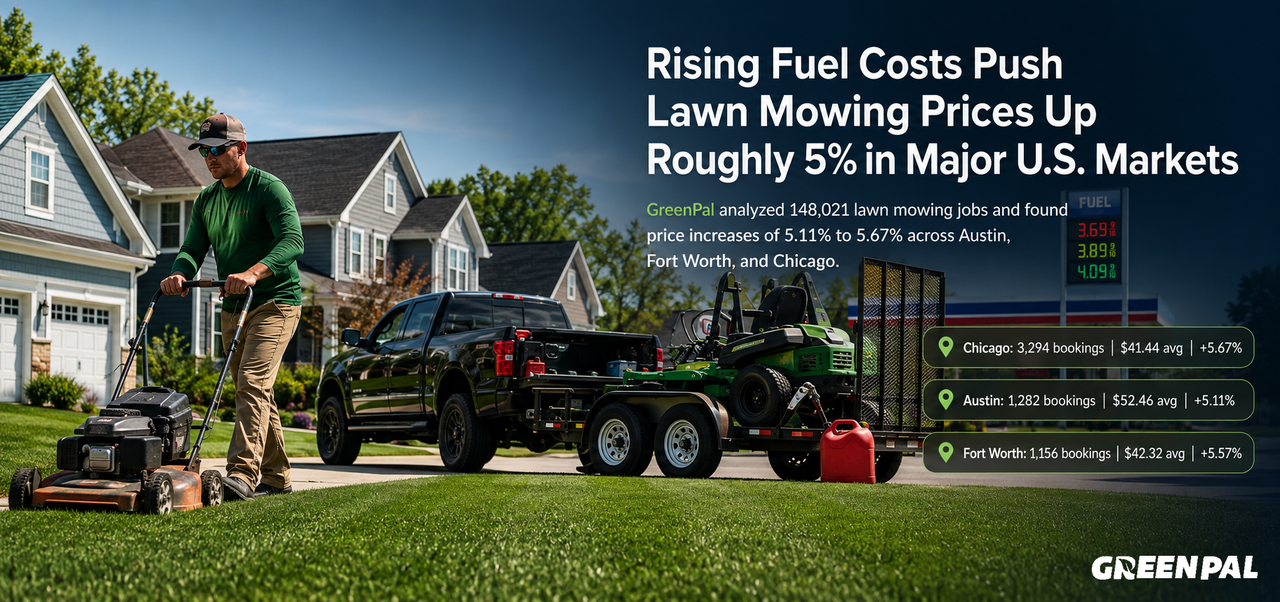
Lawn mowing prices are seeing increases of approximately 5% across several high-volume U.S. markets due to inflation and fuel costs, according to a report published August 14 by GreenPal.
GreenPal analyzed 148,021 lawn mowing jobs nationwide to identify pricing trends. The analysis focused on cities with more than 1,000 bookings to ensure results reflected established patterns rather than low-volume outliers.
In the markets analyzed, price increases ranged from 5.11% to 5.67%.
In Chicago, the average price per mowing was $41.44, representing a 5.67% increase. Fort Worth recorded an average price of $42.32 with a 5.57% increase. Austin showed an average price of $52.46, marking a 5.11% increase.
Fuel acts as a direct operating expense for lawn care companies, as providers must use it to transport equipment between properties and power mowers, trimmers, and blowers.
Bryan Clayton, CEO of GreenPal, stated that fuel affects almost every part of running a lawn care route. He noted that when fuel costs rise, providers eventually account for the expense in their pricing, which the transaction data shows happening gradually.
Homeowners may find that lawn care prices remain sensitive to fuel costs, particularly during peak mowing months.
Factors influencing these costs include property size, local labor costs, distance traveled between jobs, and route density. Providers with tightly grouped routes may be better able to absorb fuel increases than those serving customers across larger areas.