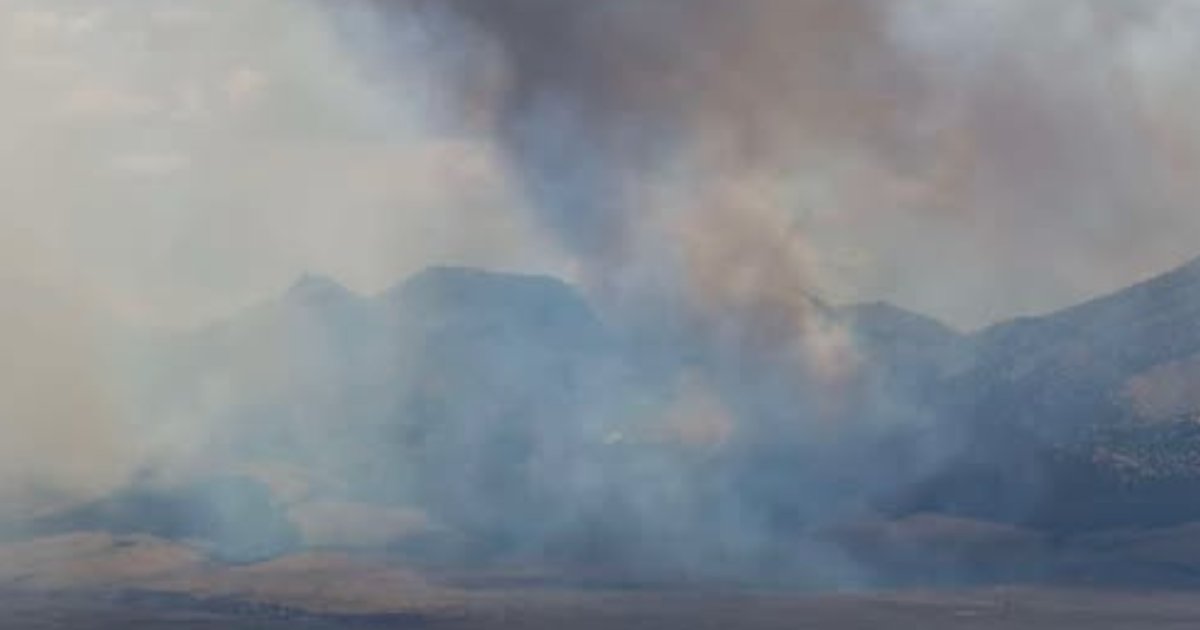
Interagency fire officials have implemented Stage 2 fire restrictions across much of Utah to combat extreme fire danger driven by persistent hot, dry weather and increasing statewide fire activity. The heightened restrictions, which prohibit all forms of open fires, apply to various state, private, and federal lands throughout the region.
Scope of Fire Prohibitions
The National Park Service announced that Stage 2 fire restrictions were implemented beginning August 1, 2025, at 12:01 a.m. The move follows a period of extreme fire danger and rising fire activity across the state. These Stage 2 prohibitions apply to all state and private unincorporated lands in Utah, including trust lands, wildlife management areas, and state parks.
Under Stage 2 restrictions, building, maintaining, attending, or using any type of fire or campfire is strictly prohibited. This ban includes the use of charcoal grills, pellet grills, and any fuel that produces ash. The prohibition remains in effect even within developed camping or picnic grounds and at private homes located on restricted lands.
In addition to state and private lands, several federal land management agencies have enacted Stage 2 restrictions. These include Bureau of Land Management (BLM) districts such as Color Country, Canyon Country, Green River, Paria River, and the West Desert. The U.S. Forest Service has also implemented Stage 2 measures for the Dixie, Fishlake, and Manti-La Sal National Forests.
Varying State Park Restrictions
While many areas are under strict bans, some federal lands remain exempt from the Stage 2 implementation. The Uinta-Wasatch-Cache National Forest and the Ashley National Forest are not currently subject to these specific Stage 2 restrictions, though the Uinta-Wasatch-Cache National Forest continues to use fire restrictions based on measured criteria like fuel moisture, weather predictions, and available firefighting resources.
For those visiting Utah State Parks, restrictions vary significantly by location. According to data from Utah State Parks updated as of June 26, 2026, several parks remain under Stage 1 restrictions, where open fires are only permitted in approved fire rings or grills at developed campgrounds that possess a pressurized running water system. Examples include Antelope Island State Park, Bear Lake State Park, and Camp Floyd State Park Museum.
Other state parks remain under no fire restrictions, allowing campfires provided park rules are followed. These locations include Garfield County's Anasazi State Park Museum, Davis County's Antelope Island, and Rich County's Bear Lake. However, officials warn that visitors must always ensure fires are completely out by feeling them with the back of a hand to confirm they are cool.
Extreme Fire Danger Drivers
The decision to implement tighter restrictions is driven by the critical drying of Utah's landscapes. Brett Ostler, a Fire Management Officer with the Utah Division of $\text{Forestry, Fire, and State Lands}$, noted that recent incidents like the Deer Creek and Monroe Canyon Fires demonstrate how quickly fire behavior can turn extreme in the state. He stated that as fuels dry out daily without relief, landscapes are becoming increasingly at risk for large wildfires.
Chris Delaney, the BLM Utah State Fire Management Officer, echoed these concerns, noting that lower-elevation ridslands are critically dry. Delaney warned that under hot and windy conditions, even small sparks can rapidly transform into fast-moving wildfires, making Stage 2 restrictions necessary to protect vulnerable landscapes and nearby communities.
Zephaniah Cunningham, Acting Fire Director for the Forest Service Intermountain Region, noted that while some national forests are facing critical conditions, others are not. Cunningham emphasized that agencies intend to allow recreation as freely as possible while protecting areas most susceptible to wildfire, adding that restrictions will be continuously evaluated and changed based on incoming data.
Prohibited Activities and Exceptions
Beyond fires, Stage 2 restrictions also prohibit several other high-risk activities. The ban includes the use of fireworks, tracer ammunition, and pyrotechnic devices such as exploding targets. Additionally, cutting, welding, or grinding metal in areas containing dry vegetation is forbidden.
Operating motorized equipment is also restricted; motorcycles, chainsaws, ATVs, and other small internal combustion engines may not be operated unless they are equipped with an approved and working spark arrestor. Smoking is only permitted within an enclosed vehicle, trailer, or building, at a developed recreation site, or while stopped in an area that is paved or cleared of dry vegetation.
There are limited exceptions to these rules. Properly shielded gas or liquid-fueled portable camp stoves with a shut-off valve are allowed, provided they are used in a space at least three feet in diameter that is barren of flammable vegetation. Furthermore, activities conducted under valid permits or waivers issued by land agencies, as well as official duties performed by on-duty firefighters, remain permitted.
Legal Penalties and Safety
Violating Stage 2 fire restrictions carries significant legal consequences. Under the current regulations, violations are classified as a Class B misdemeanor, which is punishable by a fine of up to $1,000 and up to six months in jail.
Utah State Parks advises all campers to use only approved fire pits and to never leave a fire unattended. For the most current information on agency-specific restrictions and maps, officials recommend visiting UtahFireInfo.gov or checking individual managing agency websites.