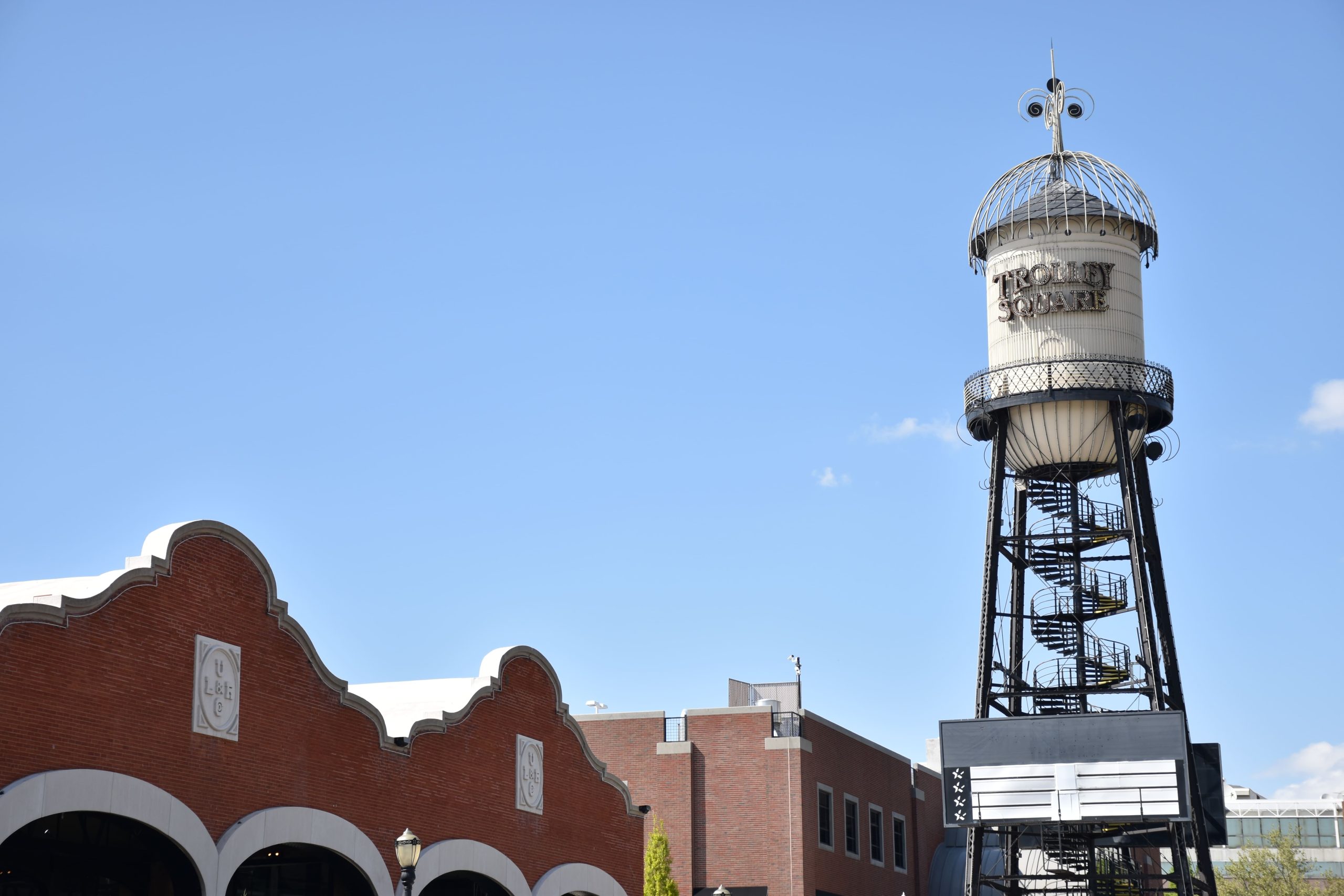
Trolley Square is expanding its retail and dining footprint as new stores prepare to open in the historic Salt Lake City district. The shopping center, which was originally constructed in 1908 to house the city's streetcars, is experiencing an upswing in commercial activity following a period of revitalization.
A Historic Transit Hub
The district, located between 600 and 700 East and 500 and 600 South, has become a major destination for local dining and shopping. A defining feature of the area is the neon-lit water tower situated on the east side of the red brick building, an icon that can be seen from miles away. According to the City of Salt Lake City, the area serves as a vital part of the city's historic character.
The Era of Mule-Pulled Cars
The origins of the district are deeply tied to the development of public transportation in Utah. In 1872, the Salt Lake City Railroad Company was formed and applied for enfranchisement with the city. By the summer of 1872, the first tracks were laid, running from the rail depot at 300 West and South Temple to 300 South and Main Street.
During the initial years of service, the public relied on mule-pulled street cars, which operated from 1872 until 1888. The early transit experience was often difficult for passengers, who frequently complained about bumpy rides, unexpected stops caused by the mules, the risk of street cars derailing, and the inconvenience of having to walk the remainder of their journeys when mules became spooked or ran away.
The Land Shark Controversy
The land that currently comprises Trolley Square has a contentious history involving a 10-acre lot known as the 10th Ward Square. In 1888, a man named Alma H. Winn attempted to claim the lot for himself, an act that earned him the nicknames "Land Shark" or "Land Jumper" in local newspapers. Winn attempted to plow the ground and post a sign stating "This Land for Sale," despite not owning the property.
In response to Winn's attempt to seize the public land, Mayor Francis Armstrong coordinated a massive posse that was deployed to the 10th Ward Square to remove Winn and his accomplices. This incident served as a catalyst for the city to take more decisive action regarding the management of public land. Less than a month after the controversy, on March 7, 1888, Salt Lake City sold the 10th Ward Square to the Deseret Agriculture and Manufacturing Society, which managed the Utah Territorial fair.
Architectural and Sporting Legacy
The development of the area was further shaped by the Utah Exposition building, which opened on October 3, 1888. The design for the building was won in a contest by Richard Kletting, who was operating under the pseudonym "Monday." Kletting went on to become one of Utah's most prominent architects, designing several landmarks that remain on the U.S. National Registry of Historic Places, including the original Saltair Resort Pavilion, the Enos Wall Mansion, and the Utah State Capitol Building.
The Exposition building also served as a venue for major sporting events. On Thanksgiving Day in 1894, the University of Utah football team played a significant match against Salt Lake High School. Although the University trailed 6 to 0 at halftime, they eventually secured a 14 to 6 victory after a hard-fought second half.
Preservation and Maintenance
Preserving the character of the district remains a priority for local government. The City of Salt Lake City maintains that properties located in local historic districts or designated landmark sites require planning approval for any exterior changes to ensure the protection of the neighborhood's historic character.
Additionally, the city provides guidance on the maintenance of historic materials. For example, the City of Salt Lake City advises residents that unpainted historic masonry—such as brick, stone, terracotta, and adobe—should remain unpainted to prevent structural damage. Painting these materials can trap moisture, which leads to extensive degradation of the masonry units.
A Growing Legacy
As Trolley Square continues to evolve, it maintains its connection to Salt Lake City's foundational history. From the early days of mule-drawn transit to the architectural contributions of Richard Kletting, the district remains a cornerstone of the city's cultural and commercial landscape.