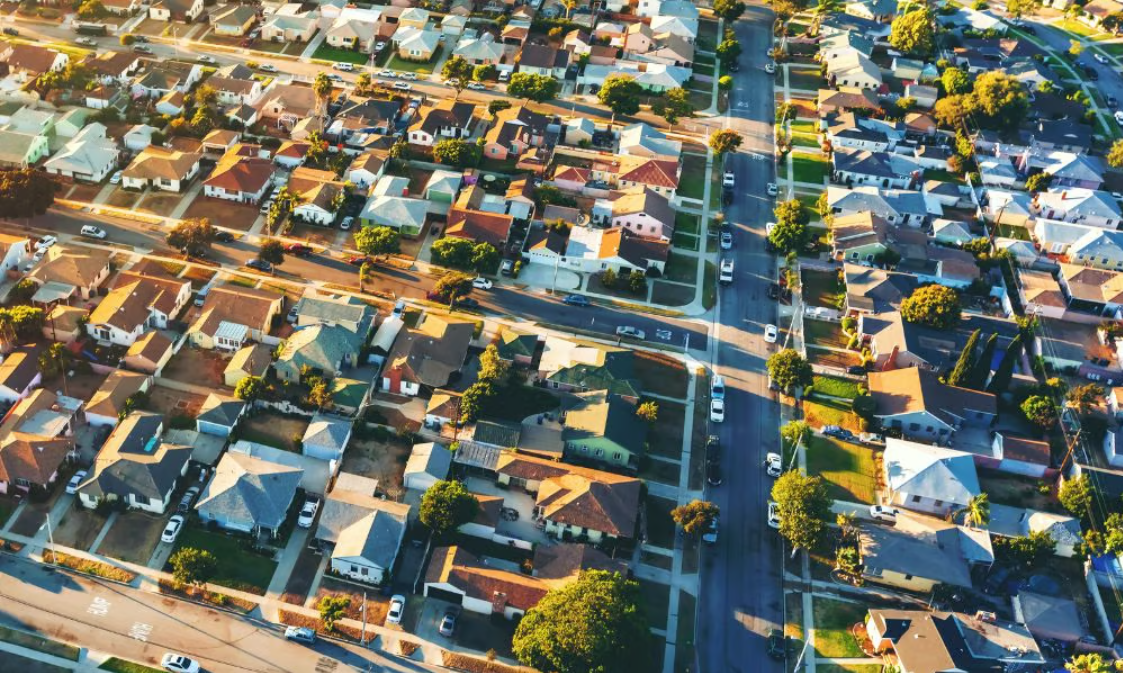
Goldman Sachs Research forecasts that the U.S. housing market will face significant affordability headwinds in 2027, with existing home sales expected to decline to 3.9 million units. This projection follows a period of rising mortgage rates, which reached a 30-year fixed-rate average of 7.40% as of October 8, 2026.
The Mortgage Lock-In Effect
Industry analysts suggest that high interest rates are creating a "lock-in effect" that restricts the supply of available homes. According to Goldman Sachs Research, more than 95% of U.S. mortgage borrowers currently hold interest rates below prevailing market levels, and 65% carry rates at least two percentage points below the current benchmark. Pandemic-era loans now represent 42.8% of all outstanding U.S. mortgages, which economists Ronnie Walker and David Mericle say has created a significant financial cost for homeowners wishing to move.
Michael A. Harris, president and CEO of United Mortgage Corporation of America, noted that this rate lock-in influences homeowner decisions, particularly for those who secured rates below 4%. Harris warned that while low rates are valuable, they should not become a "financial or personal trap" that prevents borrowers from meeting long-term financial goals.
Revised 2027 Forecasts
Fannie Mae's Economic and Strategic Research (ESR) Group has significantly revised its 2027 outlook, projecting that the 30-year fixed mortgage rate will hold at 7.5% throughout all four quarters of 2027. This is a notable increase from previous forecasts that estimated the rate would be 6.7% next year.
Fannie Mae also anticipates a slowdown in home price growth, forecasting a rise of just 0.6% in 2027, down from 2.7% in 2026. Additionally, the company projects that single-family mortgage originations will fall from approximately $2.09 trillion in 2026 to $1.87 trillion in 2027, while refinance lending is expected to shrink from $655 billion to $430 billion.
Builder Performance Declines
The pressure of high interest rates is already impacting major homebuilders. D.R. Horton reported during its fiscal fourth quarter that rising mortgage rates and affordability constraints contributed to year-over-year declines in both closings and new orders. The company closed 22,915 homes during the quarter, a 2% decrease from the same period last year.
Executive chairman David Auld stated that housing market conditions became more challenging during the fourth quarter due to cautious consumer sentiment and affordability constraints. D.R. Horton also saw a sharp pullback in home starts, with approximately 13,100 homes started during the September quarter, a 45% sequential decline.
Salt Lake County Market Trends
In Salt Lake County, the market has shown signs of shifting toward a more balanced state. As of October 14, 2026, the county had 3,526 active listings with a median list price of $560,000. Based on the July through September 2026 pace, the county's housing supply was estimated to be between 3.6 and 3.9 months, placing it at the bottom edge of the balanced range.
Local market data from October 14, 2026, indicated that more than half of the homes for sale had undergone at least one price cut. Additionally, nearly two in three sales from the July through September period involved seller concessions, with the typical amount being $10,000 to assist with buyer closing costs or lower interest rates.
Economic Drivers of Rates
The broader economic environment continues to influence borrowing costs. Mike Fratantoni, chief economist at the Mortgage Bankers Association (MBA), explained that high inflation is driving central banks to raise short-term rates, while high budget deficits and debt are pushing bond investors to increase longer-term rates.
While some analysts, such as Cotality chief economist Dr. Selma Hepp, have cautioned that even gradual rate declines may be insufficient to unlock the market if prices remain elevated due to limited supply, Goldman Sachs Research expects rates to ease to approximately 6.4% by the end of 2027.