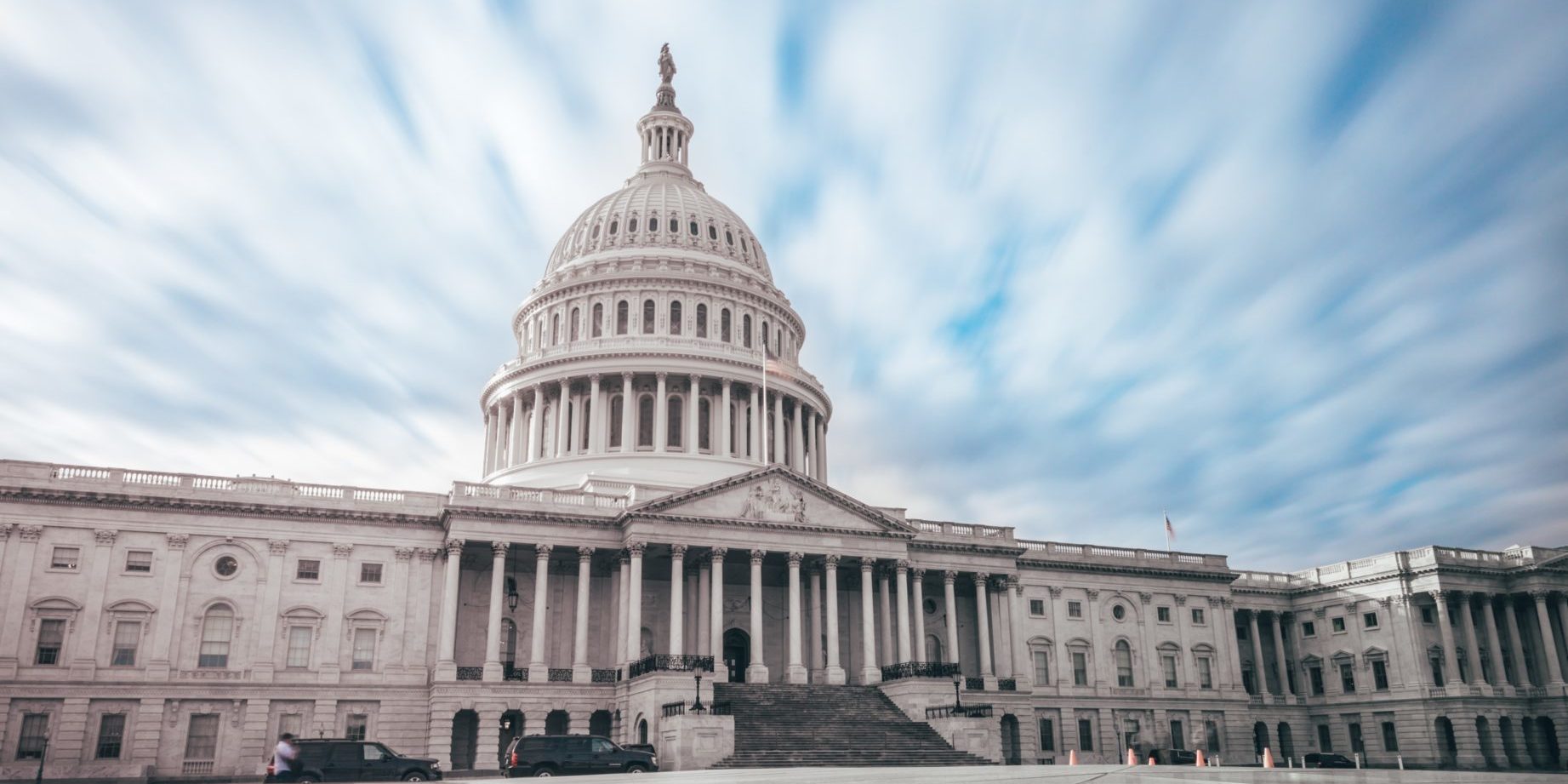
State governments across the nation are launching legal challenges against federal regulators to potentially prohibit prediction markets, arguing these platforms function as unregulated gambling. The escalating conflict pits state-driven litigation against the Commodity Futures Trading Commission's authority to oversee event contracts used by millions of Americans.
Federal Regulatory Battle
The Commodity Futures Trading Commission (CFTC) is currently engaged in a significant legal struggle to defend its exclusive jurisdiction over what it calls 'event contracts.' In an op-ed published in the Wall Street Journal, CFTC Chairman Michael S. Selig stated that nearly 50 active cases are presenting challenges from state governments seeking to establish statewide prohibitions on these products.
According to Selig, many states allege that these contracts are a form of gambling and should therefore be subject to state laws. The CFTC responded by filing a friend-of-the-court brief on Tuesday in the Ninth U.S. Circuit Court of Appeals to support Crypto.com, asserting that overzealous state governments are attempting to undermine federal authority.
Financial Tools vs. Casinos
The debate highlights a fundamental disagreement regarding the nature of these platforms. The CFT::C maintains that event contracts are 'swaps' under the Commodity Exchange Act, serving legitimate economic functions such as allowing farmers to hedge against temperature changes or small businesses to manage energy-price spikes. Selig noted that the agency has overseen the integrity of such markets since 1992, when it granted relief to the Iowa Electronic Markets.
Conversely, critics argue these platforms are indistinguishable from casinos. In a January 26, 2026, analysis, Benjamin Schiffrin, Director of Securities Policy for Better Markets, argued that firms like Kalshi and Polymarket have 'unleashed unregulated nationwide gambling' by allowing bets on everything from the Golden Globe awards to political outcomes without public interest oversight.
Schiffrin claimed these platforms use the term 'prediction markets' specifically to bypass long-standing state regulations designed to protect consumers and prevent organized crime. He further asserted that these markets are not representative of the general public but are instead dominated by a small group of young men with high risk appetabilities, making it difficult to extract meaningful societal data from their odds.
Risks of Information Warfare
Beyond the regulatory debate, security experts are raising alarms about the potential for these markets to be used as a vector for foreign influence and information warfare. A February 17, 2026, report from the Atlantic Council warned that as mainstream media outlets integrate prediction market data into their reporting as 'quasi-authoritative signals,' they risk amplifying engineered narratives created by adversaries.
The report noted that because these markets can be 'thin' and dominated by a small pool of sophisticated bettors, actors with significant capital can move prices to shape public opinion. This could manifest in commercial contexts—such as a studio buying the 'yes' side of a film performance market to manufacture optimism—or in much more dangerous geopolitical scenarios.
Specifically, the Atlantic Council highlighted that foreign intelligence services could exploit stolen data to take positions in markets related to regime stability or military escalation, then use coordinated media pushes to frame price movements as 'evidence' of impending events. The report also noted the rise of AI-generated content, which could supplement these financial manipulations with fabricated evidence to further erode trust in democratic institutions.
Insider Trading and Manipulation
The potential for market manipulation and insider trading has already been documented in high-profile instances. Schiffrin cited a case involving the capture of Venezuelan leader Nicolas Maduro, noting that an anonymous Polymarket user placed a $30,000 bet that would net $436,000 in winnings shortly before the event became public.
Similar concerns regarding the use of classified information were reported in February 202 and involving the Israeli military. According to the Atlantic Council, at least two individuals were indicted for using classified national security intelligence to place wagers on Polymarket to reap profits as high as $100,000.
Critics also point to the potential for 'insider trading' in political markets. Schiffrin argued that anyone with knowledge of nonpublic events—such as a major campaign hire or a significant donation—could profit by placing bets before the information reaches the public, effectively stealing from those on the other side of the zero-sum game.
Future Oversight and Growth
Despite the intense criticism, industry growth remains significant. An industry report cited by the CFTC estimates that the global number of users for these platforms has quadrupled to 15 million in recent years.
To mitigate risks, the Atlantic Council suggested that media organizations adopt transparent standards when citing market data and that regulators develop disclosure requirements for large, coordinated positions in sensitive markets. The CFTC continues to maintain that its existing oversight, including market surveillance and anti-money-laundering measures under the Bank Secrecy Act, is sufficient to prevent fraud and protect investors.