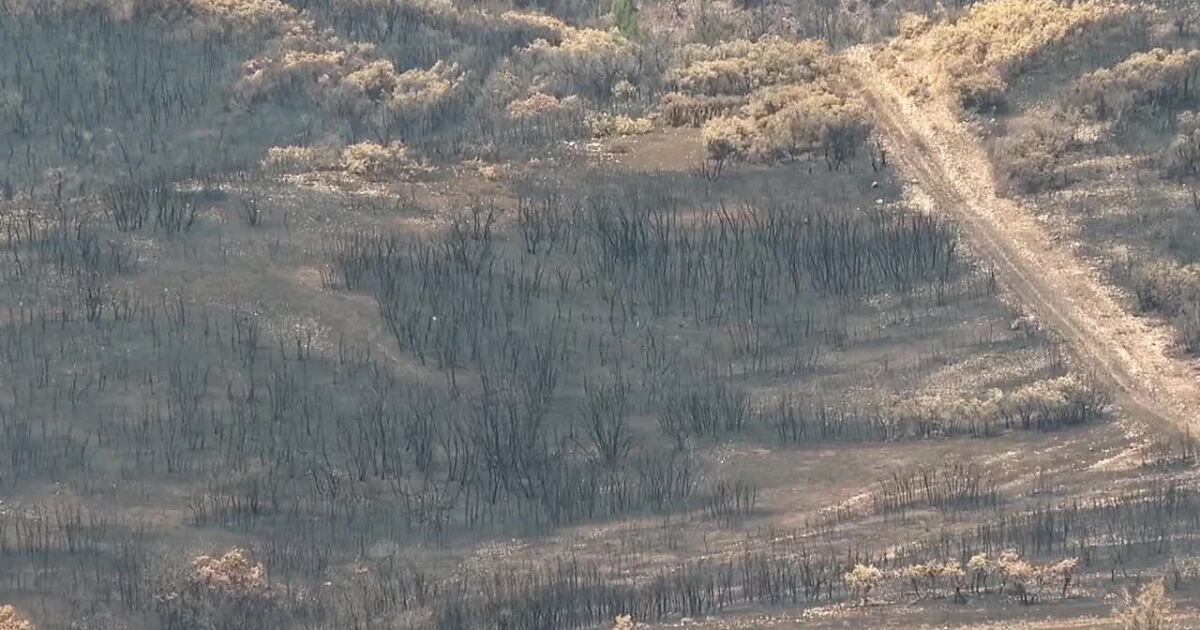
The Rocky Canyon Fire reached 96% containment on August 22, 2026, as fire management transitioned to a Type 4 team after burning 16,464 acres in Morgan and Summit counties. The blaze, which ignited on August 7, 2026, has prompted federal assistance to cover significant firefighting costs.
Transition to Type 4 Management
Management of the fire transitioned from the Northern Utah Interagency T3 Team to a Type 4 team on the morning of August 22, 2026, according to Utah Fire Info. While the threat to local communities has been removed, officials warned that 100% containment may not be reached for some time, potentially not until after the first snowfall.
Crews will continue to patrol the area and address hot spots, a process that could last for months. Utah Fire Info noted that while fire behavior is reducing, visible smoke will continue to emanate from the existing fire perimeter for the foreseeable future.
Fire Ignition and Impact
The fire, which was caused by human activity, ignited on Friday, August 7, 2026, near East Canyon State Park. The blaze spread from Morgan County into neighboring Summit County, fueled by dry vegetation and steep, rugged terrain. During its most active periods, the fire was driven by hot temperatures and gusty, erratic winds that caused dormant heat to begin smoking and torching in the Bishop's Canyon area.
At the peak of the incident, hundreds of residents were displaced, and a temporary evacuation shelter was opened at the Henefer LDS Chapel. All mandatory evacuation orders for residents in Summit and Morgan counties were lifted as containment increased. Currently, the area remains closed to the public due to hazards including loose rocks, landslides, and the risk of extreme burns.
Ecological and Structural Impact
The Rocky Canyon Fire has burned through a large portion of the East Canyon Wildlife Management Area, a 6,200-acre protected area recently acquired by the state for nearly $20 million. Wildlife biologists are currently assessing the ecological impact on the area, which provides critical winter range for elk and deer and serves as a habitat for sage, dusky, and ruffed grouse.
While two small structures were reported lost earlier in the incident, firefighters successfully protected East Canyon State Park and other structures along State Route 65 and Highway 66 using strategic firing operations. No fatalities or major injuries have been reported in connection with the fire.
Federal Funding and Assistance
Federal assistance was mobilized early in the fire's progression. On August 10, 2026, FEMA authorized a Fire Management Assistance Grant (FMAG) to help cover eligible firefighting costs after determining the fire threatened enough destruction to constitute a major disaster.
Under the grant, FEMA provides funding to pay 75 percent of the state's eligible firefighting costs. These funds cover expenses such as equipment use, repair, replacement, field camps, and mobilization, though they do not provide assistance to individual home or business owners or cover infrastructure damage.
Infrastructure and Access Status
Infrastructure and transportation routes have faced ongoing management following the fire. Highways 65 and 66 were reopened on August 17, 2026, though authorities cautioned drivers to watch for debris and potential mudslides.
As of August 22, 2026, the East Canyon Reservoir remains closed to motorized boating but is open to non-motorized activities via the south entrance. Entrances to the Wildlife Management Area and the north entrance of East Canyon State Park remain closed to the public.