An administrative hearing officer denied an appeal from local residents seeking to block major lift upgrades at Park City Mountain on Wednesday, July 29, ruling that the Park City Planning Commission correctly applied city land management code. The decision affirms the city's approval of plans to expand the Silverlode Express and replace the 30-year-old Eagle and Eaglet chairlifts.
Hearing Officer Rejects Resident Appeal
Park City's Administrative Hearing Officer Tim Pack concluded in his Wednesday decision that there is no causal relationship between increased lift capacity and an increase in the number of skiers on the trails. Pack instead found evidence that the proposed infrastructure upgrades will actually improve safety, reliability, and the overall guest experience.
In his ruling, Pack also addressed concerns regarding congestion, noting that parking and traffic demand will not increase because the resort has a mitigation plan in place. The decision follows a July 16 hearing where residents argued that the upgrades would contribute to unsafe and overcrowded conditions on the terrain served by the Silverlode and Eagle lifts.
The ruling effectively shuts down an appeal filed by six Park City-area residents on June 8. The appellants had sought to have the issue sent back to the planning commission for a more thorough review, specifically requesting a more detailed analysis of the resort's capacity.
Proposed Lift Enhancements and Debate
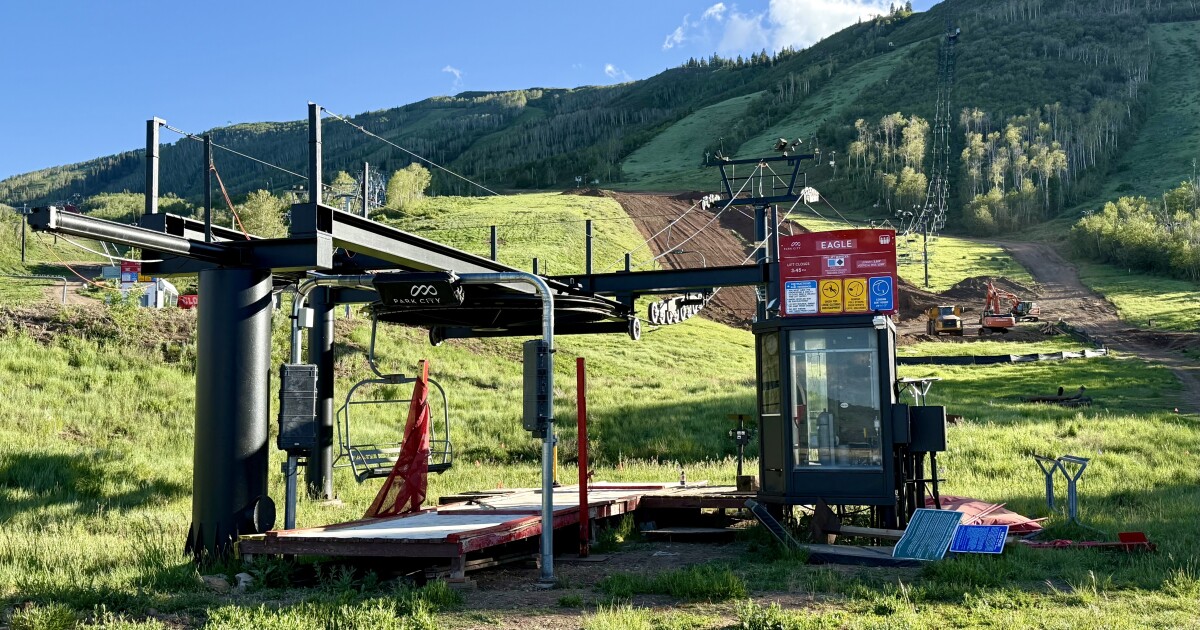
The approved upgrades involve two major projects designed to improve mountain connections. The Silverlode Express will be expanded from its current six-passenger detachable configuration to an eight-passenger detachable lift. Additionally, the 30-year-old Eagle and Eaglet chairlifts will be replaced with a new six-passenger detachable chairlift that includes a mid-mountain station.
The planning commission had previously approved these upgrades in a 5-0 vote on May 27. During that vote, Adam Strachan, a former attorney for the resort who joined the board this year, recused himself. While the vote was unanimous, the decision was not without debate.
Resident Frode Jensen, one of the appellants, testified to the commission that increased lift capacity inevitably leads to increased downhill crowding. Jensen argued that such crowding creates a detrimental impact on safety and the customer experience. He also noted that the resort has already admitted that the upgrades generate a detrimental impact that requires a mitigation plan for traffic and parking.
The Controversy Over Carrying Capacity
The current legal dispute is the latest chapter in a yearslong conflict over mountain capacity. In 2022, the resort made a first attempt to upgrade the Silverlode, Eagle, and Eaglet lifts, which sparked three years of litigation. In that instance, four residents successfully overturned the planning department's initial approval through the courts.
At the center of the controversy is the concept of 'comfortable carrying capacity,' or CCC, which measures how many skiers and riders a mountain can manage. Appellants argued that the planning commission unlawfully ignored evidence regarding how these upgrades would affect overcrowding. They contended that the commissioners should have factored in a CCC analysis to determine the true impact on the mountain.
Park City Mountain Vice President and COO Deirdra Walsh has maintained that the current process has been "rigorous and transparent." In a statement released in June, Walsh noted that more than 80 community members, including Olympic athletes and industry leaders, supported the projects, arguing they would meaningfully improve the experience for guests and residents alike.
Legal Framework and Procedural Shifts
A significant legal distinction exists between the 2022 application and the current one. The 2022 attempt was submitted under an administrative process that required CCC information and gave the city's planning director final authority. Following a 2025 ruling by the Utah Court of Appeals in favor of local residents, the resort returned the upgrades to the planning commission under a different set of rules.
Under the current conditional use permit (CUP) process, the resort was not required to provide CCC data. City Attorney Mark Harrington testified to the planning commission that the current applications do not require such an analysis or any other independent criteria beyond what is required by the code. Park City Municipal attorney Lara Swenson echoed this, stating that the plain language of the development agreement does not require a CCC analysis.
Despite these legal arguments, appellants including Catherine Jensen, Alan Theis, Marvin Kabatznick, Andrea Griffis, and Allan Inglis have remained steadfast in their opposition. They argue that the resort's internal calculations for carrying capacity are proprietary and have never been made public, making it impossible to determine if the mountain can safely manage the increased volume.
Community and Industry Support
The support for the upgrades has come from various sectors of the ski community. During the May 27 commission meeting, residents like Janine Troilo expressed confidence in the resort's ability to manage increased traffic through ski patrol, safety, and lift operations.
In addition to local residents, the proposals received support from high-profile figures, including two-time Olympic gold medalist Ted Ligety. Other organizations that voiced support for the upgrades include the National Ability Center, Park City Ski and Snowboard, and Ski Utah.
===== END =====