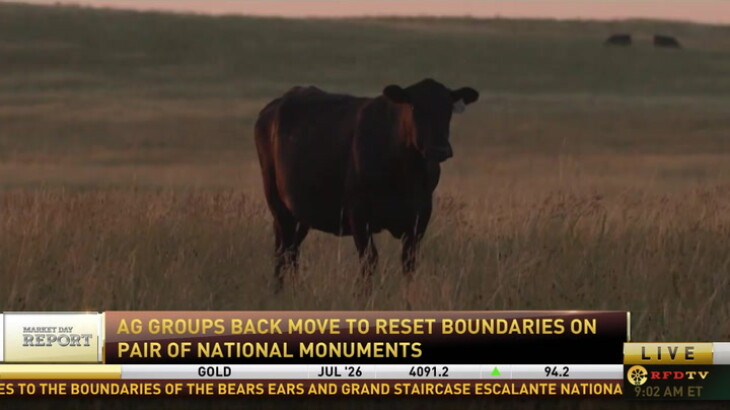
The Trump administration scaled back the boundaries of two major national monuments in Utah, a move intended to expand multiple-use management across more than two million acres of federal land. The administration announced it would reduce the size of the Bears Ears and Grand Staircase-Escalante National Monuments to reopen acreage for uses such as livestock grazing.
The administration stated that these boundary changes were designed to balance conservation with traditional land uses, including recreation and other multiple-use activities on public lands.
Cattle industry groups, including the Public Lands Council and the National Cattlemen’s Beef Association (NCBA), welcomed the decision. These organizations had long argued that previous monument designations limited access to federally managed grazing lands.
Supporters of the change suggested that restoring multiple-use management would provide ranchers with greater flexibility and assist in sustaining rural economies that depend on public lands for livestock production.
Economic impacts were a central part of the debate regarding the monument boundaries. A previous study conducted by the University of Utah found that reduced grazing opportunities within the monument areas resulted in a loss of more than $9 million in economic activity for the state, highlighting the importance of federal grazing access to many rural communities.