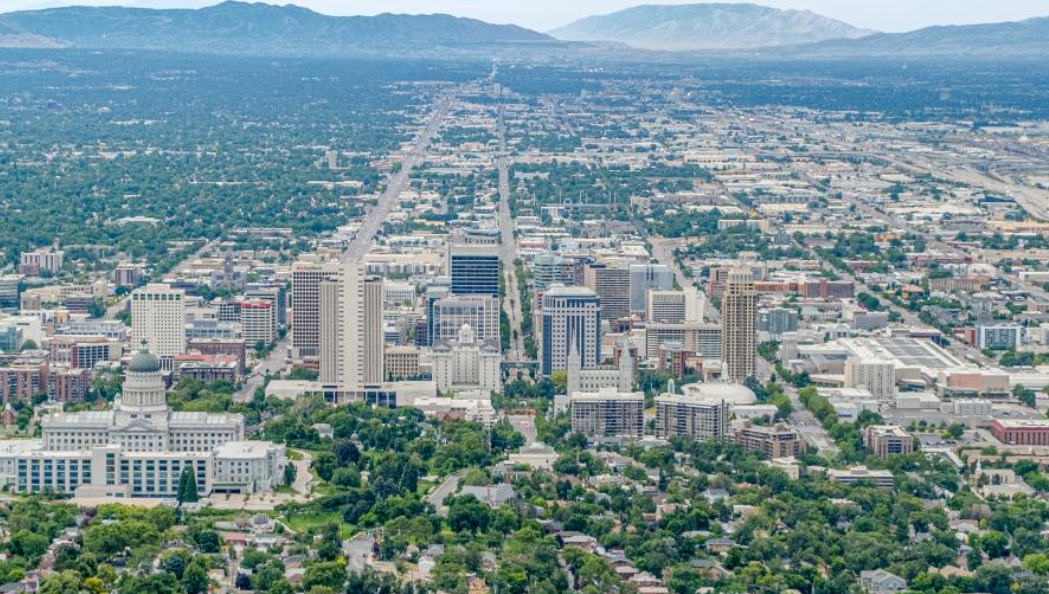
Air quality levels across the Wasatch Front have reached moderate levels on Friday, August 8, 2026, as particulate matter and ozone concentrations approach thresholds that may affect sensitive populations. According to the Utah Department of Environmental Quality, current conditions in Wasatch County show PM 2.5 levels at 9.3 µg/m3, while Salt Lake County reports PM 2.5 at 11.5 µg/m3.
Current Atmospheric Conditions
Current meteorological data from the Utah Department of Environmental Quality indicates that temperatures in Wasatch County have reached 93 degrees Fahrenheit with winds from the west at 9.8 mph. In Salt Lake County, the temperature was recorded at 80 degrees Fahrenheit with southeast winds at 2.5 mph.
Ozone levels are also being monitored closely. In Wasatch County, the ozone concentration is 0.061 ppm, a level categorized as moderate according to the state's Air Quality Index. In Salt Lake County, the ozone level is 0.031 ppm, which falls within the good range.
State officials note that air pollution varies throughout the day, influenced by temperature and sunlight. High temperatures and bright sunshine can cause hydrocarbons and nitrogen oxides to react chemically, leading to the formation of harmful ground-level ozone.
Seasonal Pollution Drivers
The Salt Lake City government has identified significant air quality challenges that fluctuate by season. During winter, the unique geography of the Wasatch Front leads to temperature inversions, which act like a lid on the Salt Lake Valley, trapping cold air and causing particulate pollution to double every day.
In the summer, the combination of high temperatures, bright sunshine, and emissions from cars, industry, and various chemical products leads to elevated ozone levels. According to a 2022 Utah Department of Air Quality report cited by Salt Lake City, mobile sources—including cars, semi-trucks, trains, buses, and airplanes—remain the greatest source of emissions in the Wasatch Front.
On-road mobile sources account for approximately 39% of the annual man-made pollution along the Wasatch Front, which includes nitrogen oxides, PM2.5 exhaust, and volatile organic compounds (VOC). While heavy-duty diesel vehicles represent only 7.5% of vehicle miles traveled, they are responsible for over 30% of mobile source pollution.
Health Risks and Vulnerable Groups
As the Utah Department of Environmental Quality monitors these levels, health officials warn that certain populations are at higher risk when air quality declines. The Environmental Protection Agency (EPA) notes that individuals with heart or lung diseases, people with diabetes, older adults, and children under the age of 18 are more likely to be affected by particle pollution.
When air quality reaches the 'Unhealthy for Sensitive Groups' threshold—which for PM 2.5 begins at 35.5 µg/m3—these sensitive individuals are advised to reduce prolonged or heavy exertion. For particulate matter, the EPA notes that there is little evidence of a population threshold, meaning even serious effects such as mortality can occur at low levels of exposure.
In the event that thick smoke from wildfires occurs, the Utah Department of Environmental Quality advises those with existing heart or respiratory ailments to reduce physical exertion and outdoor activity to mitigate health risks.
Historical Trends and Regulation
The Utah Environmental Public Health Tracking Network monitors these environmental factors to track public health trends. Historical data from the state shows that in 2019, 75% of days monitored for the Air Quality Index were rated as 'good,' while 23% were considered 'moderate.'
However, the state has faced challenges with ozone levels. In 2020, 11 Utah counties recorded at least one day where the 8-hour average ozone concentration exceeded the National Ambient Air Quality Standard.
To combat these issues, the Utah Department of Environmental Quality manages various regulatory functions, including monitoring Utah's air, developing pollution reduction plans, issuing permits, and enforcing air rules. The Division of Air Quality also provides resources to help the public understand the impacts of wood-burning, inversions, and industrial emissions.
Mitigation and Public Action
To help improve local air quality, the State of Utah and Salt Lake City encourage residents to adopt several voluntary measures. The Utah Department of Environmental Quality suggests conserving energy by turning off unused lights and appliances, recycling, and planning automobile trips to reduce unnecessary driving.
Public transportation, biking, or walking are also recommended alternatives to driving. Additionally, the state suggests that residents limit volatile organic compound (VOC) emissions and consider using battery-powered yard equipment instead of gas-powered tools to reduce noise and fumes.
For real-time updates, residents can use the Utah Air mobile app or visit the AirNow Interactive Map, which provides data from monitors across the U.S., Canada, and Mexico.