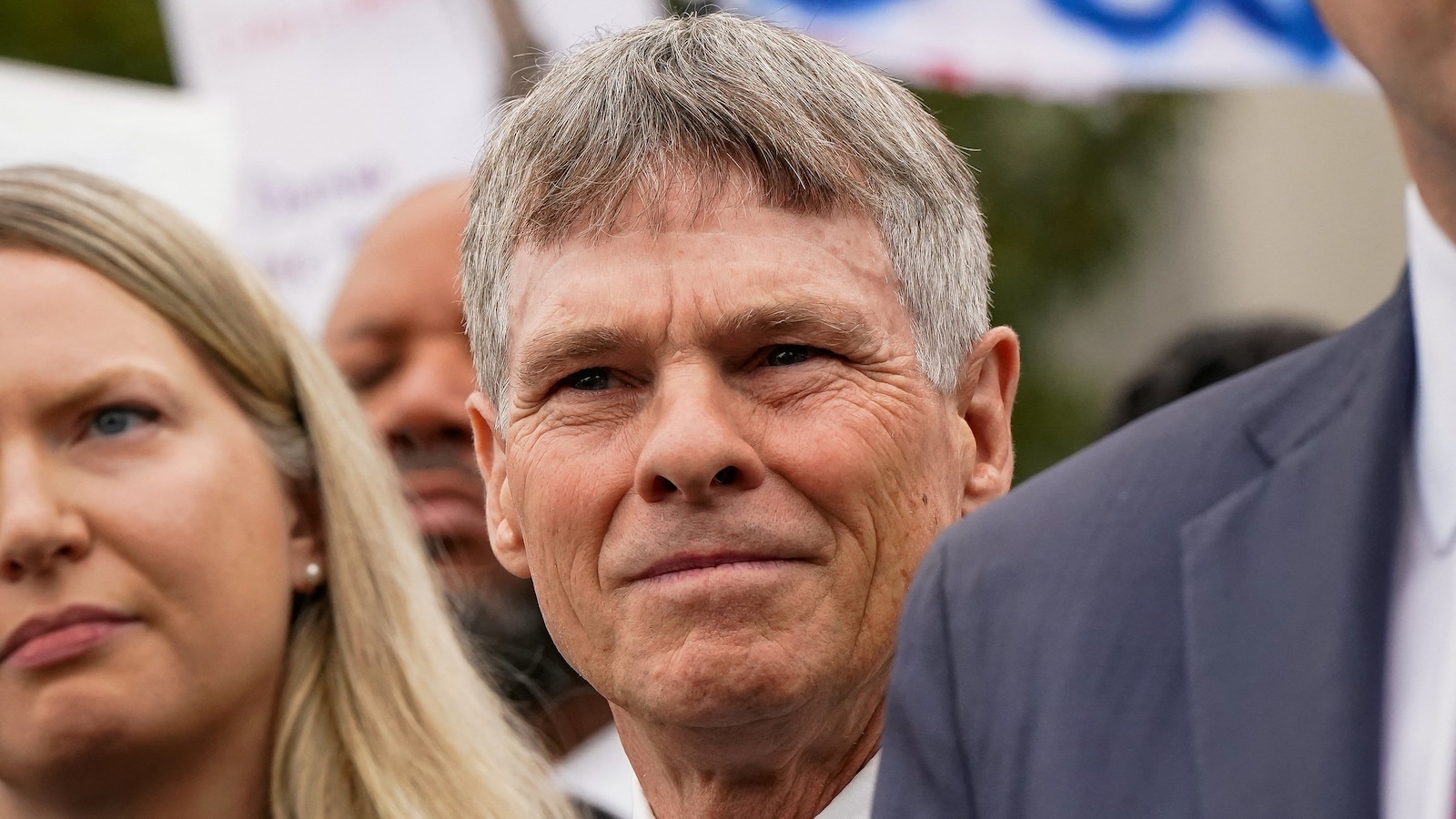
SALT LAKE CITY — Gov. Spencer Cox has pointed to the extensive legal resumes of Utah’s Supreme Court nominees. But the KSL Investigators found Jay Jorgensen and Stephen Dent would take seats on the state’s highest court without something every current justice had before joining it: prior judicial experience.
Current justices have prior experience
The four justices currently serving on the Utah Supreme Court all served as judges before joining the high court.
Jorgensen and Dent were selected by Cox to fill newly created seats on the Utah Supreme Court. Their nominations still require confirmation from the Utah Senate.
Governor Cox defends selection process
At the announcement, Cox said the state’s merit-based judicial selection process “puts qualifications, character and independence above politics.” He said his office reviewed the nominees’ records, writing samples and legal work before making the selections.
“That rigorous process gives me tremendous confidence that the appointees I’ve chosen will serve the people of Utah with integrity, humility and independence,” Cox said.
Concerns over lack of experience
But Teneille Brown, president of the board of Co-Equal Utah, said what stood out to her was not what was on the nominees’ resumes, but what was missing.
“What really stood out to me was the lack of judicial experience and frankly also the lack of trial experience,” Brown said.
Neither nominee has issued rulings as a judge. Brown said that leaves no judicial record for lawmakers or the public to review.
Senate committee views on nominations
State Sen. Todd Weiler, R-Woods Cross, chairs the Utah Senate Judicial Confirmation Committee. He acknowledged the concern, but said prior bench experience is not the only measure of who could serve well on the Supreme Court.
“I’ve always believed since I’ve been in a position to get to vote on these that it is a best practice to have appellate courts with a mix of former judges and others that haven’t been former judges,” Weiler said.
Weiler said Utah’s recent Supreme Court nominees have been former judges, which may be why these nominations are getting attention.
National trends in judicial appointments
According to the Brennan Center for Justice, 65% of sitting state supreme court justices nationwide previously served in another judgeship. That means 35% did not.
Chihiro Isozaki, counsel for the Brennan Center’s Democracy Program, said prior judicial experience is one way to assess a nominee’s background, but not the only way.
“Qualified judges come in all shapes and sizes,” Isozaki said. “One particular qualification is not the end-all, be-all of a qualified judge.”
Still, Brown said the absence of prior rulings matters, especially for appointments to the state’s highest court.
Detailed resumes of the nominees
For Jorgensen, Cox highlighted a career that included clerkships for then-federal Judge Samuel Alito and Chief Justice William Rehnquist on the U.S. Supreme Court. Cox said Jorgensen also worked at Sidley Austin, served as an executive vice president at Walmart, overseeing global ethics and compliance, and later became senior counsel for The Church of Jesus Christ of Latter-day Saints.
For Dent, Cox pointed to his academic record at the University of Utah’s law school, where he graduated first in his class, as well as clerkships for Judge Robert Shelby in Utah’s federal district court and Judge Scott Matheson Jr. on the 10th U.S. Circuit Court of Appeals. Cox said Dent worked at Gibson, Dunn & Crutcher before joining the U.S. Attorney’s Office in Utah, where he has prosecuted federal crimes.
Cox said the two nominees rose to the top after interviews and vetting.
“I feel just incredibly blessed that we had such amazing, qualified people who care deeply and were interested in this position and that two of them rose to the top,” Cox said.
Weiler said there is always some uncertainty when appointing a justice, even when a nominee has served as a trial court judge, because trial court rulings are often not published or easily searchable.
“My philosophy is you get really, really smart people with good ethics and good integrity and you kind of cross your fingers and hope for the best,” Weiler said.
He also said justices who come from outside the bench can bring a different perspective when reviewing lower court decisions.
“There is a feeling that if you have just all judges, maybe they don’t view things the same,” Weiler said.
Brown disagreed with the idea that a lack of judicial experience should be viewed as a strength.
“Would you want someone to be a referee in a basketball game who never played basketball?” Brown said.
Brown said appellate justices often review decisions made by trial court judges, which is why she believes experience inside a courtroom matters.
“If you’re sitting on high as an appellate judge making rules for the trial court and you don’t understand how that works or that experience, then I think it leads to really bad judicial decision-making,” Brown said.
The governor has defended the selections, saying he focused on legal qualifications and who he believes will best serve the state.
At the announcement, Cox said he believes the nominees “will apply the law faithfully and according to the Constitution.”
The KSL Investigators asked the governor’s office about concerns regarding the nominees’ experience, but had not heard back.
The Senate Judicial Confirmation Committee is seeking public comment on Jorgensen and Dent through 5 p.m. Tuesday, June 16. Comments should include the person’s name, telephone number and mailing address.
Electronic comments can be sent to senatejudicialnominees@le.utah.gov.
Written comments can be mailed to:
Utah Senate Judicial Confirmation Committee450 N. State Street405 North Capitol BuildingSalt Lake City, UT 84114
The committee plans to hold a public hearing before issuing a recommendation to the full Senate.
Have you experienced something you think just isn’t right? The KSL Investigators want to help. Submit your tip at investigates@ksl.com or 385-707-6153 so we can get working for you.
This story was adapted from a TV broadcast script using artificial intelligence. Every story, including those adapted with AI, is reviewed by a human editor before publication to ensure that KSL's editorial standards are upheld.