U.S. Central Command announced Tuesday, Sept. 1, 2026, that United States forces have begun striking targets belonging to the Islamic Revolutionary Guard Corps (IRGC) within Iranian territory. The strikes were launched in response to recent attempts by the IRGC to attack commercial shipping in the Strait of Hormuz and attacks directed at American service members deployed to the region.
Regional Escalation and Retaliation
The military action follows a period of heightened tension and specific recent hostilities. On Sunday, the U.S. military announced it had conducted strikes against rocket launchers located on Larak Island in the Strait of Hormuz. In retaliation for previous actions, Iran has launched missiles at U.S. bases in Jordan, though those projectiles were intercepted. Additionally, the United Arab Emirates reported that it had intercepted an Iranian drone over its waters.
Iranian Response to Strikes
Iranian state television reported hearing the sound of explosions in the southern port city of Bandar Abbas, though the broadcaster did not provide specific details regarding the nature of the blasts. In response to the recent strikes near the Strait of Hormuz, Hosein Mohebi, a spokesperson for the Revolutionary Guard, issued a warning on the platform X. Mohebi stated that a "severe punishment awaits the aggressors" and claimed that the United States will regret its new attacks following reports of explosions in various areas along and to the east of Ormuz.
Presidential Stance on Conflict
President Donald Trump addressed the situation on Monday, acknowledging that further military actions might be necessary. Trump claimed that recent American and Israeli bombings have turned Iran into a "failed nation," noting that much of the country's political leadership has died, the economy is struggling due to rampant inflation, and the Iranian military has been devastated. Despite these assessments, the president told reporters that more strikes could be required, stating, "That does not mean we are not going to give them a good beating. We will see what happens."
Six Months of Intermittent Warfare
The current escalation marks a significant shift after a one-month truce in a conflict that has seen intermittent warfare between the United States and Iran for more than six months. Throughout the conflict, Iran has targeted U.S. military bases and infrastructure across various Gulf nations. Experts suggest a return to open conflict poses a significant danger to the stability of the entire region.
Diplomatic and Safety Alerts
In response to the escalating tensions and the complex security environment in the Middle East, the U.S. Department of State has issued security alerts for several nations. These alerts were issued for Jordan, Amman, Oman, Muscat, and the United Arab Emirates, including Abu Dhabi. These warnings add to existing alerts previously issued for Bahrain, Qatar, and Israel. The Department of State recommended heightened vigilance and advised travelers to prepare for potential flight cancellations due to the risk of escalation.
Regional Security Outlook
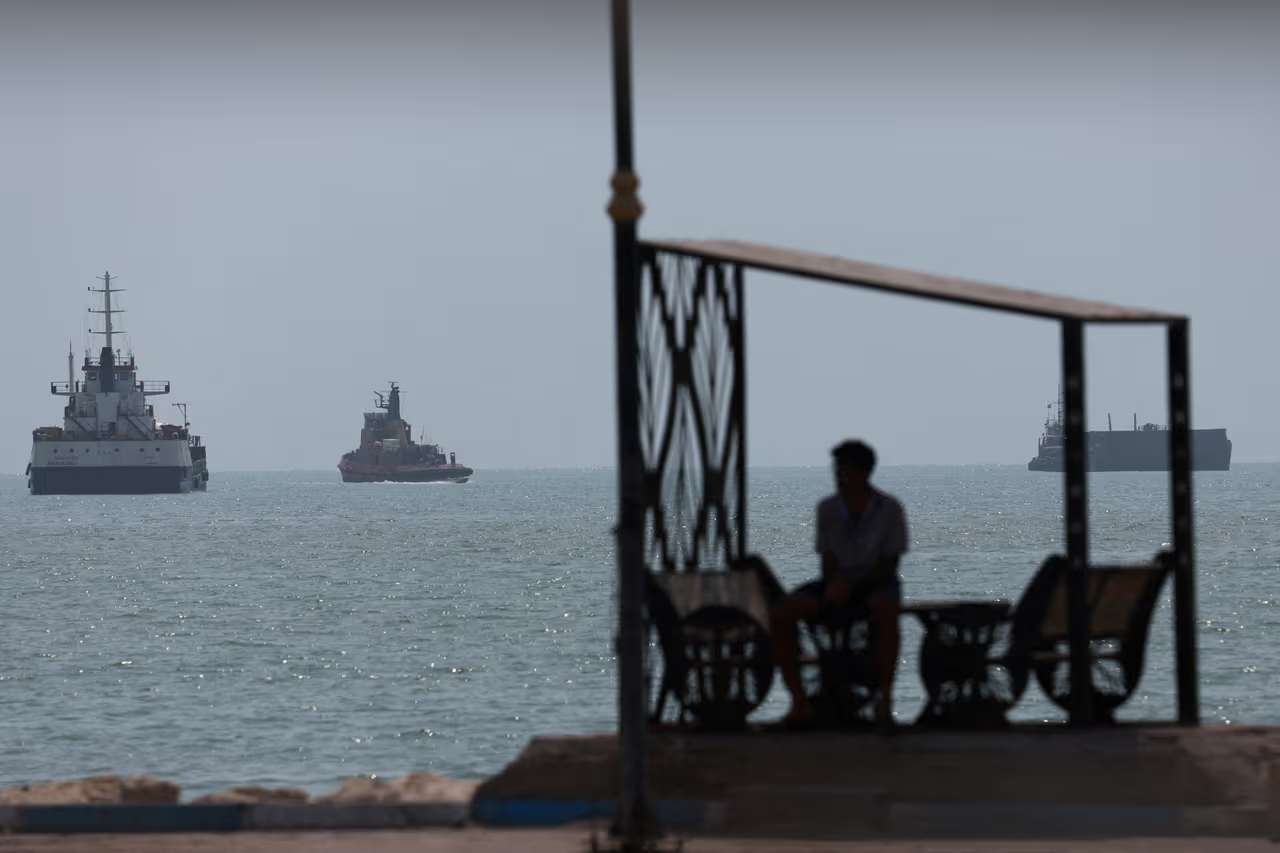
The geopolitical landscape remains volatile as international observers monitor the potential for further escalation. The combination of military strikes, retaliatory missile launches, and drone interceptions highlights the increasing complexity of the security environment in the Strait of Hormuz and surrounding territories.