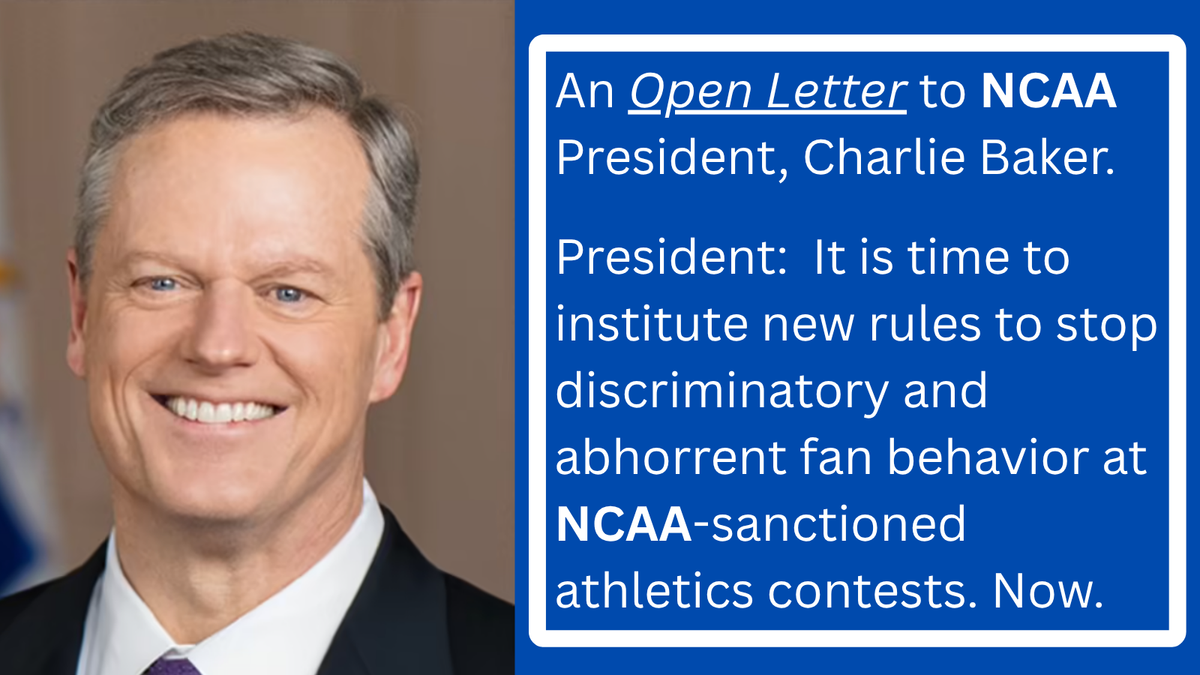
In an open letter published September 23, 2026, David Politis, the editor and publisher of Utah Money Watch, urged NCAA President Charlie Baker to establish a national anti-bigotry rule with meaningful consequences. The call for reform follows a September 19, 2026, incident in which Colorado State University student section members repeatedly chanted anti-Mormon slogans before and during a football game against Brigham Young University in Fort Collins, Colorado.
Politis, a Brigham Young University graduate living in Utah, argued that institutional apologies are insufficient to deter repeated discriminatory conduct. He noted that since 2021, eight institutions have been involved in such incidents, including the University of Southern California, the University of Oregon, Providence College, the University of Arizona, the University of Colorado, the University of Cincinnati, Oklahoma State University, and Colorado State University. While the Big 12 Conference fined the University of Colorado and Oklahoma State University $50,000 each following anti-Latter-day Saint chants, Politis stated that the current approach to deterrence is not working.
The proposed policy includes several specific enforcement mechanisms. Politis suggested that the NCAA should mandate immediate intervention by security personnel and the removal of identifiable offenders. He proposed that students found responsible for discriminatory misconduct should be banned from attending NCAA member-hosted athletic events for at least one year. Additionally, he recommended that offending seating sections face closures for subsequent home contests and that institutions face financial penalties, including a minimum $500,000 fine payable to a nonprofit serving the targeted community and an additional $500,000 benefiting student-athletes at the attacked institution.
The proposal comes amid significant financial scale in collegiate athletics. According to a July 14, 2026, report from the U.S. Government Accountability Office, Division I college athletic programs spent $20.8 billion during the 2023-2024 academic year. Politis requested that President Baker bring this issue before the NCAA Board of Governors to establish an association-wide minimum standard across all three NCAA divisions.
Politis emphasized that the goal is not to prohibit criticism of institutions or ideas, but to prevent coordinated discriminatory conduct targeting people based on religion, race, or other identities. He called for the NCAA to use existing investigative tools, such as video and eyewitness evidence, to ensure accountability and change behavior through clear, enforceable incentives.
The letter was addressed to President Charlie Baker, with copies provided to the members of the NCAA Board of Governors and the commissioners or executive directors of the 32 NCAA Division I primary conferences.