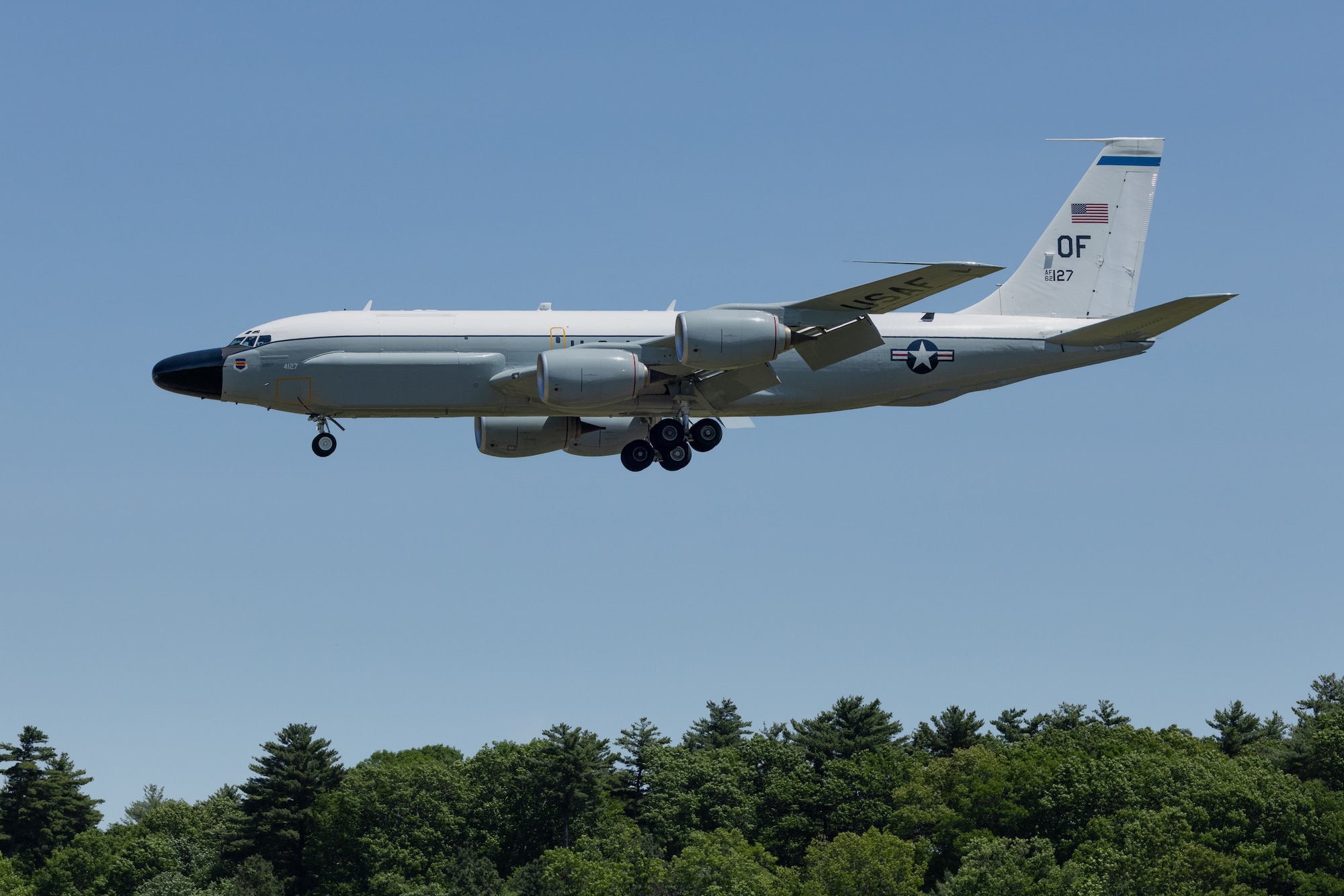
A French A330 Multi Role Tanker Transport Phénix refueled U.S. and U.K. RC-135 aircraft during a historic exercise over central France. The mission marked the first air-to-air refueling integration among the United States, United Kingdom, and France within the RC-135 enterprise.
Exercise Ravitaillement en Vol brought together a U.S. Air Force TC-135 training aircraft, a Royal Air Force RC-135 Rivet Joint, and a French Air and Space Force A330 MRTT Phénix. The event demonstrated how crews and staff from three NATO nations can operate as an increasingly integrated force.
The milestone established a pathway for U.S. and U.K. RC-135 fleets to access more than 30 allied A330 MRTT tankers worldwide. This integration expands the reach, persistence, and flexibility of a critical NATO intelligence, surveillance, and reconnaissance capability.
For the 55th Wing, which organizes, trains, and equips the U.S. Air Force RC-135 fleet, the integration expands operational reach across multiple theaters. By increasing refueling options, the integration extends time on station and gives commanders greater freedom to respond as mission demands evolve.
Personnel from the 55th Wing, 55th Operations Group, and Nebraska Air National Guard’s 170th Group participated alongside members of the RAF’s 51 and 56 squadrons at RAF Waddington and the French Air and Space Force’s 31st Air Refueling and Strategic Transport Wing.
The multinational team conducted combined planning, simulator training, mission briefings, and live refueling sorties. The effort required planners to coordinate through U.S., U.K., and French diplomatic channels to secure necessary clearances for operating in French national airspace.
This effort underscored that interoperability requires nations to align procedures, communications, command relationships, airspace requirements, and emergency actions. By synchronizing these elements, the three nations turned the mission into a repeatable multinational capability.
The exercise drew on testing conducted in October 2023 at Edwards Air Force Base, California, involving a Royal Australian Air Force KC-30A and a U.S. Air Force RC-135. A member of the 170th Group who participated in that test later helped plan the French integration.
The close similarities between the Australian KC-30A and the French A330 MRTT Phénix allowed planners to use data and lessons from Edwards to build the foundation for the June exercise.
By broadening the tanker network available to the RC-135 enterprise, the integration gives the United States and United Kingdom greater reach and freedom of action. A distributed support network reduces reliance on any single nation, tanker fleet, or operating location.
This flexibility carries strategic value along NATO’s eastern flank and in the Indo-Pacific. Additional tanker capacity can help RC-135 crews remain on station longer, strengthening the alliance's ability to monitor emerging threats and providing decision-makers with timely intelligence.