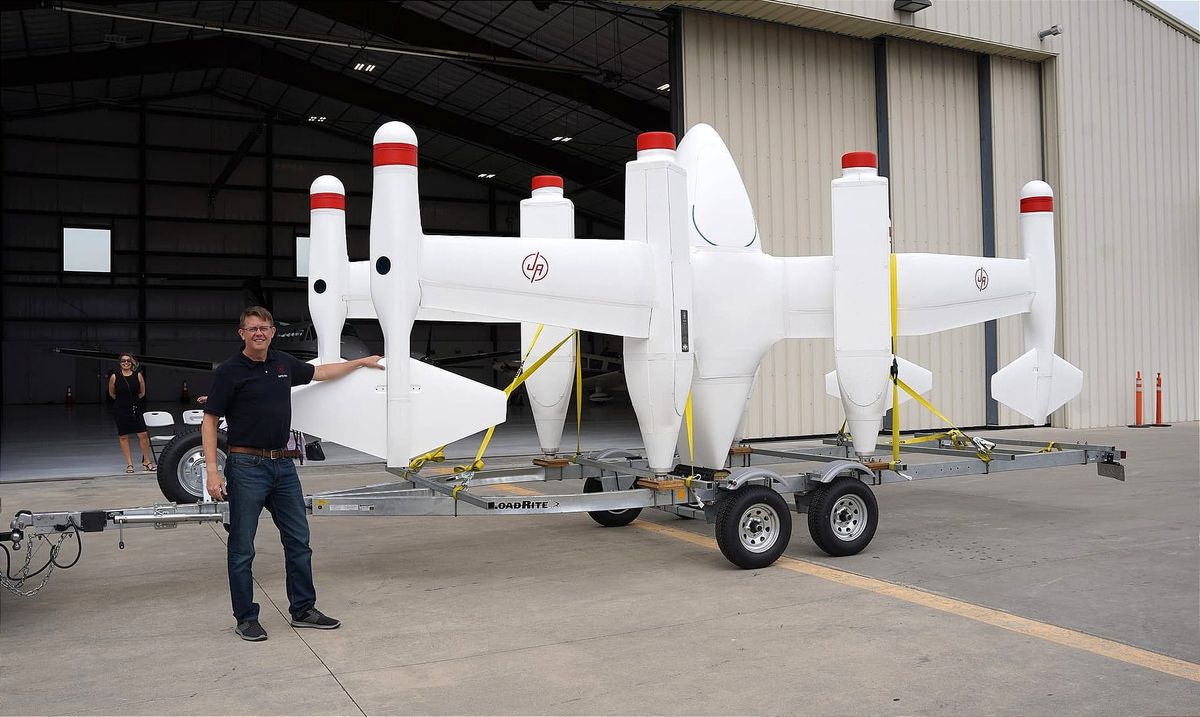
Jump Aero, a California-based company, recently brought its all-electric Pulse aircraft to South Valley Regional Airport in West Jordan to pitch Utah officials on a new type of emergency response technology. The electric vertical takeoff and landing (eVTOL) aircraft is designed to transport a single paramedic to rural emergency scenes faster than a traditional ambulance or helicopter.
Rapid Medical Response Capability
The Pulse aircraft, developed by Petaluma-based Jump Aero, aims to revolutionize rapid response for medical emergencies. According to the company, the aircraft is capable of arriving at any location within 50 kilometers in less than 8 minutes. The technology is intended to bridge the gap in medical response times, particularly in rural areas where traditional ground or air transport may be delayed.
As TechBuzzNews first reported, the company presented the aircraft at the West Jordan airport to demonstrate how the eVTOL could serve as a specialized tool for life-saving missions. The aircraft is specifically designed to carry a 150 kg payload, which allows for the transport of one person along with necessary medical equipment.
Advanced Flight Specifications
The technical specifications of the Pulse aircraft highlight its ability to operate in challenging environments. The aircraft features a biplane standing tail-sitter design with high lift-to-drag ratios and a low frontal area. This design includes a large belly window, which Jump Aero states facilitates steep approaches to unimproved landing zones.
In terms of performance, the aircraft boasts a dash speed of 250 knots and is capable of deployment in less than 60 seconds. To ensure operational safety, the aircraft is designed with propellers positioned above head height. It is also equipped with an adaptive or machine learning flight controller within a run-time-assurance architecture and includes a ballistic airframe parachute for safety.
Design and Maintenance Features
Reliability and maintenance are central to the manufacturer's design philosophy. The Pulse aircraft is built without articulating motors or retractable landing gear, which the company says makes the aircraft easy to maintain. Additionally, the design ensures there are no catastrophic single point failures.
For power, the aircraft utilizes eight independent and cross-linkable 11 kWh batteries. It is equipped with a single high-voltage direct current (HVDC) fast charging port to facilitate quick turnaround times. The aircraft is also designed to be transportable without disassembly using a flatbed trailer, allowing for easy relocation to different operational hubs.
Operational Versatility
The aircraft is engineered to handle difficult terrain and weather conditions. Jump Aero states the Pulse can hover at 2900 meters density altitude even with a failed propulsor. It is also capable of performing an all-azimuth hover in 20-knot winds and can land on 10-degree slopes, which the company notes covers most roads and driveways.
By focusing on these specific capabilities, Jump Aero intends to position the Pulse as a critical component in the future of emergency services, providing a level of speed and accessibility that current ambulances and helicopters may struggle to match in remote locations.
Future Outlook
The presentation in West Jordan marks a significant step in Jump Aero's efforts to integrate eVTOL technology into public safety infrastructure. By targeting the specific needs of rural emergency response, the company hopes to secure a foothold in the growing market for electric aviation in Utah and beyond.