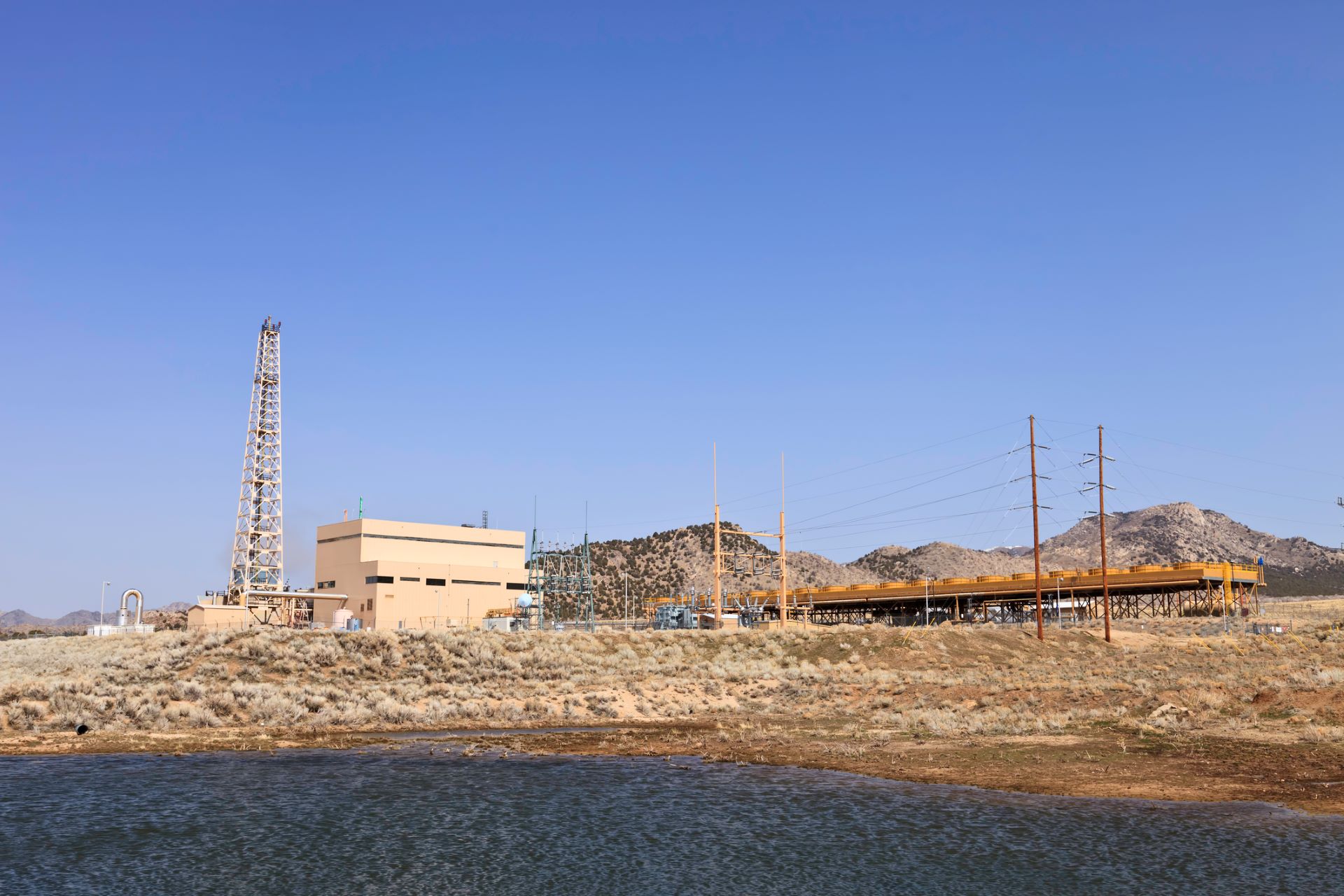
Utah has added a new form of clean energy to the grid at a time when electricity demand is climbing quickly. Fervo Energy announced that its Cape Station project in Beaver County has become the first utility-scale enhanced geothermal system project to begin delivering power.
The company stated on Thursday, September 25, that the first 33-megawatt unit at the Cape Station site has come online. This initial unit's primary customer is Southern California Edison.
Fervo Energy intends to continue building out the first phase of the project through the end of the year. This phase is expected to total 100 megawatts, which is enough to serve approximately 70,000 homes.
The project is designed to scale significantly through multiple phases. A second phase, consisting of 400 megawatts, is currently under construction and is slated to finish in 2028. A third phase would expand the site's total capacity to 900 megawatts.
Fervo co-founder and chief technology officer Jack Norbeck said that the project's success validates the science behind the technology. He noted that the achievement was reached through years of drilling, completion design, subsurface modeling, and flow testing.
Unlike conventional geothermal plants that rely on naturally occurring underground reservoirs, Fervo utilizes enhanced geothermal systems, or EGS. This method uses advanced drilling to create usable reservoirs in more locations.
To facilitate this at Cape Station, wells are drilled roughly 10,000 feet down and approximately 7,500 feet sideways. The rock is then fractured to reach water hotter than 400 degrees below ground. This heat produces steam to turn turbines for electricity before the cooled water is pumped back underground to be reheated.
Tim Latimer, Fervo co-founder, stated that the project establishes EGS as a defining new power generation technology that is ready to meet the urgent need for reliable, clean power. This development follows the company's earlier Project Red pilot, which went online in 2023.