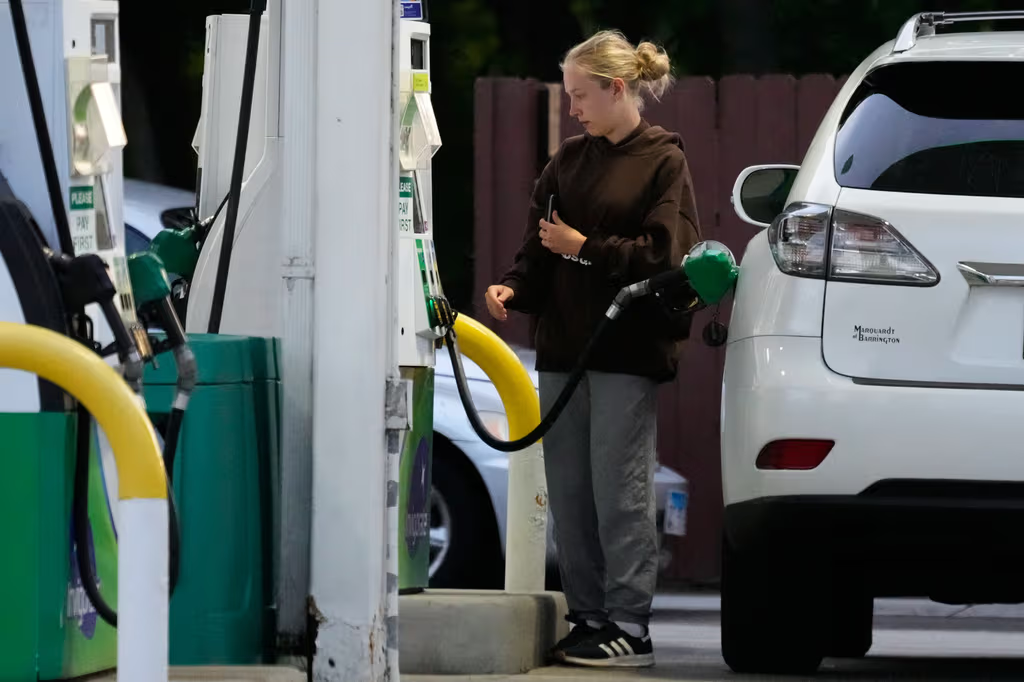
Gasoline prices in the United States have reached a historic high for Labor Day, according to a report published September 7. The surge is attributed to the ongoing war with Iran and military tension in the Strait of Hormuz, which handles 20% of global oil traffic.
The average gasoline price this Monday, September 7, is calculated at $4.15 per gallon, according to the AAA. In states including Utah, Washington, Oregon, Montana, Idaho, California, Nevada, and Arizona, prices reached a maximum of $5.01 per gallon. This follows a price of $4.14 per gallon recorded on Sunday, September 6.
Energy Secretary Chris Wright stated that officials are doing everything possible to lower costs, though no specific timeline was provided for when drivers might see relief.
Oil prices have risen significantly due to potential energy transit disruptions. Brent crude is trading around $97.51 per barrel, while WTI is near $92.28 per barrel. For comparison, before the war began, Brent crude was at $72.48 per barrel, and WTI ranged between $59.83 and $64.37 per barrel.
The price of gasoline is closely linked to crude oil because petroleum makes up 90% of commercial gasoline, while the remaining 10% consists of chemical additives and plant ethanol. Crude oil accounts for between 50% and 60% of the final fuel cost. When refineries purchase oil at higher international prices, they pass those increases to distributors to protect profit margins.


