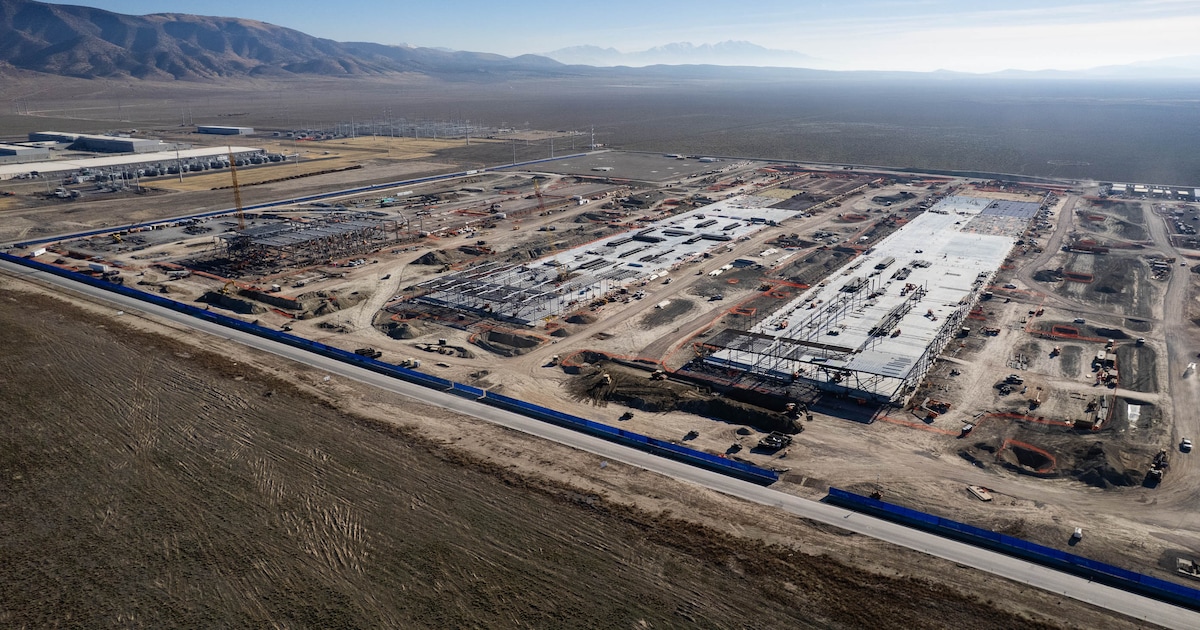
Tyson Foods will close its case-ready facility in Eagle Mountain, Utah, as part of a strategic restructuring of its beef business, a move expected to impact more than 700 workers. The decision, announced by the company on Aug. 13, 2026, comes as the food giant shifts operations to more strategically located facilities in response to historic cattle shortages across the country.
### Strategic Beef Network Restructuring
In a press release issued on Aug. 13, 2026, Tyson Foods announced it is making strategic changes to its beef operations to position the company for long-term success. The company plans to anchor its beef business around three facilities located in the central United States: Dakota City, Nebraska; Holcomb, Kansas; and Amarillo, Texas. This restructuring aims to create a more competitive footprint amidst what the company described as one of the most historic cattle shortages the country has ever experienced.
According to the company, recent USDA cattle inventory data shows continued evidence of limited heifer retention, indicating that supply constraints are likely to persist. To address these challenges, Tyson Foods is ending operations at its Eagle Mountain, Utah, case-ready facility and its Joslin, Illinois, beef facility. The company is also pursuing the sale of its beef facility in Pasco, Washington.
As part of this restructuring, Tyson Foods intends to ramp back up a second shift at its Amarillo, Texas, facility as cattle becomes available. The company stated these changes will allow it to maintain a similar level of cattle harvesting across a more efficient and modern network.
### Impact on Eagle Mountain Workers
The closure of the Eagle Mountain plant marks a significant shift for the local workforce. While the company did not provide a specific number of employees being terminated in the Aug. 13 announcement, the facility was projected to employ between 800 and 1,200 workers during its expected growth phase.
Tyson Foods stated it recognizes the impact these decisions have on team members and communities. The company said it is committed to supporting employees through the transition, including assisting them in applying for open positions at other Tyson facilities.
The facility in Eagle Mountain was designed as a meat-cutting and packaging operation. It was intended to process large cuts of beef and pork into steaks, chops, roasts, and ground meat to be packaged and sold in retail trays at grocery stores. The company had previously emphasized that the facility would not involve livestock harvesting and would not produce odors or smells associated with traditional meat processing.
### Eagle Mountain Facility Background
The Eagle Mountain plant was a major component of Tyson's expansion into the western United States. Tyson Foods had previously announced plans to invest approximately $300 million to build the case-ready beef and pork plant in the area. The facility was slated to begin operations as early as 2021 and was projected to generate an annual local payroll of $44 million.
When the project was first being planned, Tyson Foods noted that the plant would be its fourth case-ready location, joining existing plants in Sherman, Texas; Council Bluffs, Iowa; and Goodlettsville, Tennessee. The company had also addressed community concerns during the development phase, stating the plant would adhere to municipal standards for light pollution and that water usage would be managed through conservation and reclamation strategies.
Additionally, Tyson Foods had previously noted that the project would be supported by improved infrastructure, including new roads associated with the development of the Pole Canyon industrial park and a new pump station to accommodate the facility's water needs.
### Economic Context and Incentives
Tyson Foods' presence in Utah follows a broader trend of companies utilizing state-authorized tax credit programs to support expansion. Since the inception of Utah's tax credit incentive program in 2005, the state has worked with numerous companies to encourage economic growth.
According to data from the Utah Department of Commerce, many companies participating in the state’s incentive programs are Utah-based. These companies must meet specific criteria outlined in their Economic Development Tax Increment Financing (EDTIF) contracts. While Tyson Foods' specific tax credit status was not detailed in the most recent briefing, the state has historically provided incentives to various companies to bolster local employment and revenue.
### Labor Protections and Compliance
Under the Worker Adjustment and Retraining Notification (WARN) Act, employers are required to provide advance notice of qualified plant closings and mass layoffs. The U.S. Department of Labor provides compliance assistance to ensure both workers and employers understand their rights and responsibilities under these federal provisions.
The WARN Act is designed to help workers prepare for significant changes in their employment status by providing advance notice of such events.