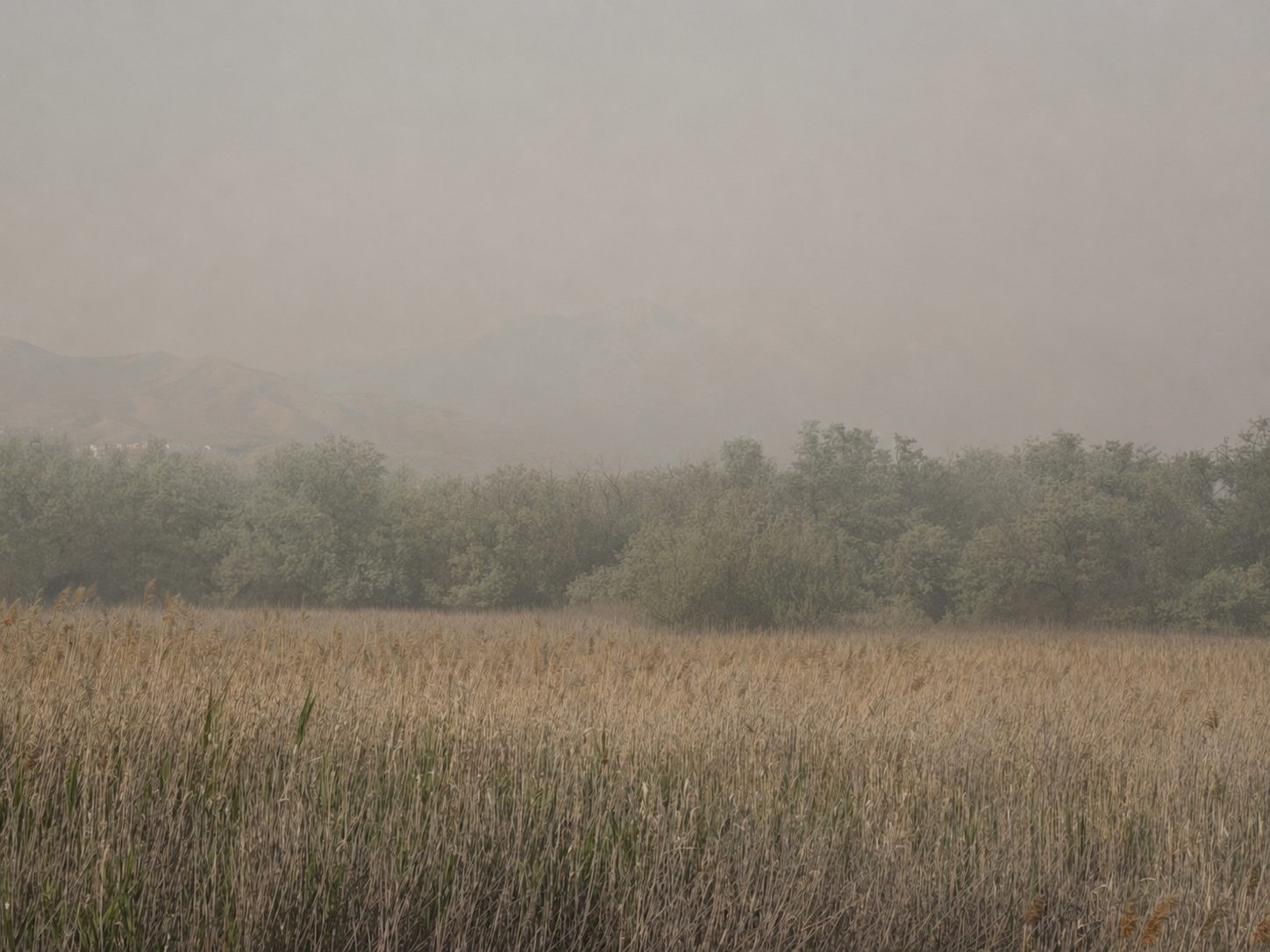
Wildfire smoke recently pushed Utah to the worst air quality in the nation, with Salt Lake City ranked as the 10th worst major city in the world for air quality. Multiple fires burning simultaneously caused smoke to converge over the Wasatch Front and Utah Valley, creating significant haze in areas including Eagle Mountain, Saratoga Springs, and Lehi.
As of late June 2026, several large-scale fires were driving these conditions. The Hastings Fire in Tooele County had reached 20,000 acres with 25% containment, sending smoke east into the Salt Lake Valley. Additionally, the Iron Fire near Eureka was burning 31,000 acres, directly affecting air quality south of Provo and within Utah County. The Dutchman Fire also contributed to the smoke load with an additional 8/80 acres.
Kerry Kelly, co-founder of Tellus, noted that the impact from wildfire smoke this year was worse than the previous year. Community members expressed feeling trapped by the smoke within the geography of Utah Valley.
Medical professionals issued direct warnings regarding the public health risks associated with the smoke. Dr. Denitza Blagev, a pulmonologist with Intermountain Health, stated that there is no safe level of air pollution and noted that wildfire smoke can irritate the lungs, eyes, and throat.
Beyond respiratory issues, Dr. Blagev highlighted increased risks for cardiovascular problems, including heart attack and stroke. The most vulnerable populations include children, elderly adults, pregnant women, and individuals with asthma, COPD, or heart disease. Even healthy individuals were advised to limit exposure.
Symptoms to monitor include shortness of breath, chest tightness, coughing, wheezing, irritated eyes, headaches, and unusual fatigue. Officials noted that symptoms may not appear immediately even after significant exposure.
To manage health risks, experts provided guidance for both indoor and outdoor activities. For outdoor safety, it was recommended to stay inside when possible and limit the intensity of physical exertion. On orange or red air quality days, individuals should skip prolonged outdoor exercise. When outdoor activity is necessary, well-fitted N95 or KN95 masks were suggested for sensitive groups.
For indoor protection, residents were advised to close windows and doors and run air conditioning on recirculate mode rather than using fresh air intake. Kerry Kelly confirmed that indoor air quality is generally better when using a central HVAC system. Other recommendations included checking and replacing HVAC filters and using portable HEPA air purifiers, particularly in designated clean rooms.
To avoid adding to the pollution, Salt Lake City guidance suggested avoiding wood burning, unnecessary idling, and activities that release volatile organic compounds (VOCs).
The air quality index (AQI) serves as a guide for daily decisions. During late June 2026, Utah, Salt Lake, Tooele, Davis, and Weber counties were in the Orange category, with forecasts moving toward Red.
The smoke event was part of an ongoing fire season that included the Glambert Lane Fire on Lake Mountain in Saratoga Springs earlier in the month. Because summer fire activity typically continues through September, officials recommend using real-time monitoring tools such as air.utah.gov, IQAir, and AirNow.gov to track changing conditions.