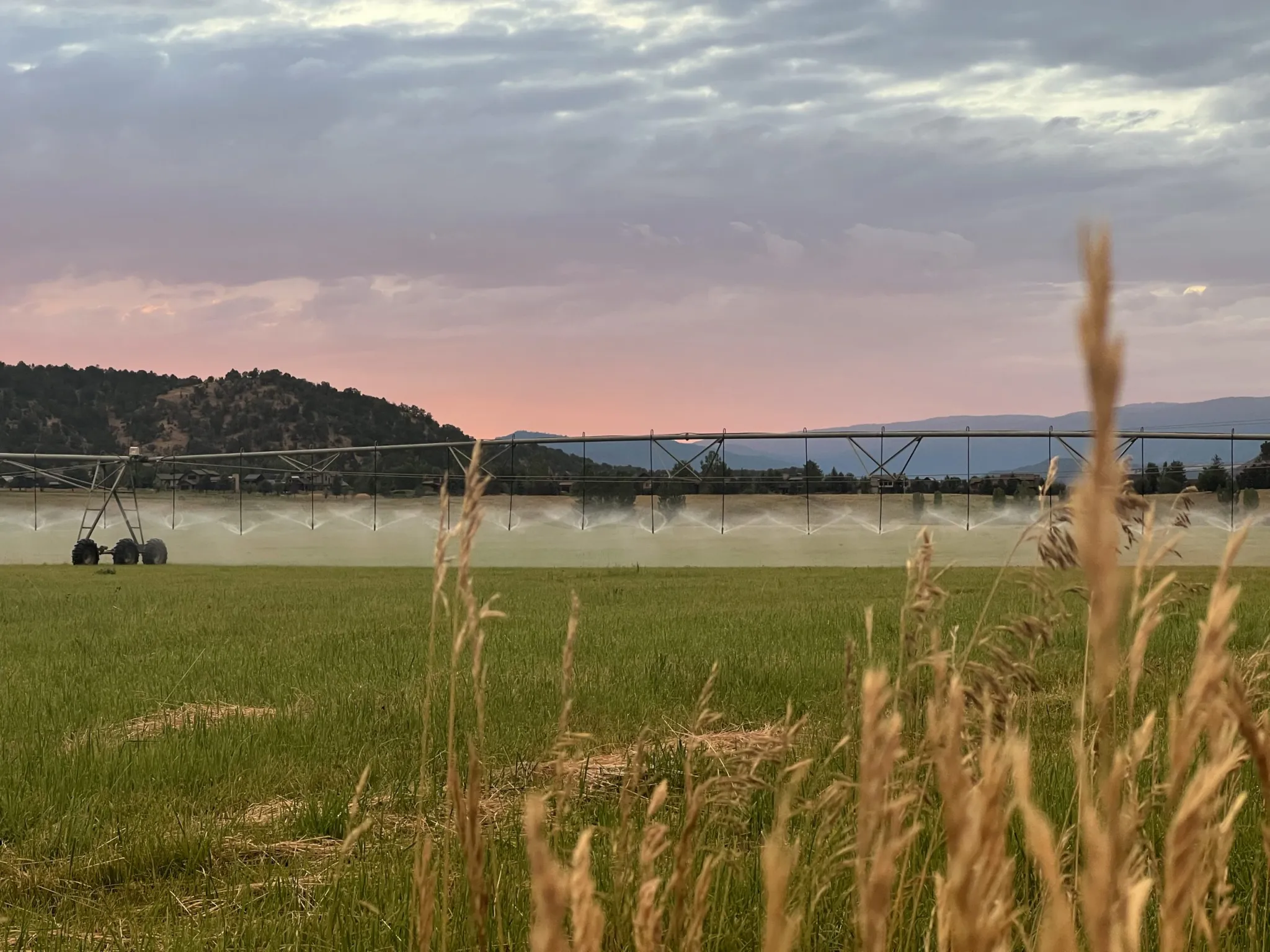
The Colorado Water Conservation Board unanimously approved the application review process and criteria for a state-run water conservation program during its regular September meeting at Copper Mountain. Known as Colorado’s near-term contribution program for 2027, the initiative seeks to use $100 million in funding from the U.S. Bureau of Reclamation to pay water users in the Upper Basin states—Colorado, New Mexico, Utah, and Wyoming—to voluntarily cut back on water use.
Under the approved criteria, Colorado projects must avoid negative impacts and speculators, comply with local ditch company rules, and consult with tribes and local water conservation districts regarding proposed projects. The board also decided to disincentivize multiyear fallowing projects, a move intended to ensure such projects remain the exception rather than the standard.
Board member and Colorado River mainstem representative Taylor Hawes stated that the program is a response to decreased supply caused by a historic, climate-change-driven drought. Hawes noted that the move is a step toward living within the river's means.
The program seeks to broaden participation beyond agriculture to include cities and industrial water users. This approach addresses concerns raised by stakeholders like Troy Waters, a fifth-generation Mesa County farmer and member of the Grand Valley Water Users Association and Ute Water. Waters argued during the meeting that fallowing fields can lead to permanent water removal and negative economic impacts on communities, suggesting instead that funds be used for infrastructure upgrades like lining ditches.
Becky Mitchell, Colorado’s representative to the Upper Colorado River Commission, stated she would communicate to federal officials that fallowing is not the only solution and that its impacts may be too great.
The program's approval comes as the federal government has taken over operations for the Colorado River and major reservoirs after seven states failed to reach an agreement. While federal plans currently call for cuts only in the Lower Basin states, the Upper Basin states are increasingly under scrutiny for their water use.
To receive credit from Reclamation, saved water must be moved and stored in the Upstream Initial Units, which include Lake Powell, Blue Mesa, Flaming Gorge, and Navajo reservoirs. The Upper Colorado River Commission has requested that these contributions be regarded as operationally neutral, meaning the saved water would not be factored into federal reservoir operations or releases.
The approval of the criteria remains conditioned on an agreement between federal officials and the Upper Basin states ensuring states maintain control and receive credit for saved water. The approval process for projects will involve a review by the Colorado Division of Water Resources and consultation with tribal nations and local districts, with the CWCB expected to decide which projects to advance to the UCRC for approval in January.