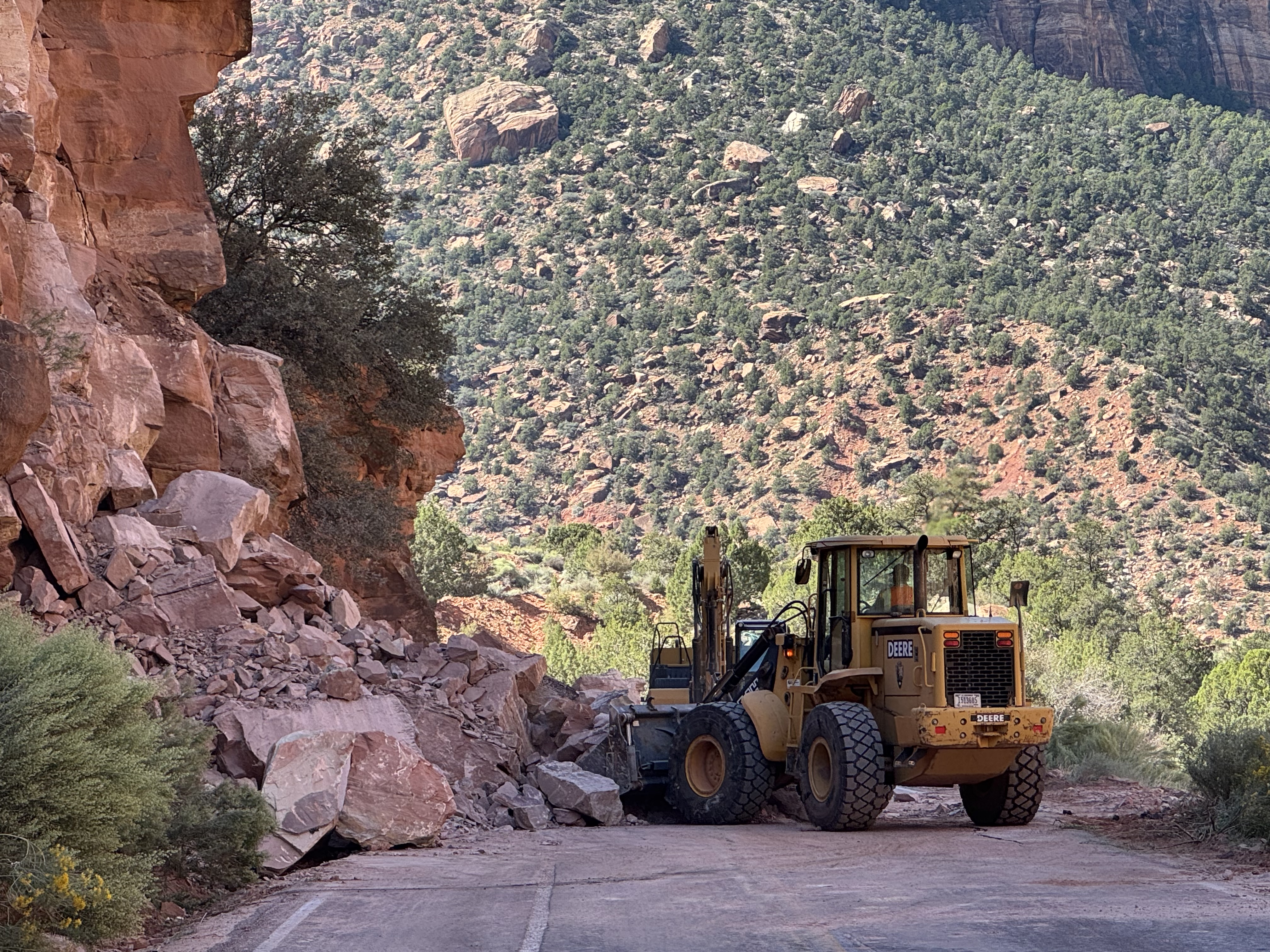
Zion National Park reopened visitor access on the Zion-Mt. Carmel Highway on Friday, Oct. 9, 2026, according to a report published Oct. 10. The reopening allows for two-way traffic and scenic driving between the East Entrance and Great Arch Overlook, though through travel to Springdale remains unavailable while crews address significant roadway damage.
The highway was initially closed on Sept. 30, 2026, after a large rock formation collapsed onto the Zion-Mt. Carmel Highway. Per reporting from Sun News, the rockslide occurred at the highway's switchbacks, sending large boulders onto State Route 9 and causing damage to a 130-foot section of the roadway. This damage resulted in the closure of the road between Canyon Junction and the East Entrance.
Under the current access plan, travelers may drive through the large tunnel to the Great Arch Overlook, but they will be turned around to exit back through the East Entrance. While the East Entrance was reopened in a limited capacity, admission through that entrance is currently free. The National Park Service noted that the South Entrance, the park's shuttle system, and the Zion Canyon Scenic Drive continue to operate under normal conditions.
Engineers are currently assessing the slide to determine the necessary repair approach. According to Kane County officials, engineers are evaluating whether repairs can be completed without blasting. Officials noted that the closure could be substantially longer if blasting becomes a requirement. Once the 130-foot section of damaged roadway is fully repaired, which is expected in the coming weeks, the park will replace temporary gravel with new asphalt.
The scale of the incident is significant given that approximately 1,600 vehicles enter Zion through the East Entrance on a daily basis, according to Kane County. To assist with the situation, the Kane County Sheriff's Office and the Tourism/Events Department have agreed to assist with traffic management, roving patrols, and emergency response. Additionally, emergency medical services from both Washington and Kane counties have agreed to be available to respond as needed.
Safety concerns have influenced park management decisions during the recovery period. Kane County officials stated that canyoneering permits would not be issued for canyons accessed from the Zion-Mt. Carmel Highway due to the potential for delayed emergency response in the event of an injury. Furthermore, park staff will be monitoring the rockfall area as expected rain moves through the region over the weekend.
Visitors traveling from Kane County toward Springdale must currently use alternative routes. These include taking U.S. 89 through Kanab and Fredonia, Arizona, then SR-389 and Utah SR-59 to Hurricane, before using SR-9 to reach the park's South Entrance. The National Park Service advises all visitors to use caution when driving through the project area and to remain alert for vehicles and pedestrians in the vicinity of the repair work.


