SPRINGVILLE — A young male moose that wandered into a Springville neighborhood was safely relocated Sunday after surprising a family who discovered the animal lounging in their backyard, wildlife officials said.
Homeowner's encounter with moose
The Utah Division of Wildlife Resources (DWR) responded to the home after the homeowners reported the unexpected visitor, marking one of the first such sightings of a moose in an urban yard in the area this season.
“I was really nervous, actually, because our family was coming over and with my little grandkids, and I just didn't know what would happen,” said homeowner Laura Thorpe. “I didn't know whether to shoo it off or what to do. So luckily, Scott saved the day.”
She called her neighbor, Scott Root, who recently retired from DWR, when she first spotted the animal eating bushes on her lawn. Thorpe said the moose had been there for hours.
Soon after, a wildlife response team arrived and developed a plan to tranquilize the moose safely.
“They wanted to make sure that they were quiet and didn't disturb him or get him up and have him be moving,” Laura said. “They wanted him to stay still. And so they kind of just moved around the yard as quiet as they could to see where the best spot was.”
The tranquilization and transport process
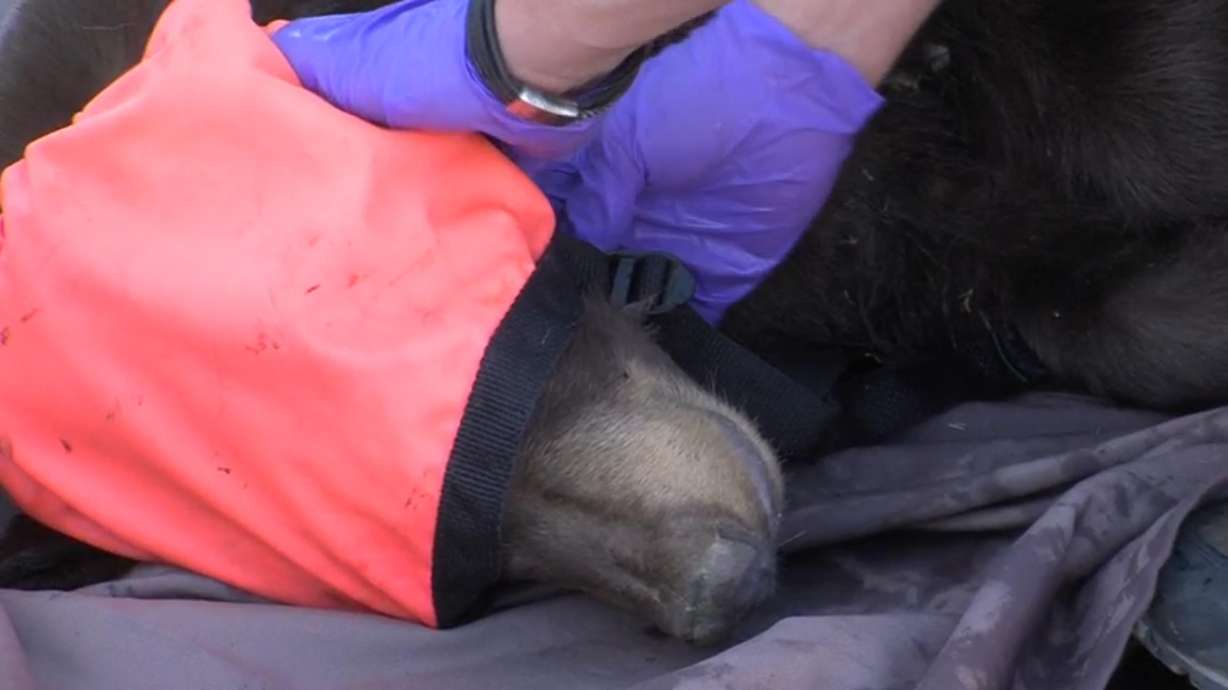
After about 15 minutes, the sedative took effect, according to her husband, Greg Thorpe.
“He walked around the side of our house and actually fell down right next to the driveway,” Greg said. “They were able to back their horse trailer up to him.”
It took a lot of people to haul the large animal into the trailer. DWR biologists examined the animal on-site and found it to be healthy, said Michael Packer, DWR conservation outreach manager, who was involved in the response.
“Our biologists conducted a physical examination and determined that the animal was quite healthy,” Packer said.
He said the moose was sprayed with a hose while it was tranquilized to help it cool down.
“Animals, just when they get stressed, just like when we get stressed, heart rate will elevate, will generate more heat,” Packer said. “It's us trying to cool down the core body temperature of that moose.”
Impact of weather on wildlife
Officials said this time of year often brings an increase in wildlife sightings in residential areas as animals search for food, water and shelter.
“They are looking for the same necessities that that we need,” Packer said. “It's like food, water and shelter. So as things warm up, they move to where they can more readily or easily find those resources. Sometimes that means that they come a little bit closer than we would like to see them in and around these urban areas.”
A relatively dry winter may have contributed to the moose’s movement into lower elevations, officials said.
“Extremes with weather changes can significantly alter animal behavior,” Packer said. “That can cause them to move into areas they wouldn’t otherwise utilize.”
Relocation to new habitat
The moose was transported to a more suitable habitat where it can access adequate resources.
Root told KSL the animal is now living amongst streams and beaver ponds.
Despite the disruption, the Thorpes said they were charmed by their temporary guest.
“We feel like we had a little pet moose,” Laura said. The family even gave it a nickname: “Moose Springsteen.”
Safety advice for local residents
DWR officials said the family handled the situation appropriately by keeping their distance and calling authorities.
They urged residents to avoid approaching wildlife and to bring pets indoors if large animals are nearby, noting that moose can become aggressive, especially toward dogs.
With more wildlife activity expected in the coming months, officials encouraged residents to educate themselves on how to respond to animals that may wander into urban areas.
Follow @KSL5TV
Like us on Facebook