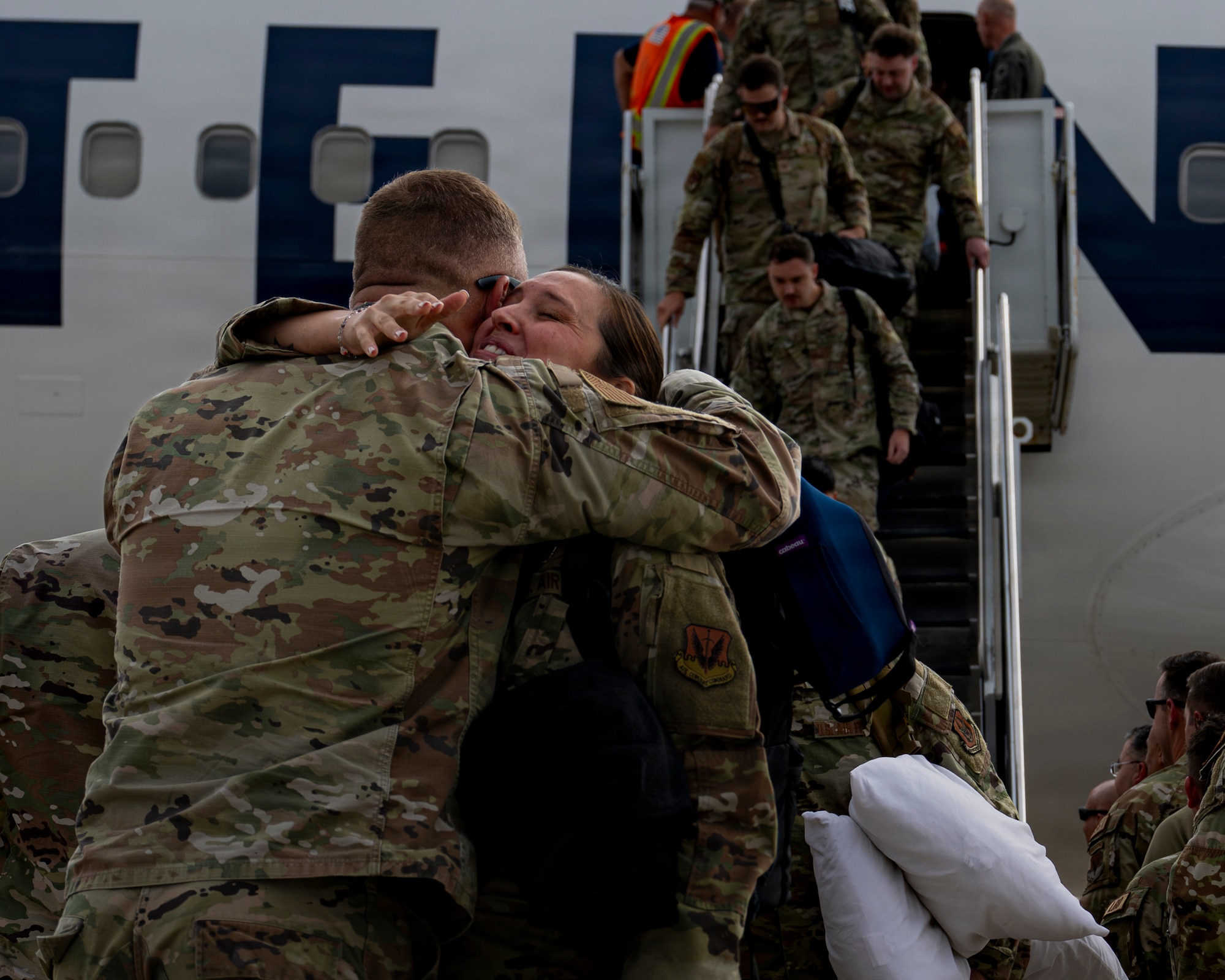
For many Airmen, the most significant part of returning from deployment begins once the initial homecoming celebrations have concluded. Reintegrating into daily life often involves navigating changed family and friendship dynamics, processing high-stress experiences, and managing personal expectations.
According to Kathryn Chapman, a Military and Family Life Counselor at the 75th Force Support Squadron’s Military Family Readiness Center, the disconnect between an Airman's expectations and the reality of home life can be a significant hurdle. While service members are focused on missions, life at home continues and may change significantly, making the transition feel different than anticipated.
The mental transition from a high-stress deployment environment can lead to what is referred to as "deployment brain." During deployments, Airmen are trained to be mission-driven and hyper-alert, and Chapman advised that the brain requires time to adjust to a new normal. Chief Master Sgt. Joshua Vanderbeck, 388th Fighter Wing command chief, noted that rushing back to normal without processing deployment experiences can impact readiness and encouraged Airmen not to carry struggles alone.
Family dynamics also undergo shifts as households adapt to functioning without a service member. Jamila Russell, a Military and Family Life Counselor at the 388th Fighter Wing’s Maintenance Performance Center, stated that these adjustments can be jarring for families. Counselors suggest that couples establish weekly check-ins to communicate needs openly and advise Airmen to ease back into household routines gradually.
Single Airmen face unique challenges, including potential loneliness and isolation if friends have moved stations or relationships have changed. To combat this, the Hill Enhanced Reintegration and Orientation Program (HERO) provides a guide for resources, events, and activities. Vanderbeck emphasized that leaders must engage subordinates daily to help single Airmen through these hurdles.
To support long-term readiness, Air Combat Command has implemented a phased reintegration strategy. This approach begins before deployment with peer support and family workshops, moves through a centralized deployment line upon return, and focuses on core resilience skills and targeted events for single Airmen between the 30-to-120-day marks.
Despite available support, military culture and fears regarding career impacts can deter Airmen from seeking help. Vanderbeck suggested that leadership should normalize the use of support agencies and treat mental well-being with the same maintenance standards applied to military gear.
Hill Air Force Base offers several resources for reintegration:
Chaplains provide confidential counseling without reporting to command or medical records.
MFL
Cs provide off-the-record support without keeping records or tracking visits.
Family Advocacy is available for couples counseling and family adjustment resources.
The HERO Program promotes engagement with support networks during the first 30 to 90 days home.
Mental Health services provide medical avenues for severe symptoms requiring documented, long-term care.