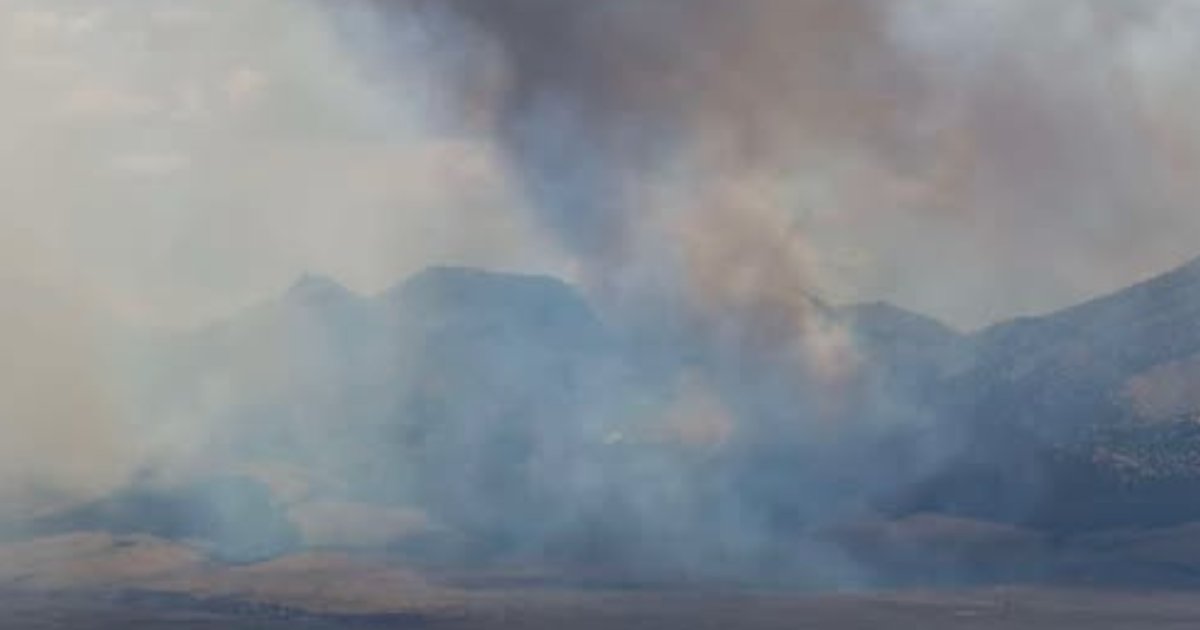
A new wildfire ignited in Iron County on June 20, burning into multiple counties overnight, as several other active blazes continue to impact air quality and infrastructure across Utah. The sudden outbreak coincides with a period of high fire potential driven by record-low snowpack and the warmest winter on record for the state.
Details of the Iron fire
The newly ignited fire, simply named the Iron fire, began burning overnight on June 20 and has already spread across Utah, Juab, and Tooele counties. As of the current report, the blaze has achieved 0% containment.
Sawmill Fire and evacuations
This new activity follows the June 16 start of the Sawmill Fire in Iron County. That fire, which has also seen 0% containment, has prompted evacuations northwest of Lund. The cause of the Sawmill Fire remains under investigation.
Air quality and smoke forecasts
The Utah Division of Air Quality issued a forecast on June 20 indicating that smoke from wildfires is contributing to high concentrations of particulates in populated areas. In Salt Lake, Davis, Utah, Weber, Box Elder, and Tooele counties, air quality is forecasted to be unhealthy for sensitive groups through at least Monday, June 22.
Mandatory action advisories issued
Because of these conditions, officials have issued mandatory action advisories for several counties. In the affected areas, employers are enough to activate mandatory trip reduction programs. Residents are advised to use 'TravelWise' methods by consolidating trips and choosing cleaner transportation options to limit volatile organic and particulate emissions.
Previous significant seasonal burns
The recent surge in fire activity follows a series of significant burns earlier this season. In May, the Wild Horse Fire burned 7,025 acres across Juab and Millard counties, causing power outages south of Leamington. This fire was eventually contained by May 19.
In early June, the Tower Fire burned 1,369 acres south of Scipio in Millard County. The blaze, which was contained by June 15, resulted in the closure of U.S. 50 and impacted air quality throughout the state. Additionally, a human-caused fire known as the South Mountain Fire burned 1,865 acres west of Stockton in Tooele County between June 8 and June 13, also causing power outages.
Extreme seasonal climate drivers
Climatologists and state officials point to extreme seasonal conditions as the primary driver for this active fire season. The 2025–26 winter was recorded as the warmest on record for Utah and featured one of the lowest snowpacks in the state's history, leaving vegetation dry enough to support fire conditions as early as March.
In Southern Utah, vegetation levels are currently at some of their driest points in a century. While the National Interagency Fire Center (NIFC) has predicted above-average fire potential for all of Utah throughout June 2026, the Great Basin Coordination Center expects the highest fire activity to concentrate in Northern Utah between August and September.
While some areas face mandatory restrictions, other parts of the state are under voluntary advisories. In Cache and Wasatch counties, air quality is expected to remain at moderate levels through June 22, with residents encouraged to voluntarily consolidate trips. Similarly, in Carbon, Grand, and Duchesne counties, air quality is forecasted to be unhealthy for sensitive groups on Saturday before dropping to moderate levels.
Health officials warn that if wildfire smoke becomes thick, individuals with existing heart or respiratory ailments should significantly reduce physical exertion and avoid outdoor activities.
The long-term outlook for the season remains dependent on the arrival of the monsoon season. While forecasts predict a potentially active monsoon season, officials expect a late onset that may not arrive until late July. A wet monsoon could provide relief, whereas a dry monsoon would allow fires to continue spreading easily across the state.