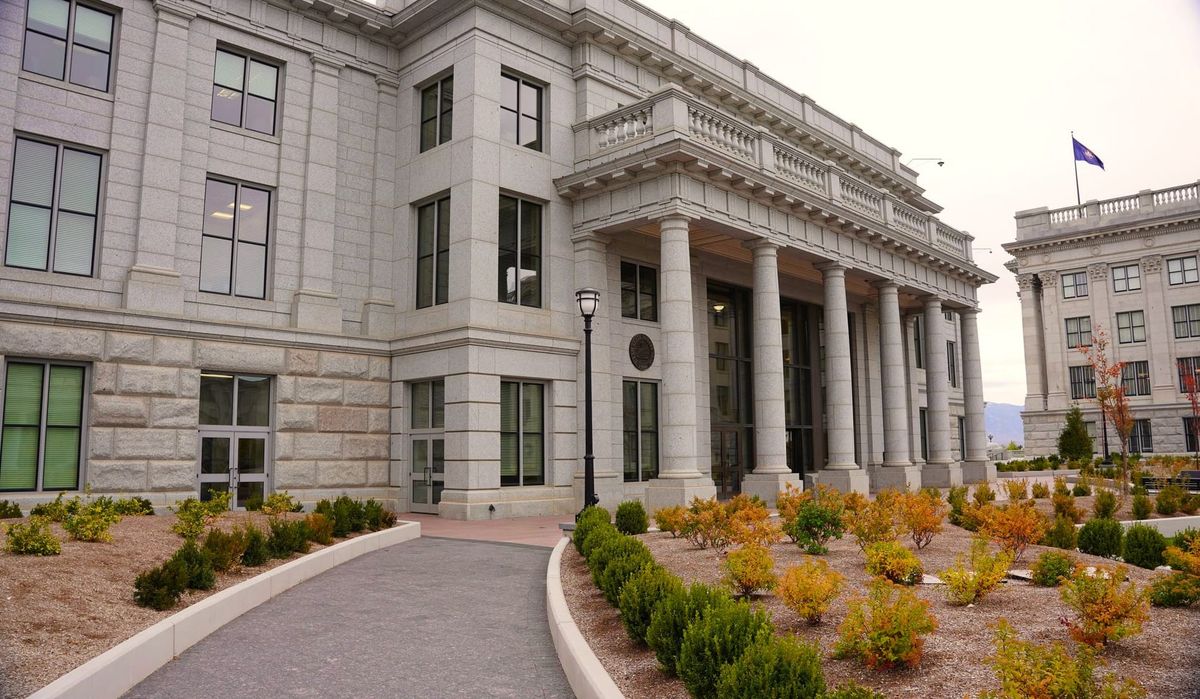
The Utah Spaceport Exploration Committee unanimously recommended Friday, Oct. 30, 2026, that the state Legislature appropriate $2.5 million to advance development through federal licensing and environmental reviews for two potential spaceport sites near Delta and Green River. The recommendation follows a yearlong feasibility study initiated in 2025 under Senate Bill 62 to evaluate the economic and technical viability of inland launch and reentry facilities.
Regulatory Transition and Funding
The committee's decision, reached during a meeting at the Utah State Capitol complex in Salt Lake City, marks a transition from initial site exploration to regulatory review and detailed planning. The proposed $2.5 million would fund coordinated Federal Aviation Administration (FAA) licensing and National Environmental Policy Act (NEPA) reviews for both locations. Additionally, the committee recommended funding at least two dedicated full-time positions within the Utah Department of Transportation (UDOT), at an estimated annual cost of approximately $500,000.
Site Selection Process
The committee's work involved evaluating seven potential locations before narrowing the field to Delta in Millard County and Green River West in Emery County. To reach its conclusions, the committee accepted a final site assessment and economic analysis prepared by RS&H, along with an initial feasibility study from The Aerospace Corporation. The current recommendations do not authorize construction, establish a final site selection, or commit the state to the full cost of developing a spaceport; the Legislature retains final authority over whether Utah proceeds and how the next phase is funded.
A Two-Site Strategy
The committee is recommending a two-site strategy to preserve the ability to compare locations as more detailed information becomes available. Delta has been identified as the state's near-term development focus, while Green River West is viewed as a complementary strategic location. This distinction was reflected in Utah's recent response to an FAA request for information regarding new spaceports and the use of priority airspace for critical space launch corridors.
Delta Site Advantages
Delta offers several technical and operational advantages, including proximity to the Utah Test and Training Range, extensive special-use airspace, highway and rail access, utility capacity, and available water resources. Its location near the Wasatch Front and Salt Lake City International Airport also provides potential market advantages. Economic analysis estimates that steady-state operations at Delta could generate an annual economic output of $69 million to $117 million, potentially supporting between 260 and 590 jobs.
Green River West Advantages
Green River West provides a different set of attributes, including access to Interstate 70 and an active rail corridor. The site also features a restricted airspace corridor with a historical connection to long-range point-to-point rocket testing between Green River and White Sands Missile Range in New Mexico. Projections for Green River West suggest an annual economic output of $70 million to $124 million and the support of 440 to 610 jobs.
Legislative Debate
The economic projections for the project were a point of discussion during the committee's final meeting. Rep. Jake Sawyer of Weber County questioned the scale of the potential investment relative to the projected direct employment, specifically raising concerns about the approximately $260 million figure associated with the broader development scenario. Sawyer questioned whether the potential economic return justified the commitment of state funds.
Economic Projections and Costs
In response to concerns regarding taxpayer costs, committee member Aaron Starks, president and CEO of 47G – Utah Aerospace and Defense, clarified that the committee is not proposing a $260 million taxpayer-funded spaceport. Starks stated that if launch becomes important for the local economy, universities, and incumbent companies, private and federal financing could be leveraged. Committee member Andy Bruce added that the state's role should be to establish the infrastructure, regulatory framework, and land arrangements necessary to attract private-sector investment, rather than carrying the full cost of the project.


