Creekstone Energy has announced a new initiative called Project Oasis, featuring patent-pending technology designed to convert natural gas exhaust into usable water at its Delta Gigasite in Millard County. The company has partnered with the University of Utah's Energy & Geoscience Institute to independently verify the technology, which aims to make the large-scale AI data center water-positive rather than just water-neutral.
Turning Exhaust Into Water
The technology, named GIGAWATER, works by capturing water vapor from the exhaust of natural-gas-powered electricity generation. According to Creekstone Energy, the process uses a regenerative rock-bed system to cool the exhaust and convert the vapor into usable water that is collected on-site. Engineering analysis projects a yield of approximately 4,000 acre-feet of water per year, a volume that exceeds the projected consumption of the Delta Gigasite itself.
Ray Conley, the founder and CEO of Creekstone Energy and an MIT-trained scientist, said the principle is based on the chemistry of combustion, similar to how a car's exhaust releases water. Conley stated that the goal is to ensure that the data center industry does not force Utah to choose between economic growth and the protection of its water resources. The recovered water has potential applications in irrigation, agriculture, geothermal energy cycles, and potentially as a potable source after filtration.
Independent Scientific Verification
To ensure the scientific validity of the GIGAWATER process, Creekstone Energy has entered into a formal research agreement with the University of Utah's Energy & Geoscience Institute (EGI). The research will be led by principal investigator Dr. Milind Deo and will be conducted in two phases. Phase 1 involves rigorous model verification, evaluating assumptions related to chemistry, thermodynamics, heat transfer, and carbon dioxide mineralization. Phase 2 will focus on the conceptual design of an experimental pilot facility to test the findings under controlled conditions.
Dr. Milind Deo stated that the science behind Project Oasis is promising and that the institute is committed to moving from theory and math through computer modeling to physical demonstration. If the results are successful, Deo noted, the technology could change how the entire data center industry approaches water usage.
Addressing Utah's Drought Challenges
The development of Project Oasis comes as Utah faces significant environmental challenges. The state has been in a drought for more than two decades and recorded its lowest snowpack on record in 2026. Governor Spencer Cox has declared a statewide drought emergency.
State Representative Jill Koford noted that the initiative goes beyond standard compliance for water reporting. Koford said that Project Oasis represents a model for how Utah businesses, universities, and state leaders can work together to meet environmental challenges head-on. The project aims to establish a new standard for data center construction in arid climates where water is a precious resource.
The Delta Gigasite Scale
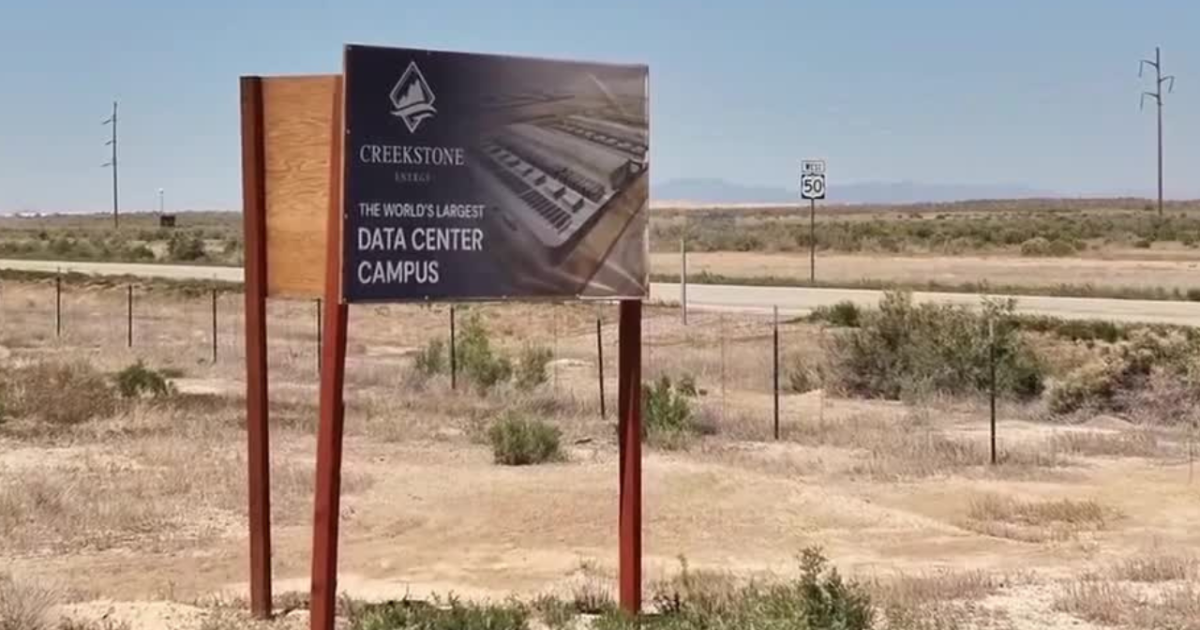
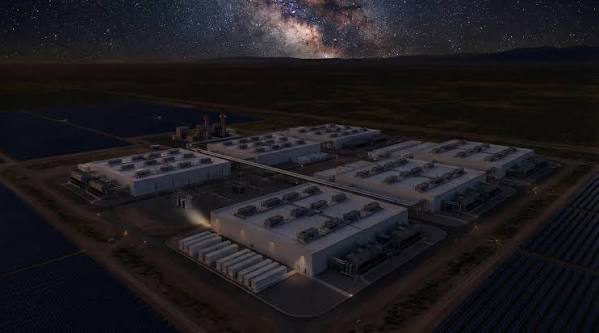
The Delta Gigasite, located near Delta, Utah, is a massive infrastructure project designed to support the energy and cooling demands of large-scale artificial intelligence compute. The campus is being built as a next-generation, multi-source power and digital-infrastructure campus. It features an integrated on-site natural gas power generation system and utility-scale solar energy, designed to operate independently of the constrained utility grid through a "behind-the-meter" design.
Creekstone Energy plans to develop the site into the world's largest AI-optimized data center, with a projected capacity of 10 gigawatts. The facility is being built to support 2030 workloads and is designed for an essentially waterless operation through its specialized cooling systems.
Economic and Infrastructure Impact
Construction on the Gigasite began late last year in Millard County. The project is a major economic driver for the region, with Creekstone Energy committing to invest $17,082,408,000 in Utah over the next 20 years. This investment is part of a state agreement involving a post-performance tax reduction through the Rural Economic Development Tax Increment Financing (REDTIF) program.
As part of the long-term commitment, Creekstone Energy expects to add 106 new, high-paying jobs to Millard County. The company's infrastructure includes a massive solar component, involving the largest solar lease in Utah's history under contract with the Utah School and Institutional Trust Lands Administration (SITLA).
Future-Ready Infrastructure
The Gigasite's infrastructure is designed to be highly connected, utilizing over 20 fiber routes to enable low-latency connections across the Western United States. Current progress includes the completion of land ownership for 1,143 contiguous acres and the installation of grid-forming battery backup systems.
The project's scale is supported by a diversified energy foundation, including natural gas interconnects and large-scale solar leases. By integrating power generation, storage, and advanced data infrastructure on a single site, Creekstone Energy aims to secure America's leadership in the artificial intelligence and clean energy sectors.
Local Economic Impact
The project's location near Delta was chosen due to the region's long history in Utah's energy economy. Ray Conley, president and CEO of Creekstone Energy, noted that the convergence of energy generation capacity, distribution infrastructure, and world-class fiber connectivity in Millard County makes the location ideal for a project of this scale.
Millard County Commissioner Trevor Johnson stated that the investment builds on the county's foundation of agriculture and hard work while expanding a diverse economy. The project is expected to provide quality jobs and strengthen local infrastructure, contributing to long-term prosperity for families and industries in the region.